In this article
Earned wage access can turn hours already worked into money available today. That may prevent an overdraft or a late fee. It can also turn a seemingly small transfer charge into a recurring annual expense and leave the next paycheck unexpectedly thin. Here is what workers and employers should calculate before treating “instant pay” as a financial-wellness benefit.
Fact-checked August 15, 2026. U.S. dollar examples are illustrative unless attributed to a named source. This article is educational, not legal, tax, or financial advice.
The short answer: more workers will be able to access pay after a shift, but most will not move to true daily payroll soon. The faster-growing model is earned wage access, or EWA: an optional withdrawal of part of wages already accrued while the employer keeps its weekly, biweekly, semimonthly, or monthly payroll cycle.
Source: the Consumer Financial Protection Bureau’s 2024 market data spotlight, based on aggregated data from eight employer-partnered providers. These are 2022 market estimates, not a forecast for every provider or user.
First, separate four products that are often called “instant pay”
The label can describe very different arrangements. The funding source, repayment method, fee model, and risk are more important than the name in the app.
| Product | How it works | Typical cost pattern | Main risk |
|---|---|---|---|
| Employer-integrated EWA | The provider reads time-and-payroll data and makes part of accrued wages available. The amount is reconciled through the next payroll. | Free standard delivery, employer subsidy, card funding, or a flat fee for instant delivery. | Frequent fees and a smaller regular paycheck. |
| Direct-to-consumer advance | An app estimates earnings from bank-account or other data without relying on the employer’s payroll record. It normally debits the bank account around payday. | Subscription, expedited-transfer fee, optional tip, or a combination. | A mistimed debit may contribute to overdraft or insufficient-funds charges; estimates may differ from actual pay. |
| Early direct deposit | A bank releases an incoming payroll deposit when it receives the payment instruction, often up to two days before the official payday. | Often free with an eligible account. | It does not provide access throughout the pay cycle and timing is not always guaranteed. |
| True daily or shift payroll | The employer calculates, withholds, reports, and pays wages after each day or shift rather than advancing part of a later paycheck. | Usually employer-funded infrastructure and processing cost. | Complex timekeeping, overtime, deductions, garnishments, corrections, and tax reconciliation. |
The distinction matters legally, too. In December 2025, the CFPB said a narrowly defined Covered EWA product is not “credit” under Regulation Z when it meets all four conditions: it does not exceed accrued wages verified by payroll data; recovery occurs through the payroll process rather than a post-payday bank debit; the provider has no recourse against the worker and does not collect or report a debt; and it does not assess the worker’s credit risk. The opinion does not decide the status of every other EWA product or override state law. Read the full CFPB advisory opinion. Articles describing the CFPB’s contrary 2024 proposal as a final rule are outdated: that proposal was never adopted and was formally withdrawn in the 2025 opinion.
How large is the market—and what does the growth figure really mean?
CFPB data show rapid adoption, not universal daily pay. Employer-partnered transaction volume grew by more than 90% from 2021 to 2022. In 2022, about 7.2 million workers used 214 million transactions to access $22.8 billion. Adding public estimates for direct-to-consumer products brings the total to roughly 10 million workers and $31.9 billion.
Usage was not merely occasional for many workers. The average employer-partnered user completed 27 transactions a year and accessed about $3,000. The share using the product at least monthly rose from 40.5% in 2021 to 47.9% in 2022. That is why the right unit of comparison is not “a $3 fee,” but the total fee paid across a year and the amount missing from each subsequent paycheck.
Meanwhile, the payroll calendar remains sticky. The U.S. Bureau of Labor Statistics found biweekly pay was the most common schedule among private establishments in February 2023, followed by weekly, semimonthly, and monthly pay. Instant-payment rails remove a banking delay, but they do not by themselves calculate overtime, taxes, benefits, tips, garnishments, or corrected timecards.
The fee math: a small charge can represent an expensive few days
A flat fee is easy to understand in dollars. To compare it with other short-term cash options, workers can also calculate an annualized rate. This is a comparison tool, not necessarily a legally required Truth in Lending Act APR for the product.
| Example | Amount | Fee | Days early | APR-equivalent | Annual fee if repeated |
|---|---|---|---|---|---|
| CFPB “typical” employer-partnered example | $106 | $3.18 | 10 | 109.5% | $85.86 at 27 uses |
| Small, short withdrawal | $50 | $3.18 | 4 | 580.4% | $165.36 weekly |
| Illustrative instant transfer | $100 | $3.49 | 3 | 424.6% | $181.48 weekly |
| Illustrative percentage fee | $100 | $5.00 | 14 | 130.4% | $130.00 every two weeks |
The first two APR-equivalent examples follow the CFPB’s method. Annual costs assume 27, 52, 52, and 26 uses respectively. They exclude subscriptions, tips, card fees, overdrafts, and late charges from other bills.
What frequency does to a flat fee
| Instant-transfer fee | Once a month | Twice a month | Once a week | Twice a week |
|---|---|---|---|---|
| $3.49 | $41.88/year | $83.76/year | $181.48/year | $362.96/year |
| $3.99 | $47.88/year | $95.76/year | $207.48/year | $414.96/year |
| $5.00 | $60.00/year | $120.00/year | $260.00/year | $520.00/year |
Five worker scenarios: when instant access helps and when it costs
| Scenario | Cash received now | Direct EWA cost | Alternative avoided or created | Immediate net effect | What happens on payday |
|---|---|---|---|---|---|
| Urgent bill, free delivery Standard EWA arrives in time. | $100 | $0 | A hypothetical $25 late fee is avoided. | +$25 | Regular take-home pay is $100 lower. |
| Urgent bill, paid instant delivery | $100 | $3.49 | A hypothetical $30 overdraft fee is avoided. | +$26.51 | Regular take-home pay is $100 lower; the transfer fee has also been spent. |
| Convenience purchase No penalty would have occurred by waiting. | $100 | $3.49 | No cost avoided. | −$3.49 | Regular take-home pay is $100 lower, increasing the chance of another withdrawal. |
| Subscription used once | $100 | $9.99/month | No other cost avoided. | −$9.99 | The effective cost is $9.99 per use; at four uses it would be about $2.50 per use. |
| Bank debit arrives at the wrong time Illustrative D2C case. | $100 | $5.00 | A hypothetical $35 bank charge is triggered. | −$40.00 | The account is debited for the advance while other bills still compete for the deposit. |
These are decision scenarios, not estimates of average consumer outcomes. Replace every hypothetical fee with the amounts in the worker’s actual bank, bill, and EWA disclosures.
Avoided cost is the key test. Paying $3.49 to prevent a certain $30 penalty may be rational. Paying it simply to move discretionary spending forward by three days is a guaranteed loss. Free delivery is usually the best default when the timing still solves the problem.
What the evidence does—and does not—show
Provider marketing often says EWA improves retention, recruiting, productivity, and financial health. Some research is encouraging, but the strongest claims should not be treated as universal causal effects.
| Evidence | Finding | How to interpret it |
|---|---|---|
| CFPB market data Regulator data | Average employer-partnered use was 27 transactions per year; roughly 90% of users paid at least one fee; employers subsidized less than 5% of total fees. | Strong evidence on scale, frequency, and fees in the eight-provider sample; it does not measure whether EWA caused better retention or financial health. |
| Harvard Business School working paper Observational | In a Mexican employer sample, EWA users had an 8% lower probability of leaving in the next pay cycle after controls; the relationship was concentrated among lower-rank workers. | Useful evidence of an association. Workers chose whether to use EWA, so unobserved differences between users and nonusers may remain. |
| EBRI/Fourth hospitality case study Small survey | Among nearly 70 users, 57% said EWA helped avoid borrowing from friends or family, 40% cited avoided late fees, and 32% cited avoided overdrafts. Seventy-five percent used EWA at least weekly. | Self-reported experiences from current users, not a representative or randomized study. Fourth, whose Fuego product was studied, supported the research. |
| Federal Reserve Bank of Kansas City review Independent review | EWA may be a lower-cost alternative to overdrafts or payday loans, while complex fees, high annualized costs, and repeat reliance create consumer risks. | A balanced synthesis of market and regulatory evidence, not a provider performance ranking. |
Provider examples: compare the free route before the instant route
Pricing varies by employer, state, account, transfer destination, and product. The table records public provider disclosures available on August 15, 2026; workers should confirm the final amount shown in their own app before authorizing a transfer.
| Provider/product | Model | Publicly disclosed worker cost | Questions to ask |
|---|---|---|---|
| DailyPay | Employer-integrated | $0 for delivery in 1–3 business days; typically $3.49 for instant transfer. The provider says fees may vary by employer, program, or state. | Is next-business-day delivery available? Is instant delivery free to a DailyPay card, and what card fees apply? |
| EarnIn Cash Out | Direct-to-consumer | No mandatory fee for standard access; Lightning Speed starts at $3.99; tips are optional. Limits and fees vary. | What exact expedited fee applies to this amount? Is a tip preselected? On what date will the account be debited? |
| Branch | Employer-integrated | Free access through Branch Wallet or standard ACH; an instant transfer to a connected debit card may carry a fee. | Can funds move to an existing bank for free? Does fee-free instant access require using the provider’s wallet or card? |
| OnePay @Work | Employer-integrated | The benefit is free; instant Instapay is free if the employer configured it, otherwise a small fee may apply. Other delivery options are free. | How many withdrawals does the employer allow? What is the exact fee when free instant delivery is not enabled? |
| Instant Financial | Employer-integrated | The company states that workers will always have a fee-free access option; any paid option depends on the program. | Where does the free transfer land, how long does it take, and are card or ATM fees separate? |
| Payactiv | Employer-integrated | Promotes fee-free disbursement options, while program and card terms can vary by employer. | Which routes are free in this employer’s plan? Are transfer, cash pickup, bill-pay, or card fees different? |
Regulation is now a product-by-product and state-by-state question
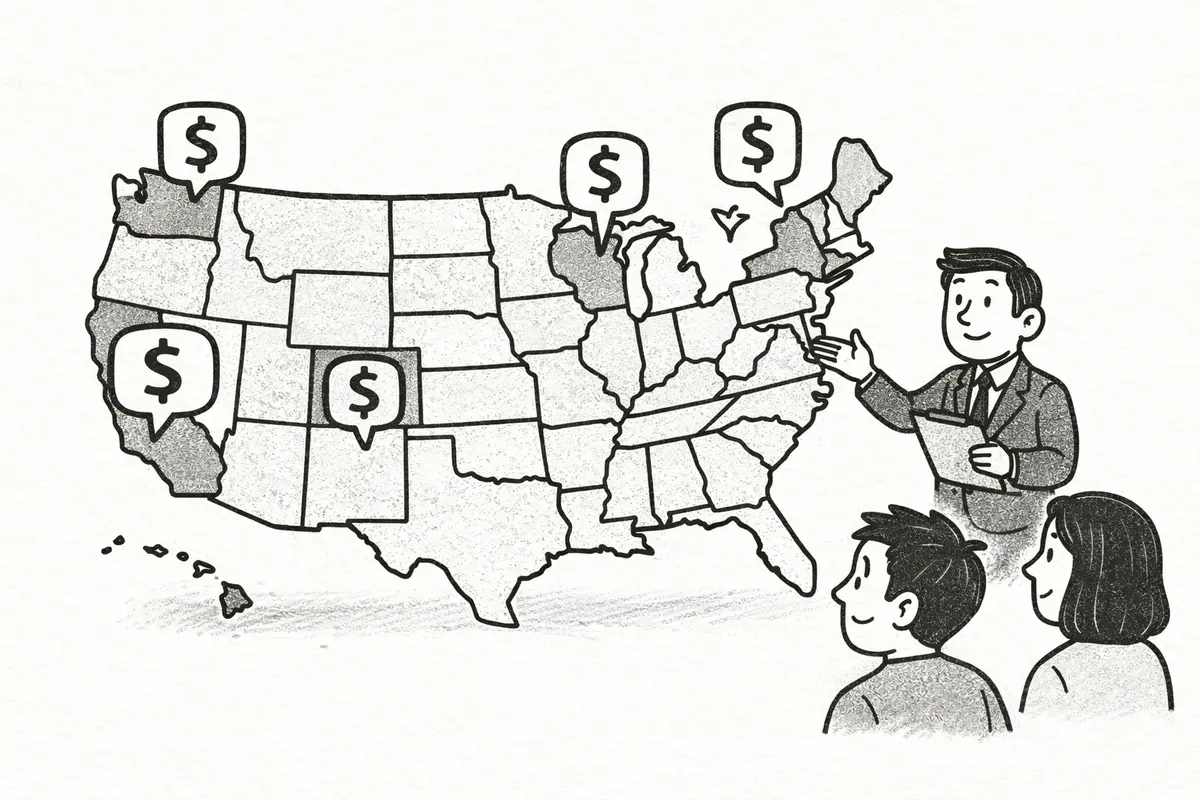
A statement such as “EWA is not a loan” is incomplete without a jurisdiction and product structure. Federal Regulation Z is only one layer; state licensing, wage-payment, electronic-transfer, privacy, unfair-practices, and payroll laws may still apply.
| Jurisdiction | Position or protection | Practical consequence |
|---|---|---|
| U.S. federal | The CFPB’s December 2025 opinion says products meeting all “Covered EWA” conditions are not credit under Regulation Z. It does not classify every noncovered product and does not interpret other laws. | Check payroll verification, payroll deduction, nonrecourse terms, collection practices, and credit-risk assessment—not just the app’s label. |
| Nevada | SB 290, effective for most purposes July 1, 2024, licenses employer-integrated and D2C providers. It requires a no-cost option and disclosures, and restricts credit checks, late fees, debt collection, and credit reporting. | Workers can check whether a provider is licensed and use the state complaint process. |
| Missouri | Section 361.749 authorizes the Division of Finance to license and regulate EWA providers. | Provider registration is a basic due-diligence check, not a guarantee that every transfer is the best financial choice. |
| Connecticut | Public Act 25-155, effective October 1, 2025, requires disclosures, wage verification, and a no-cost route; caps finance charges at $4 per transaction or $30 per month; and prohibits certain collection practices and penalties. | The state combines a free option and explicit fee limits, but repeated permitted fees can still accumulate. |
| California | The DFPI treats income-based advances, including EWA, as covered consumer-financial products subject to registration and supervision under state rules. | Employers and providers should verify current registration and disclosure requirements before launch. |
| United Kingdom | The FCA says employer salary advance schemes usually fall outside credit regulation, but warns about fee accumulation, dependency, a reduced payday balance, and limited complaint protection. | “Unregulated” does not mean “risk-free.” Employers should provide free debt-advice signposting and monitor repeat use. |
| Australia | The government’s Moneysmart guidance says pay-advance fees are usually up to 5% per use and warns about over-commitment, multiple apps, and bank charges after failed repayment. | Use one service at most, calculate the next-pay balance, and do not use one advance to repay another debt. |
A concrete employer ROI case—with the assumptions exposed
Employers should not justify EWA with a vendor’s retention percentage alone. Build a break-even model using the company’s actual headcount, turnover, replacement cost, program cost, and measured change after rollout.
Illustrative employer: 1,000 hourly workers; 60% annual turnover; $4,000 fully loaded cost per separation; $60,000 annual EWA program, integration, payroll, support, and compliance cost. The table changes only the assumed reduction in turnover.
| Turnover improvement | Avoided exits | Gross avoided cost | Annual program cost | Illustrative net value |
|---|---|---|---|---|
| 0.5 percentage point | 5 | $20,000 | $60,000 | −$40,000 |
| 1 percentage point | 10 | $40,000 | $60,000 | −$20,000 |
| 2 percentage points | 20 | $80,000 | $60,000 | +$20,000 |
| 5 percentage points | 50 | $200,000 | $60,000 | +$140,000 |
$60,000 ÷ (1,000 × $4,000) = 1.5 percentage points
This is not a promise that EWA reduces turnover by 1.5 points. It shows the result the employer must measure to break even under these assumptions. A credible test compares eligible and matched locations or uses a phased rollout, tracks at least two pay-cycle cohorts, and separates EWA’s effect from wage changes, scheduling, seasonality, and manager turnover.
Risks workers should not ignore
- Payday compression: every dollar accessed early is generally a dollar missing from the regular paycheck. If rent and debt payments cluster on payday, the shortfall can trigger another advance.
- Fee stacking: an expedited fee, subscription, optional tip, card fee, and ATM fee may apply to different steps of one transaction.
- Repeated-use dependence: frequent access can turn a one-time liquidity tool into a permanent pay-cycle shift without increasing income.
- Bank-debit risk: D2C products may debit an account based on an expected pay date. A short paycheck, delayed deposit, garnishment, or competing automatic payment can cause a shortfall.
- Estimated-pay errors: timecard corrections, overtime, tips, leave, benefits, tax withholding, and garnishments can make “available earnings” differ from final net pay.
- Privacy and data sharing: payroll, attendance, bank-account, location, and transaction data can be sensitive. Review what the provider collects, retains, and shares.
- False equivalence with a raise: faster access changes timing, not total compensation. It should not substitute for adequate wages, predictable hours, emergency savings, or affordable benefits.
Worker checklist: how to use EWA at the lowest realistic cost
- Start with the free route. If a 1–3 business-day transfer still prevents the bill or penalty, do not pay for instant delivery.
- Write down four numbers before confirming: amount received, total fee, days until payday, and expected net paycheck after the deduction.
- Annualize the habit. Multiply the full transaction cost by realistic yearly frequency. A $3.49 weekly fee is $181.48 a year.
- Compare against a specific alternative. Use EWA only when its total cost is lower than the definite overdraft, late fee, transport disruption, or other harm it prevents.
- Decline optional tips by default. A voluntary tip is still a cost. Add it to the fee when comparing options.
- Use one service, not several. Multiple apps can collectively advance more than earned pay and can schedule competing debits.
- Set a personal limit. For example, reserve EWA for essential emergencies and cap it at one use per pay cycle until a small cash buffer is built.
- Check the next pay stub. Verify hours, gross wages, taxes, benefits, garnishments, EWA amount, and final net pay. EWA changes timing; it should not erase earned wages or make withholding disappear.
- Escalate errors quickly. Save confirmation screens and pay stubs, contact payroll and the provider, and use the relevant state regulator or the CFPB complaint portal when appropriate.
Employer checklist: design EWA as a benefit, not a fee channel
- Guarantee at least one clearly visible no-cost transfer option. Consider subsidizing instant delivery for documented emergencies rather than shifting nearly all fees to workers.
- Ban default tips and dark patterns. The free option should not be slower than operationally necessary or hidden behind multiple screens.
- Cap access conservatively. Base availability on verified net accrued wages after reasonable reserves for taxes, benefits, overtime adjustments, garnishments, and prior withdrawals.
- Require nonrecourse terms. No credit check, late fee, collection lawsuit, debt sale, or credit reporting for a payroll shortfall unrelated to fraud.
- Build a correction protocol. Assign owners for timecard disputes, separation before payday, duplicate withdrawals, leave, garnishments, and failed payroll reconciliation.
- Audit the complete fee path. Include transfer, subscription, card, inactivity, ATM, replacement-card, and account-to-bank fees—not just the advertised EWA fee.
- Minimize data. Contractually restrict secondary use of payroll, attendance, banking, and behavioral data; define retention, breach notification, deletion, and vendor-subprocessor controls.
- Monitor outcomes by cohort. Track fee incidence, repeat use, complaints, payroll errors, turnover, absenteeism, and take-home-pay compression. Investigate whether high-frequency use is concentrated among lower-paid or protected groups.
- Offer the off-ramp. Pair EWA with automatic emergency savings, predictable schedules, benefits navigation, and access to independent financial counseling.
So, will every shift become payday?
The payment technology is ready. The Federal Reserve’s FedNow Service and The Clearing House’s RTP network can move funds around the clock. The harder part is producing a correct, compliant wage calculation after every shift.
That makes a hybrid future more likely than the overnight disappearance of payday: employers will retain regular payroll for final calculation and reporting, while more workers gain optional same-day access to a controlled portion of verified earnings. In sectors with clean timekeeping and high shift-worker demand, true shift pay may expand faster. For everyone else, “instant pay” will usually remain an advance in timing—not additional income.
Bottom line: EWA is most valuable as a low-frequency, low- or no-cost bridge that prevents a larger, certain expense. It becomes risky when paid withdrawals are routine, the free route is hard to find, the next paycheck is not recalculated before each use, or an employer presents faster access as a substitute for better pay and predictable work.
Frequently asked questions
Is earned wage access a payday loan?
Not necessarily. Employer-integrated EWA tied to verified accrued wages, payroll deduction, and nonrecourse terms differs materially from a payday loan. But some D2C products rely on estimated earnings and bank debits, and legal treatment varies by product and jurisdiction. Compare the actual fee, repayment method, and protections instead of relying on the label.
Does EWA change taxes or increase take-home pay?
No. It generally changes when part of pay becomes available, not the gross wages earned. The scheduled pay stub should still reconcile gross pay, taxes, benefits, garnishments, prior EWA transfers, and final net pay. Ask payroll how the employer handles corrections and withholding in its specific program.
Is a 100% or 500% APR-equivalent proof that the product is illegal?
No. The annualized calculation makes a short, flat fee comparable with other short-term cash options; it does not by itself determine whether Regulation Z applies or whether the charge violates state law. The CFPB’s December 2025 opinion excludes qualifying Covered EWA from Regulation Z’s definition of credit, while state approaches differ.
What is the safest EWA setup?
An employer-integrated program based on verified payroll data, with a prominent free transfer, conservative limits, no recourse or credit reporting, transparent reconciliation on the pay stub, strong privacy controls, and a human process for correcting payroll errors.
Sources and methodology
- Consumer Financial Protection Bureau, “Data Spotlight: Developments in the Paycheck Advance Market”, July 18, 2024.
- CFPB, “Truth in Lending (Regulation Z); Non-application to Earned Wage Access Products”, December 2025.
- Federal Reserve Bank of Kansas City, “As Earned Wage Access Grows, Oversight Tries to Catch Up”, May 15, 2024.
- U.S. Bureau of Labor Statistics, “Length of pay periods in the Current Employment Statistics survey”, August 4, 2023.
- U.S. Department of Labor, state payday requirements.
- Murillo, Vallee, and Yu, “Fintech to the (Worker) Rescue: Earned Wage Access and Employee Retention”, preliminary working paper, March 2022.
- Employee Benefit Research Institute and Fourth, “Employee Views on Earned Wage Access: A Case Study”, March 2025.
- UK Financial Conduct Authority, employer salary advance scheme statement.
- Australian Government Moneysmart, pay advance services guidance, updated June 18, 2026.
Calculations use simple arithmetic and do not include compounding. Annual weekly cost uses 52 transactions; twice-weekly cost uses 104; biweekly cost uses 26. Provider prices were checked against public provider pages on August 15, 2026 and may change. Regulatory summaries are deliberately high level; employers should obtain advice for every state and product structure in which they operate.
 About the author Matt Semon
Career Writer · AI Hiring Trends · USA I’m Matt, a writer and researcher focused on how hiring is evolving in the age of AI. I’ve been following trends in recruitment, automation, and remote work since 2018. When I’m not writing deep-dive articles for Jobicy, I’m testing AI tools to see how they impact candidates and hiring teams.