In this article
Data and hiring practices tell a different story. The post-interview thank-you email is not a mere politeness; it is a strategic tool. When executed correctly, it reinforces your value proposition, highlights your cultural alignment, and maintains your momentum in the hiring pipeline. When omitted or poorly written, it can signal a lack of interest or poor attention to detail.
This guide provides an actionable framework for executing the post-interview thank-you email, backed by recruiting data, real-world workplace norms, and concrete templates.
Do Thank-You Emails Still Matter?
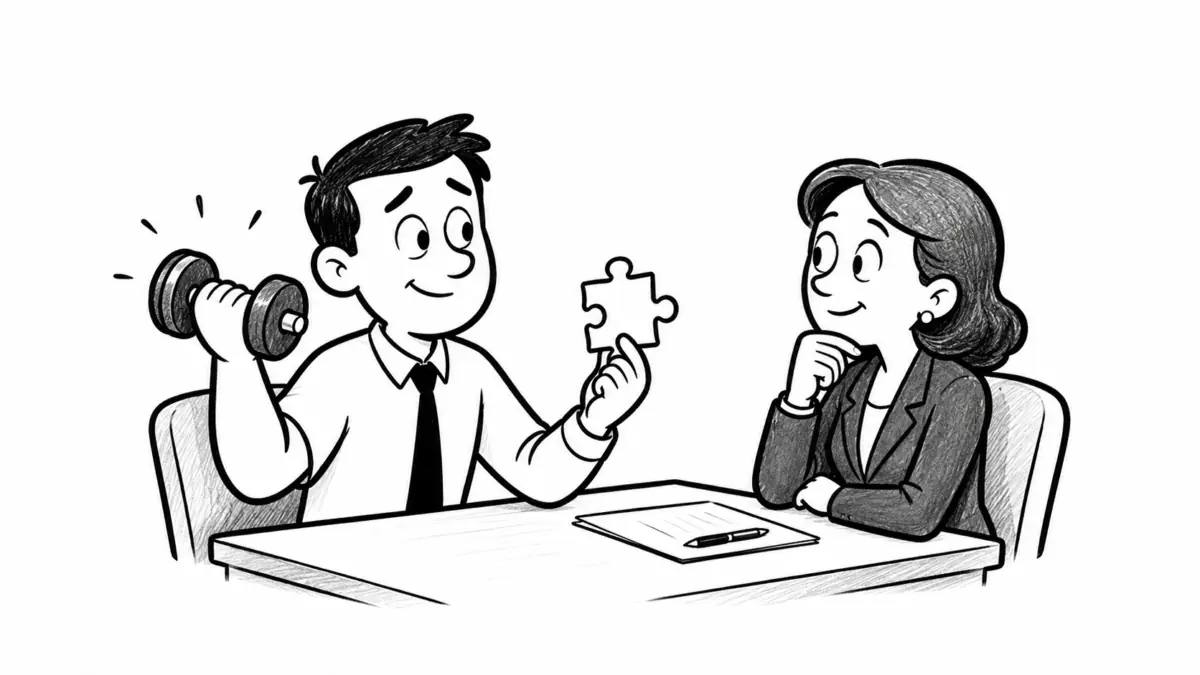
The short answer is yes. However, their purpose has evolved. Recruiters and hiring managers do not need to be thanked simply for showing up to a scheduled meeting. Instead, they value the thank-you email because it serves as a proxy for how you operate as a professional.
The Recruiter and Hiring Manager Perspective
Hiring teams use the post-interview thank-you email to evaluate several key traits:
- Communication Skills: Can you synthesize a complex conversation into a concise, impactful written message?
- Engagement and Interest: Are you genuinely interested in the role, or are you just casting a wide net? A personalized email proves you were paying attention.
- Business Etiquette: In client-facing or highly collaborative roles, your follow-up email demonstrates how you will interact with the company’s internal and external stakeholders.
Recruiter Insight: While a brilliant thank-you email rarely saves a completely unqualified candidate, a missing or poorly constructed one can easily break a tie between two equally qualified finalists. If Candidate A sends a tailored note that advances the interview conversation and Candidate B sends nothing, the offer almost always goes to Candidate A.
Strategic Benefits of the Post-Interview Email
Sending a targeted follow-up note delivers three distinct professional advantages:
1. Proof of Professionalism and Reliability
In corporate environments, prompt and professional communication is a baseline expectation. By sending a structured, error-free email within a specific timeframe, you demonstrate that you understand professional norms and can manage your own administrative pipeline.
2. Relationship and Rapport Building
Interviews are transactional by nature, but hiring decisions are deeply human. A thank-you email allows you to transition from a name on a resume to a collaborative partner. It references shared moments from the conversation, anchoring you in the interviewer’s memory.
3. Clear Differentiation from Competitors
Many candidates skip this step entirely, or they send a generic, one-sentence template. Writing a high-quality, customized response immediately positions you in the top tier of applicants. It allows you to inject one final piece of evidence as to why you are the ideal fit for the team’s current challenges.
Timing and Distribution Logic
Timing your email incorrectly can diminish its impact. Send it too quickly, and it looks automated; send it too late, and the team may have already moved on to other candidates.
The Ideal Timeline
- The 24-Hour Rule: The optimal window to send your email is between two and 24 hours after the interview concludes. This ensures the conversation is still fresh in the interviewer’s mind while demonstrating that you took time to reflect on the discussion.
- Same-Day vs. Next-Day: If your interview occurs in the morning, a late-afternoon email is appropriate. If your interview takes place in the afternoon, send the email the following morning. Avoid sending emails at midnight or over the weekend; schedule them for regular business hours (8:00 AM – 5:00 PM in the interviewer’s local time zone).
Handling the “Late Follow-Up” Edge Case
If you miss the 24-hour window due to travel, illness, or an emergency, you should still send the email. A late acknowledgment is better than none.
Acknowledge the delay briefly without making lengthy excuses:
“Please accept my delayed note, as I wanted to take some time to fully reflect on our conversation yesterday regarding the Q4 product roadmap…”
Managing Multiple Interviewers
If you were interviewed by a panel or had a series of back-to-back one-on-one sessions, you must send a separate, individualized email to each person. * Do not send one mass email to the entire group. It looks lazy and dilutes the personalization.
- Do not copy-and-paste the exact same message to everyone. Hiring managers and recruiters frequently compare notes and share your emails. If they realize you sent a boilerplate message, the positive impact is erased.
- Strategy: During the interviews, jot down one unique topic, question, or joke discussed with each specific interviewer so you can reference it in their individual note.
The 5-Step Structure of a High-Impact Thank-You Email
To write an effective follow-up, rely on a repeatable, structured framework. Every professional thank-you email should consist of these five distinct components:
1. The Subject Line
Keep it clear, concise, and searchable. Include the job title and your name.
- Example: Thank you: [Job Title] Interview – [Your Name]
2. The Greeting
Use a formal business salutation. Avoid overly casual terms like “Hey” or “Hi there.”
- Example: Dear [Interviewer Name], or Hi [Interviewer Name],
3. Statement of Appreciation
Thank them specifically for their time and for sharing insights about the role and company.
- Example: Thank you for taking the time to discuss the Senior Project Manager position with me today.
4. The Personalization Hook (The Value Add)
This is the most critical section. Reference a specific topic, problem, or project discussed during the interview. Connect that point back to your expertise or offer a brief insight on how you would approach solving it.
- Example: I particularly enjoyed our conversation regarding your team’s transition to agile methodology. Our discussion confirmed that my experience scaling agile frameworks at [Previous Company] aligns directly with your goals for the upcoming quarter.
5. Reiteration of Value, Next Steps, and Closing
Express your continued interest in the position, state that you look forward to hearing about the next steps, and close professionally.
- Example: I am highly enthusiastic about the opportunity to join [Company Name] and help drive your engineering initiatives forward. Please let me know if you need any additional information from my end.
Strong vs. Weak Wording: A Comparative Analysis
To illustrate the difference between an average follow-up and an expert-level email, review these direct comparisons:
| Component | Weak / Generic Wording | Strong / Actionable Wording | Why It Matters |
| Subject Line | Interview today | Thank you: Marketing Director Interview – Sarah Jenkins | The strong version is searchable, professional, and instantly informs the recipient who is writing and why. |
| Appreciation | Thanks for meeting with me to talk about the job. It was nice. | Thank you for taking the time to discuss the growth strategy for the enterprise sales team today. | The strong version specifies the exact context of the conversation and maintains a professional tone. |
| The Hook | I really liked hearing about your company culture and the goals you have. | Our conversation about your upcoming expansion into the EMEA market stood out to me, specifically the challenge of localization. | The weak version says nothing. The strong version proves active listening and targets a real business problem. |
| Value Proposition | I am a hard worker and I think I would do a great job at your company. | My background managing international compliance at TechCorp directly equips me to mitigate the exact regulatory risks we discussed. | The strong version shifts the focus from a subjective self-assessment to a concrete, objective solution for the employer. |
5 Field-Tested Thank-You Email Templates
Use these templates as a baseline for your follow-up strategy. Customize the bracketed text to reflect the actual details of your conversation.
1. The Formal Corporate Template
Best suited for enterprise companies, finance, legal, healthcare, or traditional corporate environments.
Subject: Thank you: [Job Title] Interview – [Your First and Last Name]
Dear [Interviewer Mr./Ms./Dr. Last Name, or First Name if they requested it],
Thank you for taking the time to speak with me today regarding the [Job Title] position at [Company Name]. I thoroughly enjoyed our conversation and appreciated the insights you shared regarding the department’s strategic priorities for the upcoming fiscal year.
Our discussion about [mention a specific business challenge or project discussed] was particularly compelling. It confirmed that the complexities your team is navigating align closely with my experience at [Previous Company], where I successfully [mention a quantifiable achievement related to the problem, e.g., reduced operational overhead by 14%].
I remain highly interested in this opportunity and am confident that my background in [core competency] will allow me to contribute immediately to your team’s success.
Please let me know if you require any further documentation or references. I look forward to hearing from you regarding the next steps in the hiring process.
Sincerely,
[Your Name]
[Your Phone Number]
[Your LinkedIn Profile URL]
2. The Startup / Tech Scale-Up Template
Best suited for fast-growing tech companies, creative agencies, or organizations with an informal, modern culture.
Subject: Great speaking with you today, [Interviewer First Name] – [Job Title] role
Hi [Interviewer First Name],
Thanks so much for hopping on the call today to chat about the [Job Title] role. I really enjoyed learning more about the fast-paced environment you are building at [Company Name].
I loved what you mentioned about [specific topic, e.g., the new product feature launch or the team’s pivot to user-centric design]. It got me thinking about [provide a brief, high-level idea or insight, e.g., how scaling automated testing could compress that timeline]. At my current company, we ran into a similar bottleneck and resolved it by [briefly mention a solution].
I am excited about the prospect of bringing my skills in [Key Skill] to a team that is moving this quickly. If you need anything else from my end, just let me know.
Best regards,
[Your Name]
[Your Phone Number]
[Your Portfolio/LinkedIn URL]
3. The Distributed / Remote Job Template
Best suited for roles that are 100% remote, emphasizing asynchronous communication skills and independent project management.
Subject: Thank you: [Job Title] Interview – [Your Name]
Hi [Interviewer First Name],
Thank you for the insightful conversation today regarding the remote [Job Title] position. I appreciated learning more about how [Company Name] fosters deep collaboration across distributed teams.
I particularly valued our discussion on [mention a specific topic, e.g., how the team manages asynchronous documentation and sprint planning]. Having worked remotely for the past [Number] years, I understand that clear documentation is the lifeblood of a successful distributed team. I am eager to bring my experience with [mention remote tools, e.g., Notion, Jira, Linear] to help optimize these processes for your group.
I am very enthusiastic about the opportunity to join [Company Name] and contribute to your ongoing projects. Please let me know if you have any follow-up questions for me.
Best,
[Your Name]
[Your Phone Number]
[Your LinkedIn Profile URL]
4. The Second / Final Round Interview Template
Best suited for later-stage interviews where you need to show a deeper strategic understanding of the business.
Subject: Following up: [Job Title] Final Interview – [Your Name]
Dear [Interviewer Name],
Thank you for welcoming me back for the [Second/Final] round of interviews for the [Job Title] position. It was excellent speaking with you again, as well as meeting the broader [department/team name] team.
Today’s deep dive into [specific strategic issue discussed, e.g., your cross-functional growth strategy] gave me a much clearer picture of where the company is heading. I was particularly interested in your goals around [specific goal]. Our conversation solidified my conviction that my experience in [specific skill, e.g., scaling enterprise accounts or managing cross-functional product launches] will allow me to step into this role and make an immediate impact.
After meeting the team and discussing the roadmap, I am more excited than ever about the prospect of joining [Company Name]. Thank you again for your time and consideration throughout this process.
Best regards,
[Your Name]
[Your Phone Number]
[Your LinkedIn Profile URL]
5. The Panel Interview Template
Use this variation for an individual on a panel. Ensure you alter the middle paragraph for each separate panelist.
Subject: Thank you: [Job Title] Interview – [Your Name]
Dear [Panelist Name],
Thank you for taking the time to speak with me today during the panel interview for the [Job Title] position. I thoroughly enjoyed discussing the role with you and the rest of the team.
I specifically wanted to thank you for your perspective on [mention a question or point this specific panelist brought up]. Your point about [summarize their point] gave me valuable insight into how [their department/role] intersects with the [Job Title] position.
I am confident that my background in [your core skill] will allow me to collaborate effectively with you and the team to achieve [Company Name]’s targets for this year.
I look forward to the next steps in the process.
Sincerely,
[Your Name]
[Your Phone Number]
[Your LinkedIn Profile URL]
Critical Mistakes to Avoid
Even an experienced professional can inadvertently damage their candidacy by making simple mistakes in a follow-up email. Guard against these common errors:
1. Sending an Obvious AI-Generated Template
Recruiters read hundreds of emails a week. They instantly recognize generic ChatGPT structural markers and overly formal, robotic language (e.g., “I hope this email finds you well,” “It was an absolute honor and privilege,” “Let us synergize”). If your email looks like a generic prompt output, the hiring manager will assume you lack original thoughts or care little about the opportunity.
- Fix: Use AI for editing and structure, but write the core insights and personal references yourself. Use your natural professional voice.
2. Excessive Length (The “Paragraph Wall”)
Your thank-you email is not a second interview or an essay. Busy hiring managers will skim or completely ignore an email that is four paragraphs long.
- Fix: Keep the total word count under 250 words. Be concise, hit your points, and sign off.
3. Spelling, Grammatical, or Formatting Typos
An email thanking an interviewer for your “excllent attention to detail” that contains spelling errors will instantly disqualify you from precise, high-stakes roles. Worse yet is misspelling the interviewer’s name or the name of the company.
- Fix: Never send the email immediately after writing it. Use a tool like Grammarly, read the text out loud to catch awkward phrasing, and double-check the spelling of every name against the company’s website or LinkedIn directory.
4. Over-Selling or Sounding Desperate
There is a fine line between enthusiasm and desperation. Avoid pleading for the job or explaining why you drastically need this career move.
- Fix: Keep the tone balanced, confident, and professional. You are an equal partner evaluating a business opportunity, not a supplicant begging for employment.
Post-Interview Thank-You Checklist
Before hitting “Send,” verify your email against this quality control checklist:
- [ ] Timing: Is it within 2 hours to 24 hours after the interview concluded?
- [ ] Recipients: Have I drafted separate, customized emails for each person on the interview loop?
- [ ] Subject Line: Does it clearly include the job title, my name, and a “Thank you” or “Following up” tag?
- [ ] Names: Are the names of the interviewers and the company spelled 100% correctly?
- [ ] The Hook: Does the email include at least one highly specific topic that was actually discussed during our conversation?
- [ ] Value Reiteration: Did I briefly explain how my specific skills address their current problems?
- [ ] Length: Is the email scannable, well-spaced, and under 250 words?
- [ ] Grammar: Have I proofread the draft line-by-line for typos and punctuation errors?
Frequently Asked Questions
Q: Should I send a thank-you email if the interview went poorly?
Yes. In fact, this is an excellent opportunity for damage control. If you fumbled a specific technical question or failed to explain a concept clearly, you can use the thank-you email to clarify your thoughts concisely.
Example: > “I appreciated our discussion on database optimization. Upon further reflection on your question regarding sharding, I wanted to clarify that in my past role, we handled this by…”
Q: Is it appropriate to send a hand-written thank-you note instead?
Rarely. In 2026, corporate hiring moves incredibly fast. Decision-makers often debrief and decide on next steps within 24 to 48 hours of completing an interview loop. Snail mail takes several days to arrive, meaning your note will likely land long after a decision has been made. Additionally, with remote and hybrid work models, your interviewer may not even be in the office to receive physical mail. Stick to email.
Q: What if I don’t have the direct email address of the interviewer?
If you interviewed through an external recruiter or an internal HR coordinator who shielded the hiring manager’s email address, you have two options:
- Ask the Coordinator: Email your point of contact and say: “I would love to send a quick thank-you note to [Hiring Manager Name]. Would you mind sharing their email address, or could I send the note to you to forward to them?”
- The Forwarding Method: Draft the note to the hiring manager and send it to the HR coordinator with a message like: “Thank you for coordinating today’s interviews. Could you please forward the attached note to [Hiring Manager Name]?”
Q: Should I connect with the interviewer on LinkedIn right after the interview?
Wait until you send the thank-you email. Sending a LinkedIn invitation immediately after an interview can feel slightly invasive to some hiring managers. It is cleaner to send your professional thank-you email first. Once the interview process has progressed or concluded, connecting on LinkedIn is a great way to maintain a long-term professional network, regardless of the immediate hiring outcome.
Final Takeaways
The post-interview thank-you email is an extension of the interview itself. It is a strategic mechanism to keep your application top-of-mind, demonstrate active listening skills, and prove that you can execute professional communications at a high level.
 About the author Barbara Best
Career Coach · Remote Work Evangelist - USA Hi, I’m Barbara. With over 12 years of experience helping people pivot careers, I specialize in remote job strategies and personal branding. After spending a decade in corporate HR, I shifted focus to coaching mid-career professionals. I believe that work should fit into your life — not the other way around.