In this article
Evidence-based career guide
UX/UI and product design can become a six-figure career without a design degree—but $100,000 is not a typical three-month outcome. Here is what current salary data, employment projections, public portfolios, training programs, and live remote vacancies actually show.
The honest answer: in three focused months, a beginner can learn the foundations, become functional in Figma, complete one or two credible case studies, and start competing for internships, apprenticeships, small freelance projects, or adjacent roles. Reaching a consistent $100K salary usually requires a stronger portfolio, commercial experience, favorable geography or industry, and often several years of progression. A degree is not universally required, but “no degree required” does not mean “no evidence of skill required.”
First, “UX/UI design” is not one magic skill
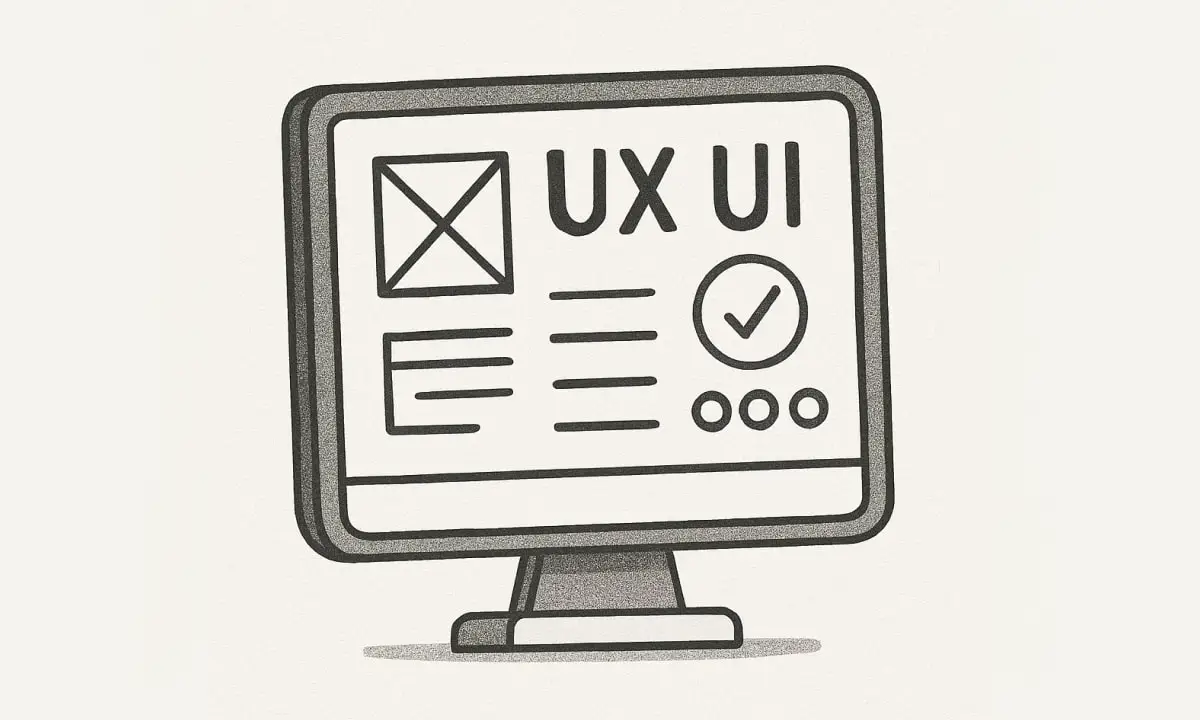
User experience design is the work of understanding users, defining problems, structuring information and flows, prototyping solutions, testing them, and improving the product. User interface design focuses more heavily on visual hierarchy, typography, color, layout, components, states, interaction details, and consistency. In many companies, one product designer is expected to do both and to collaborate with product managers, researchers, engineers, analysts, content designers, and marketers.
The U.S. Department of Labor’s O*NET profile for Web and Digital Interface Designers describes work that includes designing and testing interfaces, navigation, functionality, compatibility, usability, accessibility, and human-computer interaction. That definition is broader than making attractive screens.
| Common title | Typical emphasis | What a portfolio should prove |
|---|---|---|
| UX Designer | User flows, information architecture, prototyping, usability testing | How evidence changed your decisions—not just the final screens |
| UI Designer | Visual systems, responsive layouts, components, interaction states | Typography, spacing, accessibility, consistency, responsive behavior |
| Product Designer | End-to-end product work, business constraints, delivery with engineering | Problem framing, tradeoffs, shipped outcomes, metrics, collaboration |
| Interaction Designer | Behavior, flows, states, motion, input and feedback | Detailed prototypes and reasoning for important interactions |
| UX Researcher | Research planning, interviews, observation, testing, synthesis | Method choice, recruitment, ethics, analysis, actionable findings |
| Design Systems Designer | Reusable components, tokens, documentation, accessibility, governance | Component anatomy, variants, states, contribution model, adoption |
Junior applicants improve their odds by choosing a primary direction. “I design accessible B2B workflows” is easier to evaluate than “I do UX, UI, branding, illustration, animation, marketing, and strategy.” Breadth becomes valuable after the portfolio demonstrates depth.
Can UX/UI design really pay $100K?
Yes—but the headline needs context. The closest consistent U.S. government category is Web and Digital Interface Designers, which overlaps with many UX/UI roles but does not map perfectly to every job titled “UX Designer” or “Product Designer.” According to the U.S. Bureau of Labor Statistics, its median annual wage was $98,090 in May 2024.
U.S. median for web and digital interface designers, May 2024
Annual earnings for the lowest-paid 10% in the same occupation
Annual earnings for the highest-paid 10%
Projected employment growth for 2024–2034
These figures come from the BLS Occupational Outlook Handbook. The median is the midpoint across workers at different experience levels; it is not an entry-level salary. The large gap between the bottom and top deciles is evidence that experience, location, industry, company size, specialization, and employment type matter enormously.
| U.S. industry | Median annual wage | What it suggests |
|---|---|---|
| Finance and insurance | $121,710 | Complex, regulated products can pay well, but domain knowledge and experience are often expected. |
| Computer systems design and related services | $98,610 | Close to the national occupational median. |
| Advertising, public relations, and related services | $74,510 | A reminder that “design industry” does not automatically mean six figures. |
| Retail trade | $69,280 | Industry mix can move pay tens of thousands of dollars. |
International reference points
A U.S. salary should not be presented as a global remote salary. The UK government’s National Careers Service currently lists approximately £32,000 for starters to £65,000 for experienced UX designers. Canada’s official Job Bank wage report shows a broad national range of roughly C$20.00 to C$52.88 per hour, with regional variation.
Global employers may use location-based pay bands, hire through a local entity, use an employer of record, or engage international workers as contractors. Always compare base salary, currency, taxes, healthcare, paid leave, pension or retirement contributions, equity, equipment, and contractor expenses—not salary alone.
Salary reality check: a six-figure national median can coexist with a difficult junior market. The median worker is not a new graduate of a 12-week program. A better goal is to secure the first role that produces real users, shipped work, feedback, and measurable outcomes; those assets make later compensation growth possible.
What the hiring data actually says
BLS projects employment of web developers and digital designers to grow 7% from 2024 to 2034, compared with 3% across all occupations. It projects about 14,500 openings per year across the combined web developer and digital designer group, mostly from growth and replacement needs. For web and digital interface designers specifically, BLS projects employment to rise from about 128,900 in 2024 to 137,900 in 2034.
That is healthy growth, not proof that companies are “desperate” for every new designer. Job boards in August 2026 show many remote senior and staff openings, while true junior remote roles are materially scarcer. Remote entry-level applicants also compete across a much larger geographic pool.
Do you need a degree?
BLS says educational requirements in this occupational group range from a high school diploma to a bachelor’s degree, and that candidates may not need a specific credential if they can demonstrate ability through projects or prior work. At the same time, the current O*NET profile classifies the occupation in Job Zone Four—considerable preparation—and says most occupations in the zone require a four-year degree, although some do not.
The practical conclusion is neither “a degree is mandatory” nor “degrees do not matter.” Some employers use degree filters; others accept equivalent experience. A no-degree candidate must usually replace the missing credential signal with stronger evidence:
- two or three concise case studies that show decisions, tradeoffs, and outcomes;
- at least one project involving real stakeholders or users;
- strong visual and interaction fundamentals, not only UX vocabulary;
- clear written and verbal communication;
- basic accessibility and responsive-design competence;
- reliable collaboration, documentation, and handoff habits;
- domain knowledge from a previous career where relevant.
Your previous career can be an advantage. A nurse moving into health-tech design, an accountant targeting fintech workflows, a teacher designing learning products, or a customer-support specialist improving service tools already understands users and constraints that a generic beginner project may miss.
What can you realistically achieve in three months?
| Available time | Realistic preparation window | Likely output |
|---|---|---|
| 25–35 hours a week | 12 intensive weeks | Foundations, working Figma skills, 1–2 case studies, first applications and project outreach. Employment is possible but not guaranteed. |
| 10–15 hours a week | 6–9 months | A structured course, repeated practice, 2–3 case studies, feedback cycles, and a more credible search. |
| 5–8 hours a week | 9–18 months | Steady transition while employed, with time to secure a real stakeholder project and build a network. |
| Research-heavy or specialized path | 12–24 months | Deeper research methods, accessibility, enterprise workflows, data products, design systems, or domain expertise. |
A credible 12-week sprint
- Weeks 1–2: Learn the product-design loop. Study problem framing, user needs, flows, wireframes, prototypes, usability testing, iteration, accessibility, and delivery. Analyze one familiar product every day.
- Weeks 3–4: Build Figma fluency and visual foundations. Practice auto layout, components, variants, styles, variables, grids, type scales, responsive constraints, prototyping, annotations, and developer handoff. Recreate screens only as exercises; do not publish copies as original work.
- Weeks 5–7: Complete a research-backed project. Recruit relevant participants, obtain consent, run interviews or task-based tests, synthesize evidence, define a narrow problem, explore alternatives, prototype, and test again.
- Weeks 8–9: Add a real stakeholder project. Help a nonprofit, local business, open-source team, community group, or existing employer solve a bounded problem. Agree on scope, access, ownership, and portfolio permission in writing.
- Weeks 10–11: Package the portfolio. Create two readable case studies, a focused landing page, an about page, contact information, a résumé, and a short presentation deck. Test the portfolio on mobile and with keyboard navigation.
- Week 12: Enter the market. Request critiques, rehearse a 20-minute case-study presentation, create job alerts, contact relevant teams, and apply to a small batch of well-matched roles. Keep improving after the sprint.
Three months can make you application-ready; it does not automatically make you competitive for every junior role. If interviews do not appear after 30–50 well-targeted applications, diagnose the portfolio, positioning, eligibility, résumé, and role selection before simply sending hundreds more.
Specific courses and learning resources
Choose one structured spine, then add targeted references. Completing four overlapping beginner certificates is usually less valuable than completing one course and applying it to a real problem.
| Resource | Use it for | Time and caveat |
|---|---|---|
| Google UX Design Professional Certificate | A broad beginner sequence: research, flows, wireframes, prototypes, testing, portfolio work, and AI-assisted tasks | The current page estimates six months at 10 hours per week. No degree or prior experience is required to enroll. A certificate is not a job guarantee. |
| University of Michigan UX Research and Design | More explicit depth in qualitative research, testing, surveys, analytics, and a capstone | The platform currently estimates about two months at 10 hours per week, but strong project work usually takes longer than video completion. |
| CalArts UI/UX Design Specialization | Visual communication, information architecture, wireframes, and screen design | Useful for visual foundations; check the current tool stack because some course materials reference Adobe XD. |
| Figma Design for Beginners | Official hands-on instruction in frames, auto layout, components, prototyping, and a responsive portfolio | Free official product training. Tool proficiency alone is not UX competence. |
| Digital.gov Usability resources | Research agreements, test planning, moderation, analysis, and government-tested practices | Free. Use the sample materials to run an actual study, not only to memorize terminology. |
| W3C Web Accessibility Tutorials | Accessible images, forms, tables, page structure, carousels, and semantic design considerations | Free and authoritative. Pair it with WCAG 2.2 and test designs beyond automated contrast checks. |
| GOV.UK Design System | Evidence-based components, patterns, content, accessibility, and service design | Free. Study the rationale and research behind patterns instead of copying their visual style. |
| Apple Human Interface Guidelines and Material Design 3 | Platform conventions, components, interaction behavior, responsive patterns, and accessibility | Reference libraries, not complete career courses. Use the correct platform guidance for each project. |
Skills your curriculum should cover
- problem framing, assumptions, constraints, and success criteria;
- research questions, participant recruitment, consent, interviews, observation, and usability testing;
- synthesis without inventing personas, quotes, or findings;
- information architecture, task flows, journey maps, and content hierarchy;
- sketching, wireframing, interaction states, responsive UI, and prototyping;
- typography, color, spacing, grids, hierarchy, and component systems;
- accessibility, including keyboard flows, focus, labels, errors, contrast, zoom, motion, and assistive technology;
- product metrics, experiment literacy, and the difference between qualitative insight and statistical evidence;
- design critique, decision logs, async communication, and engineering handoff;
- responsible use of AI for exploration and prototyping without fabricating research or exposing confidential data.
Three portfolio projects that create credible evidence
1. Improve a difficult service flow
Choose a narrow task such as rescheduling a clinic appointment, requesting a permit, returning an online purchase, or comparing insurance options. Test the current experience with relevant people, identify failures, prototype alternatives, and retest the same tasks.
2. Design a domain-specific workflow
Use knowledge from your previous career. Examples: a teacher’s lesson-planning workflow, a support agent’s escalation queue, a restaurant’s inventory exception, or a nurse’s handoff checklist. Domain depth makes the work less generic.
3. Ship something for a real stakeholder
Redesign a nonprofit donation path, improve an open-source onboarding flow, or help a local service business reduce booking confusion. Measure something modest and honest: completion rate in a test, support requests, time on task, form errors, or stakeholder adoption.
What each case study should contain
- Context and your role. Name the project type, timeline, team, constraints, and exactly what you did. Label a self-initiated concept as a concept.
- A specific problem. Explain whose problem it is, why it matters, and what evidence supports it. “The app is ugly” is not a UX problem statement.
- Research and limitations. Describe participant criteria, methods, sample size, questions, consent, and what the study cannot prove. Never invent research to make a case study look complete.
- Alternatives and decisions. Show rejected options, constraints, feedback, and the reasoning behind important tradeoffs. A perfect linear process looks less believable than thoughtful iteration.
- Interaction and visual quality. Include flows, key states, errors, empty states, loading, responsive layouts, accessibility decisions, and a prototype where useful.
- Validation and outcome. Compare before and after using the same tasks or criteria. Separate measured outcomes from expected outcomes.
- Reflection. State what you would change with more time, data, technical input, or access to users.
A redesign is not automatically evidence. Replacing a famous app’s screens without access to its users, analytics, business model, or technical constraints can show visual skill, but it does not prove that the new experience performs better. Be explicit about assumptions and avoid presenting fictional metrics as results.
Portfolio minimum viable package
- a home page that says what kind of designer you are and which roles you want;
- two strong case studies rather than five shallow school assignments;
- a visible résumé, contact method, location, work authorization, and remote availability;
- readable pages on mobile, reasonable load time, keyboard access, alt text, and clear focus states;
- a 15–20 minute presentation deck based on the best case study;
- password instructions for confidential work and no unauthorized disclosure;
- no copied UI, fabricated users, fake quotes, invented metrics, or AI-generated “research.”
Real career trajectories and portfolios to study
These public examples are useful because they show different kinds of evidence. They are not templates to copy and they do not prove that everyone can reproduce the same career on the same timeline.
| Designer and trajectory | Portfolio lesson | What not to infer |
|---|---|---|
| Gloria Lo Describes herself as a self-taught product designer who learned through workshops, reading, side projects, and applying design at work. | Clear personal positioning, end-to-end product work, and a path that combines self-education with applied experience. | “Self-taught” still involved repeated practice and real work; it does not mean a few tutorials were sufficient. |
| Moritz Oesterlau Moved through structured UX training into product/UX work and later mentoring. | Case studies state project context and make the process navigable instead of dumping every artifact onto one page. | A bootcamp is one element of the trajectory, not proof of automatic placement. |
| Simon Pan Public work has included Amazon, Uber, and Google; his Uber case study is widely referenced. | Strong narrative structure, field evidence, constraints, decision-making, and measurable product impact. | A beginner without shipped data should not imitate the metrics or imply access to evidence they do not have. |
| Elizabeth Lin Progressed through product design and design education, including Khan Academy and Primer, and now builds educational products. | Role-specific positioning, strong visual voice, teaching through the portfolio, and showing how a career can expand beyond a single job title. | A distinctive visual portfolio works because it is supported by substantial product and teaching experience. |
When reviewing any portfolio, ask: Can I identify the problem in 30 seconds? Is the designer’s contribution clear? Which claims are supported by evidence? What changed after feedback? Are outcomes measured or merely predicted? Can the designer explain business and technical constraints? Those questions are more useful than copying the layout.
How to get hired for a remote UX/UI role
1. Define your eligibility before searching
“Remote” may mean remote within one U.S. state, within a country, across a region, or anywhere. Record your location, citizenship or work authorization, preferred employment type, working hours, languages, compensation floor, and whether you can legally invoice as a contractor. Do not spend hours applying to a “Remote US” role if the employer cannot hire where you live.
2. Search beyond one title
Create alerts for several combinations:
(“junior product designer” OR “associate product designer” OR “UX designer” OR “interaction designer” OR “design intern” OR “product design apprentice”) AND (remote OR distributed)
Add a domain or strength to reduce competition:
(“product designer” OR “UX designer”) AND (accessibility OR fintech OR healthcare OR B2B OR data OR design systems) AND remote
3. Match the portfolio to the vacancy
Read the responsibilities before the requirements. Identify the product type, users, expected methods, seniority, collaboration model, and business outcome. Put the most relevant case study first. If the job is for complex B2B workflows, a polished food-delivery concept should not lead the application.
4. Prove remote-working behavior
Remote teams need visible thinking. Your application and portfolio can demonstrate it through concise writing, decision logs, organized files, clear Figma naming, prototype instructions, asynchronous walkthroughs, handoff notes, accessibility annotations, and examples of resolving feedback across functions.
5. Use a focused résumé
Keep the document readable and role-specific. Translate previous work into relevant evidence without changing facts. For example, “interviewed 20 customers and redesigned the support intake process, reducing repeat contacts” is more useful than “excellent empathy.” Include portfolio URL, location, work eligibility, tools, methods, relevant domain experience, and measurable outcomes.
6. Build relationships around work, not requests
Ask designers for critique on one specific issue. Attend portfolio reviews, contribute to an open-source project, write a useful teardown, or share a tested prototype. A short note such as “Your team is hiring for billing workflows; I spent three years in accounts receivable and recently tested a self-service invoice dispute flow” gives a person a reason to respond.
7. Prepare for the actual interview loop
- Recruiter screen: explain your transition, location, eligibility, compensation range, and why this product.
- Portfolio presentation: present one case in 15–25 minutes, leaving time for questions; make your contribution and evidence explicit.
- Hiring-manager interview: discuss ambiguity, prioritization, feedback, conflict, mistakes, constraints, and impact.
- Craft or working session: clarify the problem, state assumptions, involve the interviewer, explore alternatives, and avoid racing directly to polished UI.
- Cross-functional interview: show how you work with product, engineering, research, content, support, and data.
Protect your time and work. For an unpaid take-home assignment, ask about the time limit, evaluation criteria, ownership, data, and whether the prompt is based on active company work. A reasonable hiring exercise should assess skill without extracting substantial free production work.
Remote vacancies and where to find them
The following is a market snapshot checked on August 16, 2026. Individual listings can close, change, or restrict location at any time. Verify status, employer identity, pay, classification, eligibility, and application instructions on the original page.
| Example vacancy or source | Published signal | Why it matters |
|---|---|---|
| Deep24 — Design Intern | Remote US; internship; $20–$30 per hour in the current YC listing | A real early-career entry point—and evidence that the first rung is not automatically a $100K salary. |
| Product Designer — UX/UI & Design Systems | Remote contract; listed pay band $50,000–$74,999 | Shows demand for a combined product, UI, and design-systems skill set below the six-figure headline. |
| CodePath — Senior Product Designer | Remote across specified regions; U.S. band $148,000–$190,000; 6+ years requested | Demonstrates that high remote compensation is real, but attached to senior evidence and geographic rules. |
| Rula — Senior Product Designer | Remote; $180,000–$221,000; 5+ years requested in the current listing | Another high-pay example where experience, product ownership, and domain complexity are explicit. |
Live job pages worth monitoring
- Jobicy remote jobs — filter for Web, UI & UX Design, experience level, geography, salary, and recency.
- We Work Remotely: UX/UI Design and Product Design.
- Y Combinator remote design roles — useful for startup internships, founding roles, and small teams.
- Wellfound product design jobs — check posting age and remote hiring regions carefully.
- Simplify entry-level UI/UX roles and UIUXJobsBoard internships.
- Apprenticeship.gov Job Finder — O*NET identifies approved apprenticeship titles including User Experience Designer.
Remote-job scam check: verify the opening on the employer’s own careers site; confirm that email comes from the company domain; never pay for equipment, training, gift cards, or a background check through an unknown vendor; do not deposit a check and forward money; and do not send bank, tax, or identity documents before verifying the employer and formal hiring stage.
A repeatable weekly job-search system
Quality and feedback loops matter more than a giant application count. Start with this four-week cycle and adjust based on evidence.
- Build a 30-role target list. Include 10 realistic junior or adjacent roles, 10 small-company or contract opportunities, and 10 stretch roles. Track location eligibility, pay, must-have skills, deadline, contact, and status.
- Submit 8–12 high-fit applications per week. Tailor the résumé summary and case-study order. Mention one precise match between your evidence and the role. Do not rewrite every sentence or create unpaid speculative work for each application.
- Make five useful contacts per week. Contact alumni, meetup participants, designers in your domain, recruiters, or founders. Ask a focused question, request a brief critique, or share relevant work—never a generic demand for a referral.
- Run two portfolio critiques. Ask reviewers to identify where they became confused, which claims lacked proof, and whether your contribution was clear. Observe before explaining; then revise.
- Practice one presentation and one interview. Record yourself. Remove long process narration, define unfamiliar terms, state outcomes early, and prepare answers about failure, constraints, conflict, feedback, and remote collaboration.
- Review conversion data every Friday. Track applications to screens, screens to interviews, and interviews to finals. No screens usually points to targeting, résumé, eligibility, or portfolio positioning; screens without progression often point to presentation or evidence.
Realistic career routes
Direct junior route
Training → two strong case studies → internship, apprenticeship, junior UX/UI, or associate product designer → broader product ownership → mid-level product designer.
Adjacent-role route
Customer support, QA, content, marketing, operations, implementation, or front-end work → internal UX improvements → hybrid responsibilities → formal design role.
Domain-expert route
Healthcare, finance, education, logistics, government, or another field → targeted UX training → portfolio in the same domain → product team that values subject knowledge.
Freelance-to-product route
Small paid audits and websites → repeat clients and shipped outcomes → agency or contract product work → in-house role. Treat pricing, scope, taxes, and contracts as business skills.
The six-figure milestone is most credible after the designer can independently frame ambiguous problems, work with real constraints, influence partners, ship high-quality solutions, and demonstrate impact. Some people reach that point quickly; others need several years. The timeline is not a moral judgment and cannot be guaranteed by a course provider.
Sources and data notes
- U.S. Bureau of Labor Statistics: Web Developers and Digital Designers — national pay, industry medians, education, employment, and 2024–2034 projections.
- O*NET: Web and Digital Interface Designers — duties, preparation level, and apprenticeship titles.
- UK National Careers Service: UX Designer — UK salary and entry routes.
- Government of Canada Job Bank: UX Designer Wages — national and regional wage ranges.
- Google UX Design Professional Certificate, University of Michigan UX Research and Design, and CalArts UI/UX Design — current curriculum and platform time estimates.
- Figma Design for Beginners, W3C WAI Tutorials, and Digital.gov Usability — practical tool, accessibility, and research instruction.
- Vacancy examples and pay bands were checked on August 16, 2026 on the linked Jobicy, Y Combinator, We Work Remotely, and Wellfound pages. They illustrate the market and are not salary surveys.
Career and compensation disclaimer. This article is educational information, not a promise of employment, income, immigration eligibility, or course outcomes. Salary datasets use different occupation definitions and may exclude bonuses, equity, self-employment income, or benefits. Job listings can expire or change. Training time depends on prior experience, language, accessibility needs, available hours, feedback quality, geography, and labor-market conditions. Verify course pricing, financial-aid terms, job status, work authorization, taxes, and employment classification with the original provider or a qualified professional before spending money or making a career decision.
 About the author Ines Martínez
Digital Nomad & Resume Strategist · Spain/Mexico ¡Hola! I am a digital nomad and resume nerd who’s helped over 500 professionals craft winning CVs. My background is in UX writing, but I fell in love with career coaching while traveling across Latin America. I write practical guides and templates that actually help people get hired.