In this article
Pull up a chair. Pour yourself something strong. Because I need to tell you a story about the time I was rejected for a job by a robot that, I’m convinced, was having a really, really bad day.
I’d found this gig—a “Creative Content Alchemist” or some other gloriously ridiculous title that basically meant “writer who can also make memes.” It looked fun. The company seemed cool, all bright colors and ping-pong tables in their photos. You know the type. I spent hours tailoring my resume, writing a cover letter that was basically a stand-up routine on paper, and curating a portfolio that screamed, “HIRE ME, I’M FUN AND COMPETENT!”
I hit “submit,” and instead of a confirmation page, a chat window popped up. Boop. A chipper little avatar named “Casey” wanted to ask me a few questions. Fun! Interactive! Modern!
Ten minutes later, I wanted to throw my laptop out the window.
Casey, the soulless chatbot gatekeeper, asked me a series of questions so generic they could have applied to an astronaut or a pastry chef. “Describe a time you demonstrated synergy.” “On a scale of 1-10, how would you rate your ability to innovate proactively?” I mean, seriously? What am I supposed to say? “A solid 8, Casey, but on Tuesdays, my proactivity is more of a 9.5, especially if I’ve had coffee”?
The final question was the killer. It was a timed, one-way video question. “You have 60 seconds to tell us why you’re the perfect fit for our culture. Your time starts now.” My webcam light blinked on. I froze. I looked like a deer in headlights frantically trying to summarize my entire personality and professional worth in one minute to a blank screen. I mumbled something, ran out of time, and the window closed.
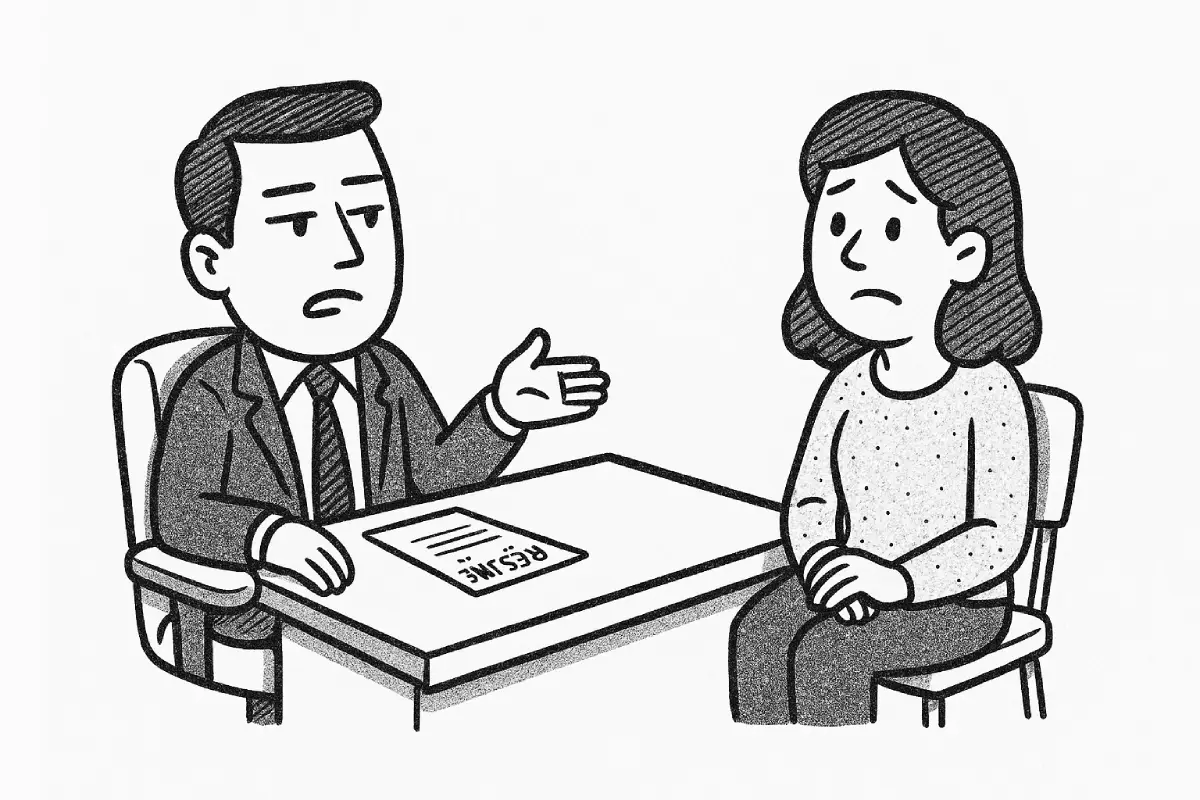
The next day, I got the email. “After careful consideration of your qualifications…” Blah, blah, blah. You know the one.
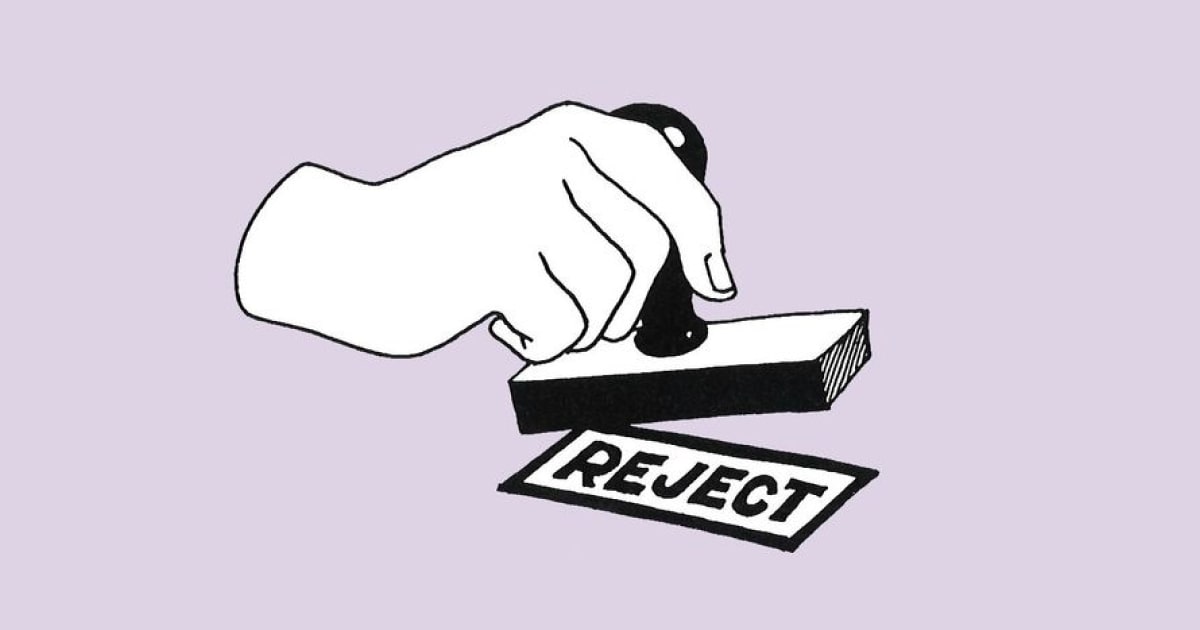
My application hadn’t been seen by a human. Not a single living, breathing person. I was filtered out, weighed, measured, and found wanting by an algorithm. I wasn’t rejected for the job. I was rejected by a script.
And that, my friends, is the cold, hard reality of looking for a job in the glorious age of AI. We’ve become so obsessed with efficiency, with data, with scaling everything, that we’ve completely forgotten the one thing that actually matters in hiring: the humans.
The Rise of the Robots and the Resume Black Hole
Look, I get it. I really do. If you’re a big company, you’re getting thousands—tens of thousands—of applications for a single opening. It’s a deluge. A tsunami of PDF-s. And some poor HR person is supposed to sift through all of that? It’s an impossible task. So, enter the Applicant Tracking System, or the ATS. The digital bouncer at the door of Club Dream Job.
It was sold to us as a miracle. A way to streamline, to organize, to find the “perfect” candidate based on keywords and qualifications. No more bias, they said! Pure meritocracy, they promised!
What we got was a black hole.
You send your resume into the void, and unless you’ve managed to perfectly guess the magic combination of keywords the machine is looking for, you’re toast. It doesn’t matter if you’re the most brilliant, creative, and passionate person for the role. If you wrote “managed a team” instead of “spearheaded cross-functional leadership,” the bot might just shrug its little robot shoulders and toss you in the digital trash bin.
It’s a system designed by engineers to solve a human problem, and it’s doing it with all the grace and nuance of a sledgehammer performing brain surgery.
It’s creating a whole generation of job seekers who are learning to write for machines instead of people. We’re all becoming experts in keyword-stuffing and resume optimization, sanitizing our beautifully unique experiences into bland, algorithm-friendly bullet points. We’re stripping away the very stories that make us interesting, the very personality that a company should be desperate to hire.
And for what? So a machine can tell a human that another human is “87% a match”? What does that even mean? Is that 87% of their skills? Their soul? Their willingness to laugh at the boss’s bad jokes?
The whole thing is just… bleak. It’s transactional. It feels less like building a team and more like ordering spare parts from a catalog. And it’s a massive problem, because it’s not just failing the candidates. It’s failing the companies, too.
Why Your Perfect Candidate Is Probably in the Bot’s Rejection Pile
Think about the best person you’ve ever worked with. The one who was a genius at their job, who made the whole team better, who came up with that one brilliant idea that changed everything.
Now, look at their resume. Would they have made it past an AI filter?
Maybe they were a history major who ended up being a rockstar software developer. Or a former bartender with the most incredible people skills you’ve ever seen, making them a god-tier project manager. These are the wild cards. The people with non-linear career paths. The ones who bring a completely different perspective to the table.
And the ATS hates them.
An algorithm is trained on past data. It looks for patterns of what “success” looked like before. It’s inherently backward-looking. It’s designed to find more of the same. More people from the same schools, with the same titles, from the same companies. It’s a fact: a major 2025 Global Talent Trends report from Mercer found that enhancing the employee experience is a top priority for the majority of HR leaders, yet the obsession with automation often gets in the way of that crucial human connection.
Innovation doesn’t come from hiring the same person over and over again. It comes from the friction of different ideas, different backgrounds, different ways of thinking. It comes from the person who raises their hand and says, “Hey, what if we tried this completely bonkers thing?”
A machine will never understand that. A machine can’t measure potential. It can’t feel a spark. It can’t have a conversation with someone, hear the passion in their voice, and think, “You know what? This person has it. I don’t know what it is, but they have it, and I need them on my team.”
And that’s the magic we’re losing. The serendipity. The beautiful, messy, unpredictable art of human connection.
Okay, So What’s the Alternative? Are We Smashing the Machines?
Alright, before you grab a pitchfork and start marching on Silicon Valley, let’s take a breath. I am not saying we should burn the whole system down and go back to the Stone Age of paper resumes and rolodexes. (Though, honestly, a little part of me is nostalgic for that.)
AI is a tool. And like any tool, it can be used for good or for, well, creating a dystopian hiring hellscape. The problem isn’t the technology itself; it’s our slavish devotion to it. It’s our willingness to outsource one of the most fundamentally human business decisions—who we choose to work with—to a machine that doesn’t understand us.
So, what does a more human-centered approach look like?
It’s actually not that complicated. It’s about remembering that there’s a person on the other side of the screen.
1. Write Job Descriptions That Sound Like They Were Written by a Human.
Please, for the love of all that is holy, can we stop with the corporate jargon? No one is a “synergy ninja” or a “growth-hacking guru.” Talk like a person. What’s the job really like? What’s a day in the life? What kind of person will thrive on your team? Be honest. Be funny. Show some personality. Attract people who are drawn to your actual culture, not a word cloud of buzzwords.
2. The Two-Minute Rule.
I dare any hiring manager to do this: actually spend two minutes—just 120 seconds—looking at every single resume that comes in. Yes, all of them. You’ll be amazed at what you find. You’ll spot the interesting hobbies, the weird side projects, the unconventional career jumps that the bot would have instantly flagged as “irrelevant.” You might just find your next superstar hiding in plain sight.
3. Bring Back the Phone Call.
Remember those? Before we scheduled six rounds of Zoom interviews, a simple 15-minute phone screen was the gold standard. It’s a low-stakes way to get a real vibe check. You can hear someone’s energy. You can ask a question that isn’t on a script. You can have a genuine, spontaneous conversation. You can learn more in a 15-minute chat than you can from a 10-page data report from an AI assessment.
4. Give. Feedback.
This is the big one. It has become perfectly acceptable to “ghost” candidates. To just never, ever reply. It’s cruel, and it’s a terrible way to do business. You don’t have to write a novel, but a simple, honest sentence or two can make all the difference. “We were really impressed with your portfolio, but we decided to go with someone who had more experience in X.” Boom. Done. The person feels respected, and your company doesn’t look like it’s run by callous robots. As this analysis from McKinsey points out, the experience a candidate has during the hiring process directly impacts a company’s reputation and ability to attract top talent in the future.
This Isn’t About Nostalgia; It’s About the Future.
Fighting for a more human-centered approach to hiring isn’t about being a Luddite. It’s not about being old-fashioned. It’s actually about being incredibly forward-thinking.
In a world where AI can do more and more of the technical, repeatable tasks, what skills are going to be most valuable? Creativity. Critical thinking. Empathy. Collaboration. The ability to connect with other humans.
And how do you find people with those skills?
You don’t find them with a keyword scanner. You find them by talking to them. By listening to their stories. By treating them like people.
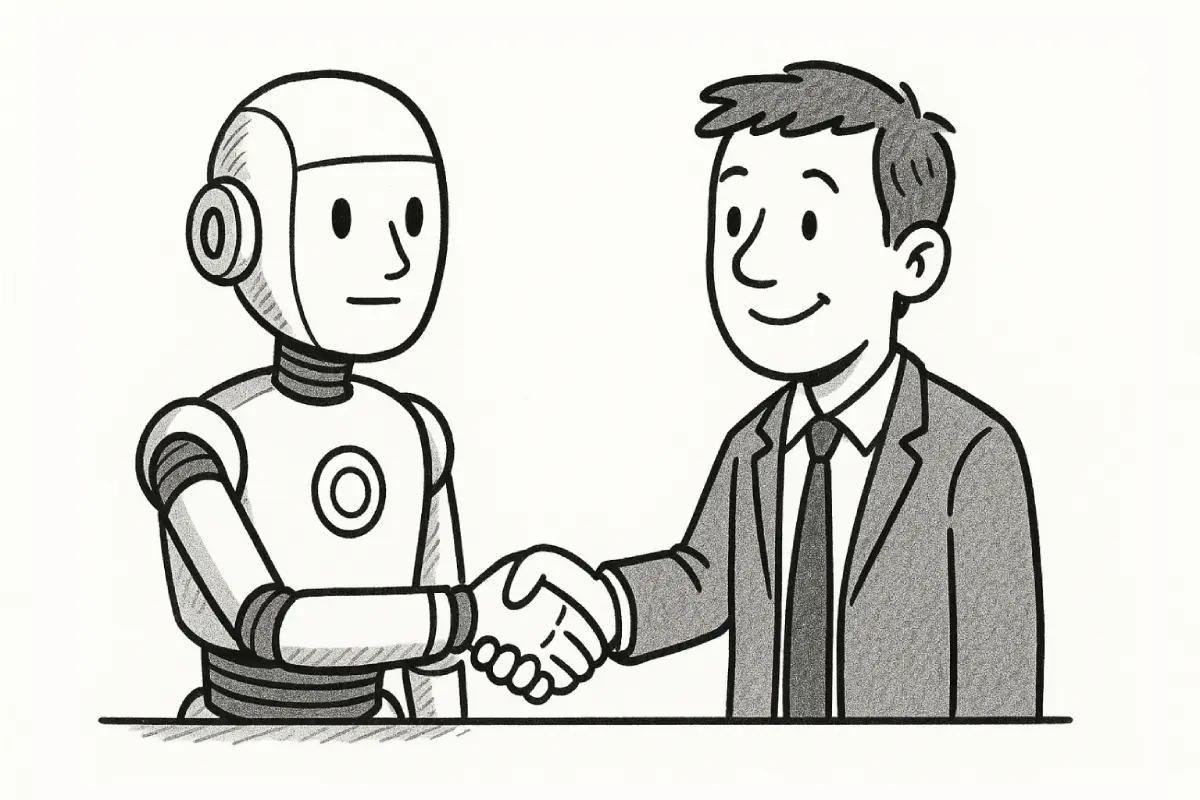
We have this incredible opportunity right now to redefine what work means. We can use technology to automate the boring stuff—the scheduling, the paperwork, the tedious administrative tasks—to free us up to do more of the human stuff. More mentoring, more creating, more connecting. This is echoed in many future of work reports, which emphasize that the integration of AI should augment human capabilities, not replace them, fostering a more collaborative and fulfilling work environment.
But that only works if we put the humans back in the driver’s seat. Especially when it comes to building our teams.
So, to every hiring manager, every CEO, every HR person out there: I’m begging you. Put down the algorithm. Step away from the dashboard. And go have a conversation. You might be surprised by who you find.
And to every job seeker who’s ever been rejected by a chatbot named “Casey”—don’t you dare let it dull your sparkle. Your weird, wonderful, un–keyword-optimizable story is your greatest asset. Somewhere out there is a team of humans who are dying to hear it.
 About the author Ines Martínez
Digital Nomad & Resume Strategist · Spain/Mexico ¡Hola! I am a digital nomad and resume nerd who’s helped over 500 professionals craft winning CVs. My background is in UX writing, but I fell in love with career coaching while traveling across Latin America. I write practical guides and templates that actually help people get hired.