In this article
Working remotely gives you back the commute and a desk nobody else touches. It can also mean you get to Thursday and realize the only thing you’ve said out loud all week is “sorry, you’re on mute.”
Gallup looked at this in 2024 and found that 25 percent of fully remote employees said they felt lonely, against 16 percent of people who worked only on-site (hybrid workers landed in between, at 21 percent). Nine points doesn’t sound dramatic on paper. Anyone who’s spent a February working from a kitchen table will tell you it feels bigger than that.
None of this means you need to go back to an office. It does mean the social part of your week has to come from somewhere else, and usually it won’t show up unless you arrange it.
Separate Work Calls From Social Calls
By six o’clock, after a day of meetings, another video window is about the last thing anyone wants to open. Which is awkward, since video is also how most of us keep up with friends who moved away.
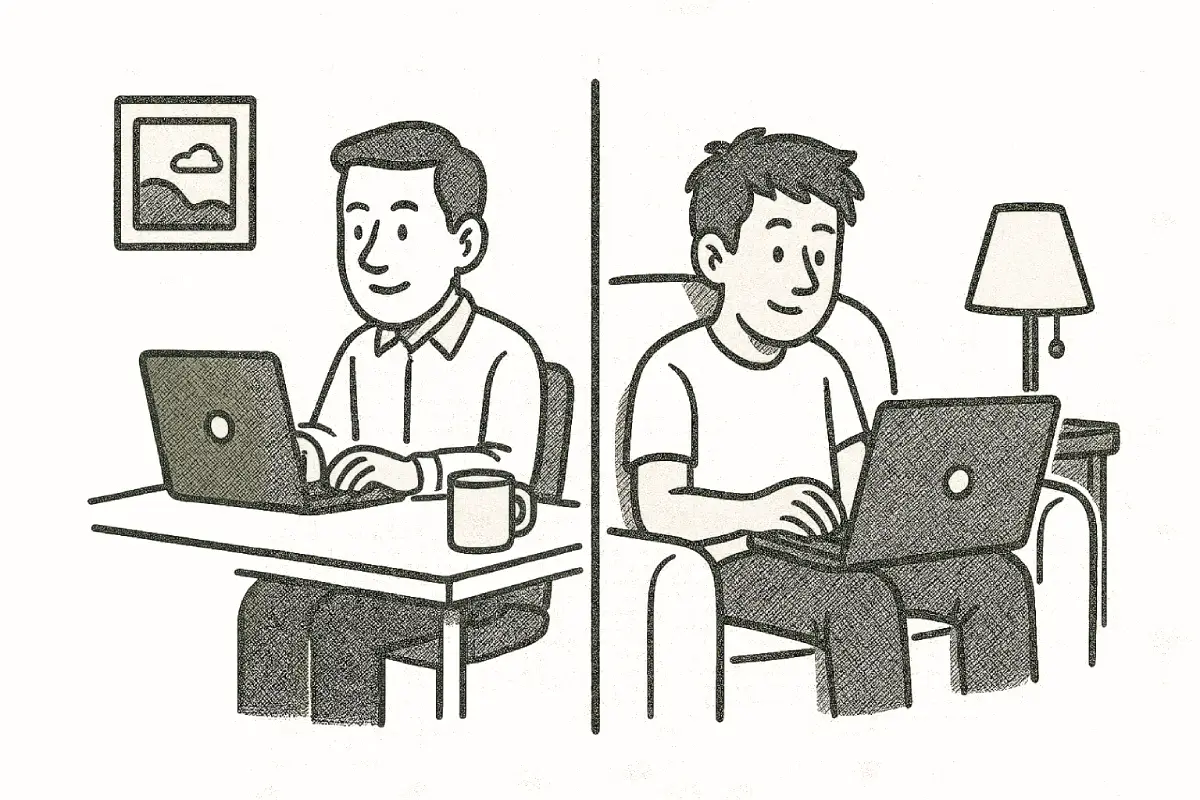
What helps is making the two kinds of calls feel nothing alike. Plenty of remote workers keep Zoom and Teams for work only and use something else entirely for online video chat with friends at night, so the call with an old college roommate doesn’t look like the Tuesday sprint review. Take it from the couch instead of the desk if you can. Different screen, different chair, different head space.
Put Something on the Calendar That Isn’t a Meeting
People who work from home tend to be very good at calendars and oddly bad at putting anything fun on them. Friendships fade because nobody picked a date, and that’s more or less the whole reason.
So pick one thing that repeats every week and treat it like a client call. Could be a Thursday catch-up with your sister, or a Sunday night co-op game with two friends from your old job. What it is matters a lot less than the fact that it keeps happening, and that you don’t bump it for a deadline that honestly could have waited until Monday.
Leave the House at Least Once a Day
Feels silly to even write this. But ask a few people who’ve worked remotely for a couple of years when they last left the house on a weekday before dinner, and watch them think about it.
Buy the coffee instead of making it. If your job allows it, take your laptop to the library a couple of mornings a week. None of that is socializing in any real sense, but a two-minute chat with the guy at the bakery counter still counts for something, and it breaks up the day in a way a second monitor never has.
Use Video When Text Isn’t Enough
Texting works for “running 10 min late.” It works a lot less well for a friend who’s having a bad month. That person probably doesn’t need another heart reaction on their message. They need to see you, even if it’s only for a quarter of an hour.
A rough rule: once a conversation has turned into three long paragraphs going back and forth, call. Work relationships have Slack keeping them on life support whether you try or not. Friends outside work don’t get that, so they need the call more.
Find People Who Work the Same Odd Hours
Remote schedules get strange. Work with a team in Singapore from Chicago and your “lunch” might be at 11 p.m., while your evening starts mid-afternoon when all your local friends are still at their jobs.
A fair number of people deal with this by finding others who keep the same weird hours, like freelancers, people on international teams, or folks who simply live somewhere else. Coworking Discord servers help, and so do language exchange groups and videochat apps where somebody is usually around at 1 a.m. when you’ve just logged off. Use some common sense about privacy early on, though. Your address and your employer can stay off the table until you actually know who you’re talking to.
Say Yes to the Optional Stuff
Virtual coffee chats and the optional Friday call are very easy to skip. Nobody tracks attendance, and your task list is long.
Which is exactly the problem. People in an office get small bits of contact all day without trying: someone at the printer, somebody asking about the weekend. Remote workers only get the moments they choose to show up for. So show up to a few, and leave after twenty minutes if you want.
Notice When It’s Getting Worse
Loneliness usually doesn’t announce itself. It looks more like staying in bed a bit longer, letting calls you used to enjoy go to voicemail, or noticing you haven’t had a real conversation since Saturday. If that sounds familiar, handle it the way you’d handle a problem at work and change one small thing this week.
Book a desk at a coworking space for a day. Call the friend you keep meaning to call. Or tell your manager you’d like more face time with the team, which is a completely normal thing to ask for. Remote work is probably here to stay, and the people who seem happiest with it mostly stopped waiting for a social life to happen by accident.