In this article
Working from home can remove a commute and give you more control over your day. It can also blur the line between work and life, make achievements less visible, and turn a spare room into a source of distraction. The right question is not whether remote work is universally better; it is whether your role, home setup, manager, and working habits make it sustainable.
Remote and hybrid work remain significant arrangements for people in remote-capable roles. In Gallup’s 2025 U.S. data, 51% of remote-capable employees worked hybrid, while fully remote and fully on-site work each accounted for smaller shares. The same research found that employees’ sense of control over their schedule was linked with whether they viewed the arrangement as fair.

6 advantages of working from home
1. No daily commute
Removing a regular commute can give you back time, lower travel costs, and make the start of the day less rushed. The benefit is most meaningful when you deliberately assign that recovered time to something useful: sleep, exercise, planning, childcare, or focused work.
Practical move: Keep a short “commute replacement” ritual. For example, take a 10-minute walk before logging on, then write the day’s three priority tasks. At the end of the day, repeat the walk or another brief transition activity before returning to home life.
2. More control over your work environment
At home, you can usually adjust noise, lighting, temperature, and desk layout more easily than in a shared office. You may also have greater flexibility in how formally you dress, although client meetings and video calls may still require a professional standard.
Control is helpful only if the setup supports concentration. A kitchen table beside household traffic may be convenient, but it is not automatically a productive workspace.
3. Greater flexibility around personal responsibilities
Remote work can make it easier to schedule a delivery, attend a school event, prepare meals, or fit in an appointment without losing time to travel. That flexibility should be planned, not assumed: many remote jobs still have fixed hours, meeting windows, response-time expectations, and coverage requirements.
Decision criterion: Before accepting a remote role, ask whether flexibility means “you choose your hours” or simply “you work from a different location.” Those are very different arrangements.
4. Potentially better routines for food, movement, and recovery
Home working can make it easier to prepare lunch, take a short walk, or step away between tasks. It does not guarantee healthier habits, though. Long stretches of sitting and back-to-back video calls can happen at home just as easily as in an office.
Try this: Put a 10-minute lunch-free walk and two five-minute movement breaks on your calendar. Treat them as appointments, not rewards you earn only after finishing everything else.
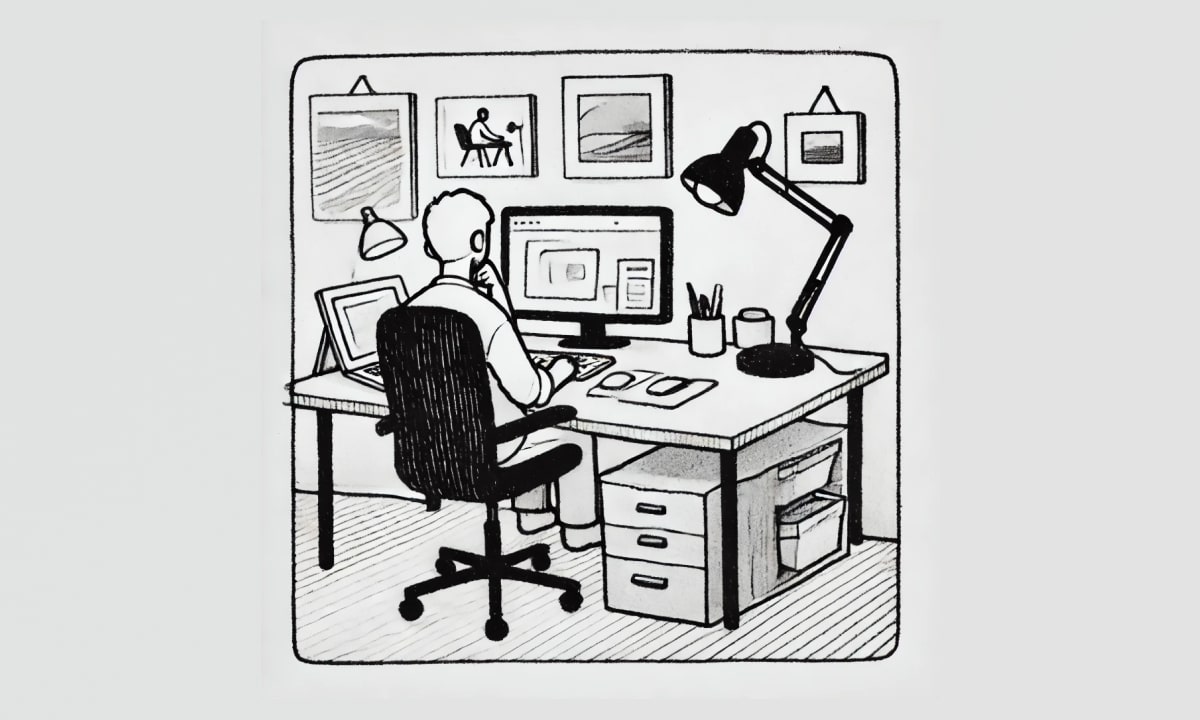
5. A workspace tailored to focused work
A dedicated home setup can be particularly useful for writing, analysis, design, coding, and other work that benefits from uninterrupted blocks of attention. It can also make confidential calls easier if you have a private room and an appropriate headset.

6. Possible tax treatment for some workers
A home office is not an automatic tax write-off. Rules depend on your country, employment status, contract, records, and the way you use the space. In the United States, the federal home-office deduction generally applies to qualifying self-employed people, not employees; qualifying business use typically must be regular and exclusive, with further rules around the principal place of business. The IRS offers both actual-expense and simplified methods.
In Canada, employees who meet the relevant conditions may be able to claim certain home-office expenses, but documentation and an employer-completed T2200 or T2200S may be required depending on the claim. In the UK, the rules changed for the tax year from April 6, 2026 to April 5, 2027; check HMRC guidance before claiming, particularly if home working is voluntary.
Important: This is general information, not tax advice. Check the tax authority for your jurisdiction and consider a qualified tax professional before filing a claim.
5 disadvantages of working from home
7. You need to manage your own motivation
At home, fewer external cues tell you when to start, focus, pause, or finish. Some people thrive with that autonomy; others need more structure than they expect. Motivation is less about willpower than designing a workable system.
Use a visible daily plan: choose one must-finish task, two important tasks, and a small set of routine tasks. Start with the must-finish item before checking low-priority messages.
8. Work can become harder to switch off
When the laptop is always nearby, it is easy to answer one more message, reopen a project after dinner, or let work spill into weekends. This can create a longer workday without making the work better.
Set a clear boundary:
- Choose a normal finish time and put it in your calendar.
- Set a status that says when you will next respond.
- At the end of the day, list the first task for tomorrow.
- Close work apps and put the laptop out of sight where possible.
If your role regularly requires work outside those hours, ask your manager to clarify the on-call expectation rather than silently extending every day.
9. Isolation and weaker informal connections
Remote work can reduce the casual conversations that help people feel part of a team and learn how decisions are made. This matters especially for new hires, early-career professionals, and workers who depend on quick collaboration.
Countermeasure: Schedule one purposeful connection each week: a project check-in, virtual coffee, peer review, or mentor conversation. Make it specific enough to be worth attending; “let’s catch up sometime” rarely survives a busy week.
10. Your work may be less visible
Being productive is not always enough when your manager cannot easily see the progress, decisions, or collaboration behind the work. Visibility should not mean being constantly online. It means making outcomes, risks, and priorities easy to understand.
Weekly update template:
Subject: Weekly update — [Name], [week of date]
- Completed: [one to three outcomes, with links or measurable results]
- Next: [the most important priorities for next week]
- Needs/risks: [decision, feedback, dependency, or deadline risk]
- Availability: [any planned time away or changed hours]
For career discussions, pair this record of results with a clear conversation about level, scope, and pay. Jobicy’s guide to asking for a salary range can help you prepare for that discussion.
11. Home distractions and technical problems can disrupt work
Deliveries, family members, pets, housework, poor internet, and inadequate equipment can interrupt deep work. Remote work also shifts some responsibility for connectivity and workspace quality onto the worker, even when an employer provides equipment or a stipend.
Communication template for a blocker:
Hi [Manager], I’m blocked on [specific issue]. I have completed [what is done]. To keep [project] on schedule, I need [decision, access, or input] by [time/date]. If that is not possible, I recommend [practical alternative].
A realistic remote-work schedule
A schedule should match your team’s time zone and meeting culture, but it should protect at least one focused block. Here is an example for a role with standard weekday availability:
| Time | Purpose |
|---|---|
| 8:30–8:45 | Review priorities, messages, and calendar; choose the day’s must-finish task. |
| 8:45–10:30 | Focused work with notifications muted where your role allows. |
| 10:30–11:00 | Messages, team coordination, and a short movement break. |
| 11:00–12:30 | Meetings or collaborative work. |
| 12:30–1:15 | Lunch away from the desk. |
| 1:15–3:00 | Project work, client work, or a second focus block. |
| 3:00–4:15 | Meetings, reviews, and replies. |
| 4:15–4:30 | Document progress, plan tomorrow’s first task, and sign off. |
Do not copy this schedule blindly. If your day is meeting-heavy, protect shorter 30- to 45-minute blocks instead. The goal is a repeatable rhythm, not an idealized calendar.
Home workspace checklist
- A chair and screen position that let you work without hunching or craning your neck.
- Reliable internet, plus a backup plan for essential meetings.
- Headphones or a headset for calls and privacy.
- Enough lighting for video calls and reading without glare.
- A power source and charging setup that does not create clutter or trip hazards.
- A place for confidential documents and a habit of locking your screen.
- Basic boundaries with people you live with: when interruptions are urgent and when they can wait.
How to agree on remote-work expectations with your manager
Use an early conversation to prevent misunderstandings about availability and performance.
Hi [Manager], to make sure I’m working effectively from home, can we align on expectations for core hours, response times, meeting attendance, and how you would like progress updates? I propose [your normal hours] as my core availability, a weekly written update, and an early message whenever a deadline or dependency is at risk. Does that fit the team’s needs?
Write down the agreement after the conversation. It gives both of you a reference point if workloads, time zones, or team practices change.
Is working from home right for you?
Working from home is most likely to suit you when you can create a dependable workspace, communicate progress clearly, protect your time off, and maintain enough contact with colleagues. If you are exploring remote opportunities, start with Jobicy’s guide to remote job boards and what to avoid, then assess each employer’s actual expectations rather than relying on the word “remote” in the job title.
 About the author Yuri Ko
Hi 👋🏼 I’m Yuri, founder of Jobicy — a global platform for remote jobs and digital careers. I’ve spent years building hiring tools, career resources, and supporting distributed teams. My mission is to make remote work accessible, transparent, and human-centered. Through my articles and products, I share honest, actionable insights to help people grow their careers and help companies succeed in the modern work environment.