In this article
Healthy ownership means taking responsibility for the next useful step, the risks, and the handoff. It does not mean accepting unlimited work or becoming a single point of failure.
What taking ownership looks like—and what it does not
| Observable ownership | What to avoid | A better boundary |
|---|---|---|
| Clarifying the problem, owner, deadline, and success measure before starting. | Quietly accepting an unclear assignment and then working late to compensate. | “I can own the first draft. Who approves the final decision, and what is the deadline?” |
| Raising a risk early with evidence and one or two options. | Waiting until a deadline has passed, or escalating every minor issue without context. | “This dependency may delay launch by three days. Option A is to narrow scope; Option B needs design support by Thursday.” |
| Documenting a repeatable process and teaching a backup. | Keeping knowledge private so that you appear indispensable. | Create a short runbook, name a backup, and test the handoff once. |
| Owning a result while naming the people who helped deliver it. | Taking credit for shared work or absorbing work outside your authority. | State your role, credit contributors, and ask for a decision when scope changes. |
The word “indispensable” can be misleading. A well-run team should be able to cover absences and transfer knowledge. Aim instead to become consistently dependable: someone who turns ambiguity into a plan, communicates trade-offs, and improves the way work moves through the team.
Do not confuse ownership with job security
Good work can strengthen your reputation and make a performance conversation easier to ground in evidence. It cannot guarantee that a role survives a restructuring, a budget cut, or a business closure. The U.S. Bureau of Labor Statistics’ Job Openings and Labor Turnover Survey (JOLTS) tracks openings, hires, quits, layoffs, and other separations each month. On the verification date, its latest available release reported a preliminary 1.1% layoffs-and-discharges rate for June 2026; that is a national aggregate, not a forecast for any employer or occupation. Review the current release rather than treating one month as a personal risk score.
For U.S. workers, some large plant closings and mass layoffs may trigger notice duties under the federal WARN Act, subject to coverage rules and exceptions. That legal framework is not a performance guarantee and state rules can differ. See the BLS JOLTS program and the U.S. Department of Labor’s WARN Act guidance for current information.
Four practical ownership scenarios
The figures below are examples, not universal targets. Start by recording a baseline, agree on the definition with your manager, and pair every speed metric with a quality check. A shorter cycle time is not an improvement if errors, customer complaints, or rework rise.
| Situation | Action to take this week | Concrete example | Evidence or KPI to review |
|---|---|---|---|
| Junior employee | Choose one recurring friction point. Review the last 10–20 examples, identify the pattern, and ask permission to test a small fix. | A support coordinator finds that account-access tickets repeatedly miss one verification step. They draft a two-minute checklist, test it for two weeks, and revise it with the team. | Reopened-ticket rate for that category; time to resolution; number of agents using the checklist; customer-quality guardrail. |
| Senior individual contributor | Turn a recurring risk into a one-page decision with options, cost, owner, and checkpoint. | An engineer maps three causes of a recurring deployment rollback and proposes two fixes. The team chooses one, assigns a backup owner, and reviews incident recurrence after 90 days. | Repeat incidents; lead time; rollback rate; documented decision and review date. |
| Manager | Make ownership visible across the team: one accountable owner per deliverable, a decision-maker, and a weekly blocker review. | A marketing manager replaces a vague campaign tracker with a brief that names the audience, approval owner, launch date, and definition of done. | On-time completion of agreed milestones; percentage of planned 1:1s held; team pulse on role clarity; avoid using a survey as a punishment tool. |
| Remote or hybrid teammate | Write an asynchronous update before a meeting: context, decision needed, options, and a default next step if nobody objects. | A product designer posts a short brief with three annotated choices, asks for comments by Wednesday, and records the final choice and rationale in the project space. | Approval rounds; handoff rework caused by missing requirements; decisions recorded with owner and date; response time across time zones. |
Use metrics that improve the work, not the appearance of activity
A useful KPI has three parts: the outcome, a quality guardrail, and a review date. Do not select a number merely because it looks ambitious in a status update.
| Weak measure | Stronger measure | Quality guardrail |
|---|---|---|
| “Answer more tickets.” | Reduce median resolution time for the named ticket type from the current baseline by 15% by the next monthly review. | Do not increase reopenings or reduce the customer-satisfaction score. |
| “Run more projects.” | Complete one approved cross-functional project this quarter with scope, owner, risks, and outcome documented. | Get a stakeholder review before calling it complete. |
| “Be a better teammate.” | Ask three collaborators a single 1–5 question about the clarity and predictability of your handoffs, then agree on one change. | Invite written examples; do not treat a small informal sample as a formal 360° performance review. |
| “Communicate more.” | Publish a weekly update containing progress, next milestone, decision needed, and risk status for one active initiative. | Keep it concise; an update that nobody can act on is not useful communication. |
Google’s research on effective teams identifies dependability and structure and clarity among the dynamics it studied. That does not prove that any individual KPI will cause a promotion, but it supports a practical habit: make commitments, roles, and plans explicit rather than relying on impressions. Read the methodology and limits in Google’s overview of the five team dynamics.
Three scripts to turn intent into an agreement
Email: offer to improve a recurring problem
Subject: Proposal to reduce [specific friction] in [process]
I noticed that [evidence: for example, 7 of the last 15 requests] were delayed at [step]. I would like to test [small, reversible change] for [two weeks]. Success would mean [outcome and baseline/target] without worsening [quality guardrail]. I will document the result and bring it to our [date] check-in. Is there a constraint, owner, or approval step I should include before I start?
One-page project proposal
| Field | What to write |
|---|---|
| Problem | A factual description of the friction, its affected users, and the evidence. |
| Outcome | One measurable result, baseline, target, and review date. |
| Scope | What you will do, what you will not do, and the decision you need. |
| Plan | Milestones, contributors, dependencies, and the accountable owner. |
| Risks | The two most likely failure points, early signals, and escalation path. |
| Handoff | Where the documentation lives, who is trained, and how success will be reviewed. |
1:1 conversation: ask for useful feedback
“I want to take ownership of [outcome], not just complete tasks. I propose to measure success by [metric] and protect quality with [guardrail]. What would make this genuinely useful to the team? What decision rights do I have, what should I escalate, and when should we review the result?”
For an informal collaborator check, ask: “On a scale of 1–5, how clear and predictable was my handoff on [project]? What is one change that would make the next handoff easier?” Tell respondents how you will use their feedback and do not promise confidentiality you cannot provide.
A 30/60/90-day ownership plan
| Period | Focus | Actions | Evidence to bring to a check-in |
|---|---|---|---|
| Days 1–30: learn and baseline | Understand one workflow before trying to optimize it. | Meet the upstream and downstream owners; collect 10–20 recent examples; write the current process and one small proposed experiment. | A one-page process map, agreed definition of the metric, risks, and approval to test. |
| Days 31–60: deliver a bounded improvement | Own a reversible change with a clear scope. | Run the experiment; send concise weekly updates; escalate a material blocker early; keep a decision log. | Baseline versus current result, quality guardrail, stakeholder feedback, and the next decision required. |
| Days 61–90: make it repeatable | Turn the result into a team capability. | Document the playbook; train a backup; propose whether to scale, stop, or revise the change; ask for feedback on your ownership and communication. | A short retrospective, adopted documentation, named backup, and an agreed next-quarter priority. |
What to do next week
- Pick one repeated delay, error, confusing handoff, or customer pain point—not an entire department-wide problem.
- Collect enough examples to describe the pattern without blaming a person.
- Ask the responsible manager for the outcome, guardrail, decision rights, and review date.
- Propose a small test in writing, including what you will stop or defer to make room for it.
- Publish a short update after the first week: what happened, what changed, what decision is needed next.
Remote and hybrid teams: make the work legible
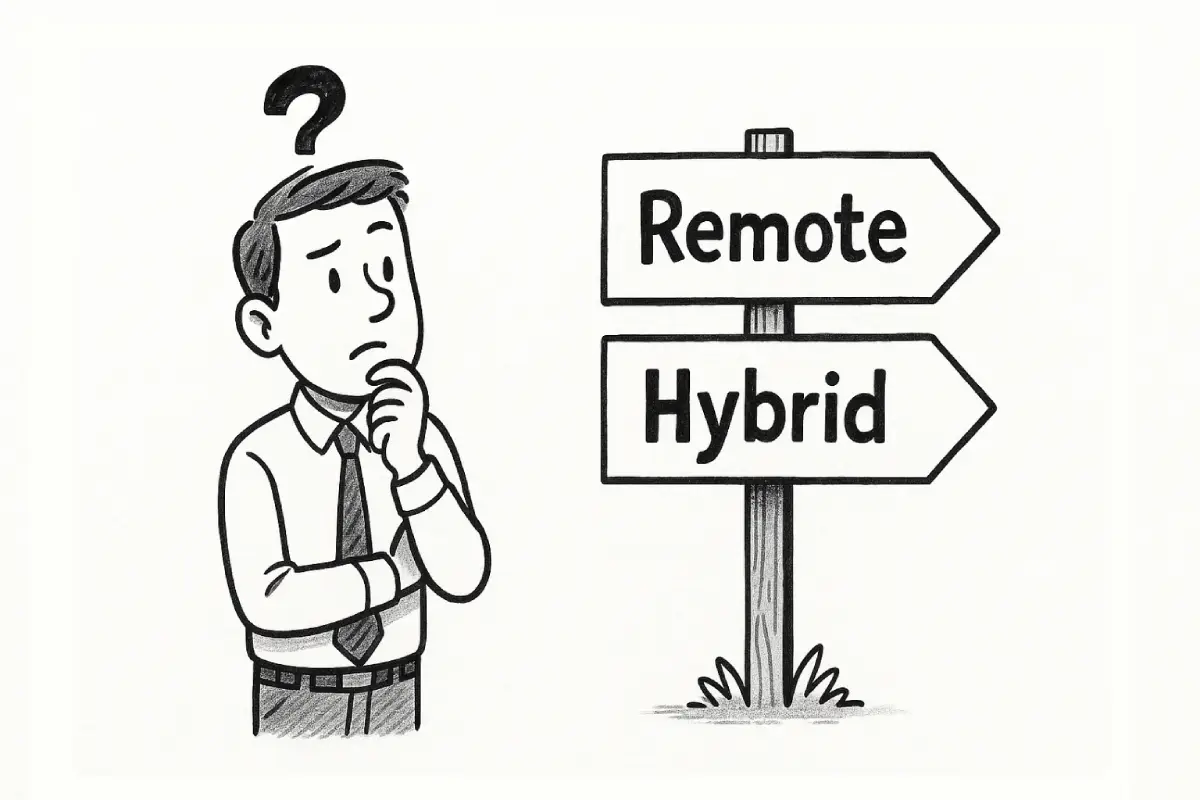
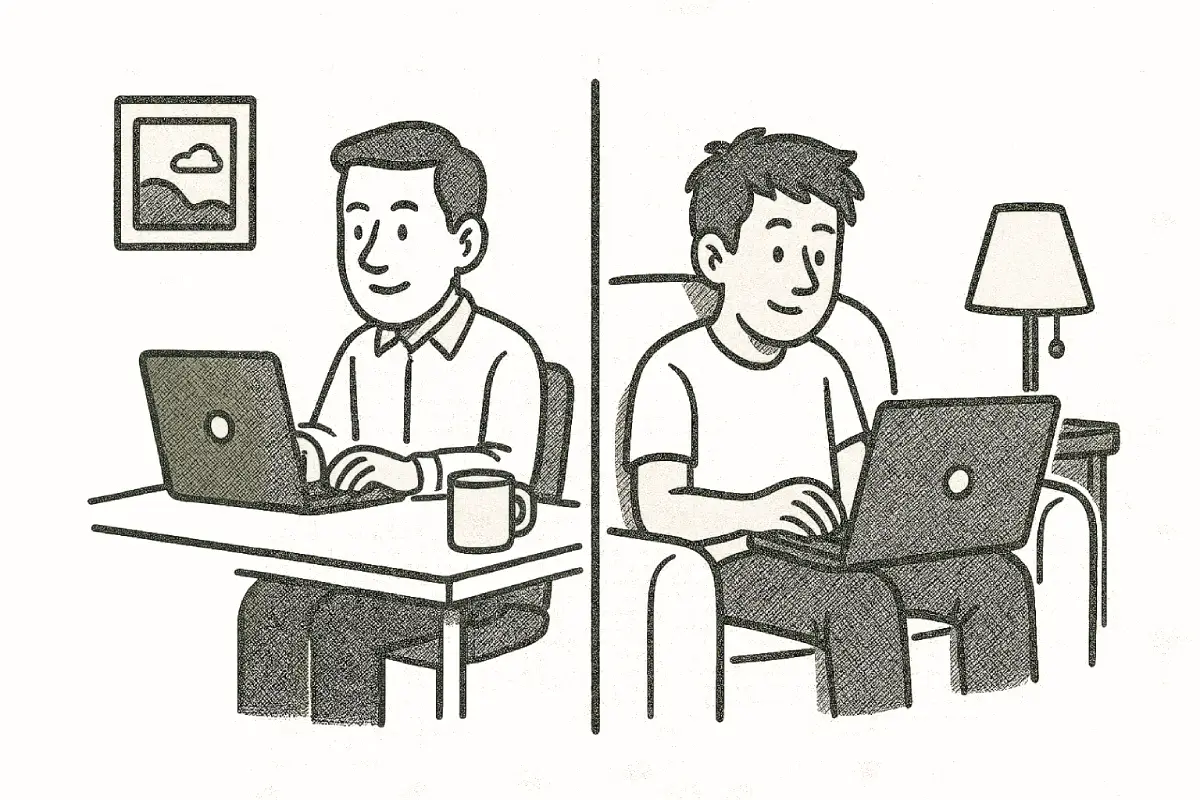
In distributed work, ownership can disappear when decisions live only in calls or private messages. Use a shared project space for the brief, owners, deadline, decision, and handoff. State the response window rather than implying that colleagues must be online at all hours. For practical meeting and asynchronous-work patterns, see Jobicy’s guide to managing remote teams across time zones. If your work arrangement crosses borders, remember that tax, employment, and compliance obligations may change; Jobicy’s remote-work legal guide for employers explains why assumptions need checking.
When to pause or escalate
Ownership is not a reason to conceal a safety issue, data-security risk, harassment concern, legal question, or serious conflict of interest. Follow the relevant internal procedure and escalate promptly to the appropriate manager, HR, security, legal, compliance, or safety contact. If a request requires sustained overtime, changes your role materially, or shifts accountability without authority, ask for workload priorities and written clarification rather than silently absorbing the risk.
Sources and editorial note
- U.S. Bureau of Labor Statistics, Job Openings and Labor Turnover Survey (JOLTS) — monthly national and state estimates of job openings, hires, and separations; figures can be revised.
- U.S. Department of Labor, WARN Act resources — coverage and notice information for qualifying U.S. employment actions.
- Google, team dynamics: five keys to building effective teams — an account of Google’s research and its specific context, not a universal performance formula.
Editorial note: The scenarios, targets, and scripts in this article are practical editorial guidance. They are not research findings, legal advice, a promise of promotion, or a substitute for your employer’s policies. Adapt them to your role, workload, jurisdiction, and manager’s expectations.
 About the author Natalya Luft
Remote Culture Consultant · Former HR Director I’m Natalya -- originally from Kyiv, now based in NYC. I’ve spent 15+ years building and managing distributed teams across Europe. I write about culture, communication, and leadership in remote-first organizations. I believe remote work is about trust, not tools.