In this article
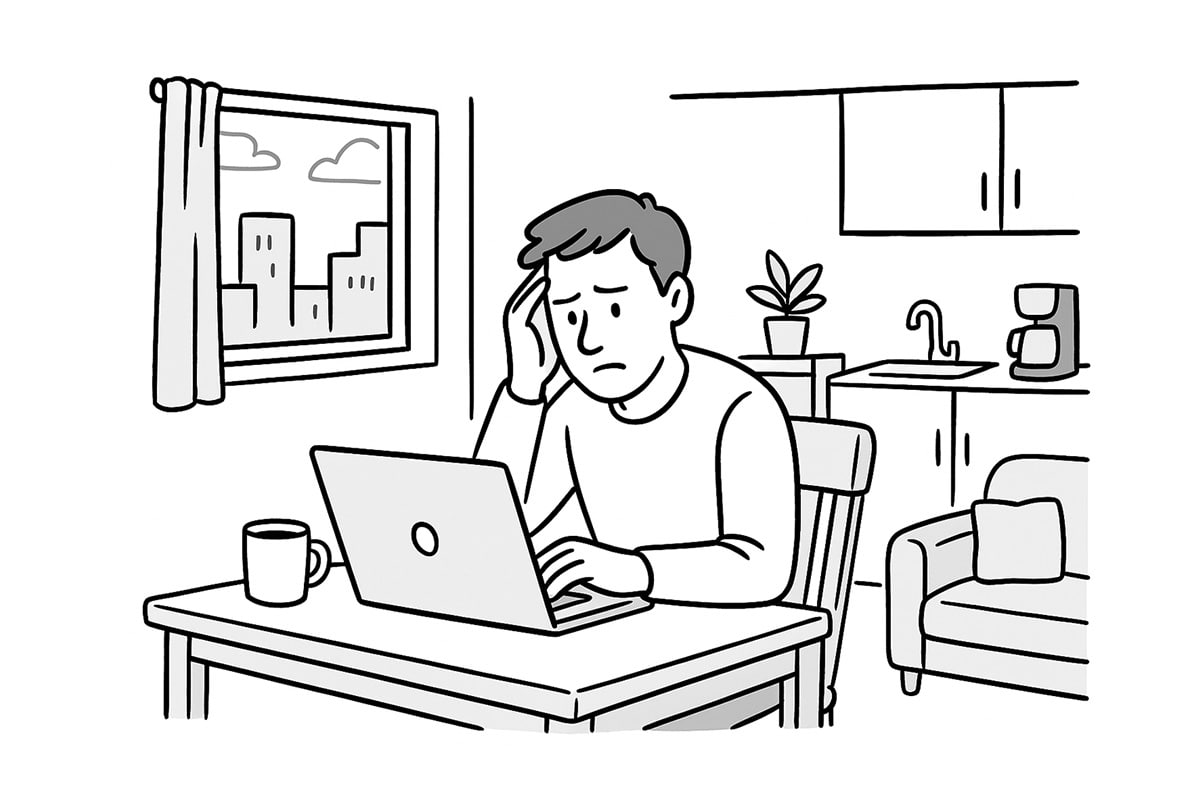
The severance does not begin with the paperwork. It does not begin with the sterile, heavily rehearsed cadence of the human resources representative, whose voice seems to arrive through a thick pane of frosted glass. No, the true severance begins in the body. It begins with a sudden, microscopic shift in the air pressure of your bedroom. It is the click of the laptop shutting down. The immediate, deafening rush of a Tuesday morning that has suddenly been stripped of its scaffolding.
Listen to it. The silence in the room is not empty; it is a heavy, suffocating velvet. It tastes of copper, of adrenaline cooling too quickly in the veins, of stale coffee left cooling in a ceramic mug that still bears the logo of a company you no longer belong to.
For years, your mind was a tightly wound spool of thread. Every morning, you pulled the thread taut, weaving it into the grand, relentless tapestry of productivity, deliverables, and calendar invites. Now, the thread has snapped. And you are left holding the frayed, useless end, watching it curl into the palm of your hand like a dying insect.
This is not a guide on how to update your resume. I care nothing for your LinkedIn summary right now, and neither should you. This is an exploration of the spaces between the breaths. This is about the architecture of the sudden void, and how we must learn to walk through its echoing halls without losing our minds to the ghosts.
The Geometry of the Sudden Silence
I remember the morning after it happened to me. The alarm did not ring. The sunlight, usually a signal to rush, to consume, to produce, was instead pouring through the blinds in thick, lazy columns of dust motes. I lay there, watching the dust dance, feeling a profound, terrifying weightlessness. It is the sensation of stepping off a stair that isn’t there.
When the machinery of your daily life is abruptly unplugged, the mind does not simply power down. It continues to whir, frantically spinning its gears in the dark. We call this the phantom limb syndrome of the modern worker.
You reach for the phone to check the morning slack messages, your thumb tracing the ghost of an icon that you deleted the night before. You feel the phantom vibration in your pocket, the illusory ping of an urgent request. Your nervous system is still responding to the metronome of a music that has stopped playing. It is a dissonance that rattles the teeth.
“We pour our liquid selves into the rigid vessels of our titles. When the vessel is shattered, we do not immediately become a puddle on the floor; for a agonizing moment, we retain the shape of the jar, held together by nothing but the surface tension of memory.”
The disorientation is absolute. According to recent 2025-2026 insights on global worker wellbeing by Gallup, the psychological dislocation following unexpected unemployment triggers neurological responses virtually indistinguishable from physical grief. It is not just the loss of income; it is the sudden, violent erasure of context. Who are you, if you are not the person answering those emails? Who are you in the dark?
The Taste of Phantom Ash
We must speak of the bitterness. It coats the back of the throat. It is the taste of phantom ash—the remnants of loyalty burned down to the wick.
You gave them your evenings. You gave them the fragile, lavender hours of your mornings, sacrificing the slow ritual of watching the dawn break in favor of a fluorescent commute. You gave them the sharpest, brightest edges of your intellect. And in return, a fifteen-minute video call. A screen going black. A deactivated badge.
There is a specific cruelty to the digital dismissal. In the past, to lose a livelihood was a physical event. You packed a physical box. You walked out of physical doors, feeling the cold wind on your face, carrying the weight of your possessions. Today, the erasure is frictionless. One moment you are integrated into the nervous system of an organization; the next, you are simply logged out. The servers do not weep for you. The cloud forgets your name in milliseconds.
Gathering the Shards (The Mourning)
Society—loud, impatient, terrified of stillness—will demand that you immediately pivot. The internet is thick with the toxic positivity of the “next chapter.” They will tell you that this is not a closed door, but an open window. They will tell you to “bounce back,” to leverage your network, to rebrand.
Do not listen to them. Shut the window. Lock the door. Draw the curtains.
Before you can reset your mind, you must allow it to shatter completely. You cannot rebuild a house while the foundations are still on fire. You must sit in the ash. You must allow yourself the profound, ugly, necessary indulgence of mourning.
Mourn the routine. Mourn the annoying coworker whose predictability secretly anchored you. Mourn the specific angle of the afternoon sun hitting your desk. Mourn the version of yourself that existed in that ecosystem. That self is dead. Bury it with dignity.
I recall sitting on my kitchen floor, surrounded by the hum of the refrigerator, crying not because I loved the job, but because I had lost the rhythm. Humans are rhythmic creatures. We crave the steady heartbeat of the expected. When the beat stops, the silence is a physical blow.
Letting the Soil Lie Fallow
Think of the earth in winter.
When the frost sets in, the trees do not panic. They do not frantically attempt to force green leaves through the ice. They draw their sap deep down into their roots. They embrace the austerity of the cold. They sleep. They allow the soil to lie fallow.
We have forgotten the absolute necessity of the fallow period. We have been conditioned to believe that if we are not producing, we are dying. But in agricultural terms, a field that is never left to rest will eventually turn to dust. It will become barren, incapable of sustaining life.
You have been forced into winter. It feels like a punishment, but it is, in fact, a brutal grace. Your mind, overheated by the constant friction of performance, needs the frost. It needs the quiet. It needs to stop producing fruit for a season.
Data from the Pew Research Center’s latest explorations of employment and life satisfaction increasingly suggests that workers who take deliberate, un-optimized pauses between roles—who resist the urge to immediately re-enter the slipstream—return with a restored cognitive plasticity. But statistics are cold comfort. You must feel it in the bone.
You must learn to look at a Tuesday afternoon and see not a void to be filled with “networking,” but an empty canvas. A terrifying, beautiful expanse of nothingness.
The Alchemy of Stillness
How, then, do we reset? How do we begin the alchemy of turning this leaden grief into something breathable?
We do it by returning to the body. The corporate world is a realm of disembodied intellect; you exist merely as a brain attached to a keyboard, floating in a digital ether. To heal, you must crash-land back into your own flesh.
You must re-tune your sensory apparatus, which has been dulled by years of artificial lighting and recycled air.
Go outside. I do not mean a brisk, purposeful walk to “clear your head.” I mean a slow, aimless wandering. Touch the rough, damp bark of an oak tree. It has stood there for a hundred years, indifferent to market fluctuations and quarterly earnings. Feel the cold, indifferent solidity of it.
Listen to the rain. Not as background noise to a conference call, but as a symphony in itself. Notice how the sound changes depending on whether it is hitting asphalt, leaves, or the tin roof of a bus shelter. Smell the sharp, metallic tang of the petrichor. Let the sensory details flood you, washing away the sticky residue of corporate jargon.
Make coffee. But do not make it to fuel a task. Make it as a sacrament. Grind the beans slowly, breathing in the dark, smoky aroma. Watch the water bloom the grounds, rising in a dark, rich crust. Feel the warmth of the mug seeping into your palms. Drink it in silence, watching the steam curl into the air and disappear.
This is the alchemy. You are proving to your nervous system, moment by moment, breath by breath, that you exist outside the matrix. You are tethering yourself to the tangible, the physical, the real.
The Thread of the Un-Tethered Self
As the days blur together, a subtle shift begins. The panic recedes, leaving behind a clear, cool pool of introspection.
You begin to notice the layers of identity you have acquired. For years, when someone asked you who you were, you responded with a noun. An engineer. A marketer. A director. A manager. You handed them a business card, a neat little rectangle that contained the entirety of your societal worth.
Now, your pockets are empty. The business card is a relic.
Who are you?
“I stripped away the title, and underneath I found a stranger. She was quieter than I remembered. She liked the smell of damp earth and the sound of cellos, and she had no interest in ‘synergy’.”
You are the person who laughs too loudly at bad jokes. You are the person who knows exactly how to slice a peach so it doesn’t bruise. You are a collection of memories, a constellation of small kindnesses, a repository of fears and unspoken dreams. You are the sum of your scars and the shape of your shadows.
You are beginning to re-discover the un-tethered self. This is a profound, somewhat terrifying freedom. The World Economic Forum’s recent 2026 workforce reports speak of a macro-shift—a movement away from career-centric identity toward a more holistic, integrated life view. But the macro-shift begins here, in the quiet rebellion of your own mind. It begins when you decide that your worth is not tied to your utility.
You are valuable simply because you breathe. Because you exist. Because you are a unique lens through which the universe is observing itself.
Reweaving the Palimpsest
The mind is a palimpsest—an ancient manuscript page from which the text has been scraped or washed off so that the page can be reused for another document.
The layoff was the violent scraping away of the old text. It hurt. It left scratches on the parchment. But now, the page is blank again. The ink is waiting in the well.
Do not rush to fill it with the same tight, frantic script. Let the ink flow differently this time.
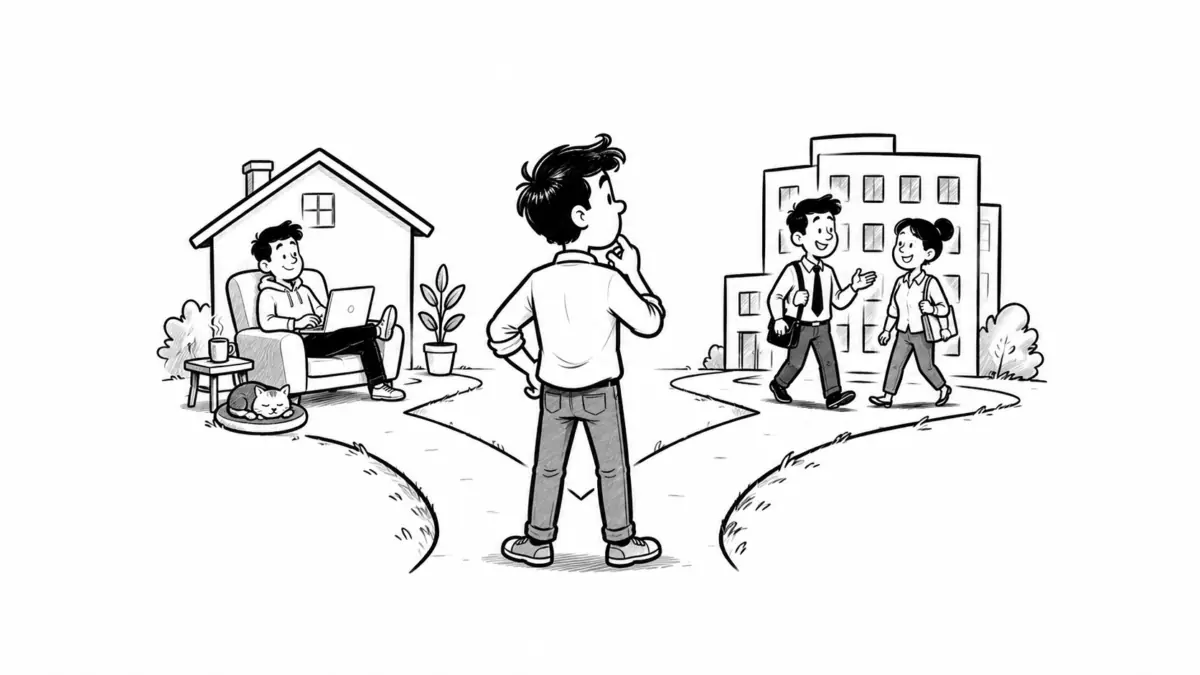
When you finally begin to think about what comes next—and you will, eventually, when the winter thaws and the sap begins to rise—do not begin with “What jobs are out there?” Begin with “What texture do I want my days to have?”
Do you want the frantic staccato of a startup? Do you want the slow, deep hum of a quiet craft? Do you want days that smell like sawdust, or days that taste like espresso and ambition?
You are no longer a cog seeking a machine. You are an architect standing before an empty lot.
The Art of the Slow Return
The return to the “world of the employed” should not be a desperate scramble. It should be a deliberate, carefully choreographed dance.
When you sit down to look at job descriptions, do not read them with the hungry, panicked eyes of someone who needs to be rescued. Read them with the cool, discerning gaze of someone who is deciding whether to invite a stranger into their home.
You have tasted the profound quiet. You have survived the sudden silence. You have sat in the ash and found that you did not disappear. This gives you a quiet, dangerous power.
You are no longer afraid of the void, because you have learned how to furnish it. You have learned how to breathe in the empty room.
The Doorway Half-Open
There is no definitive conclusion to this process. There is no morning where you wake up and a golden trumpet announces that you are “reset.”
Instead, there is a gradual softening. The phantom limb stops aching. The metallic taste leaves your mouth, replaced by the clean, cool taste of water.
One evening, you will be standing by the window, watching the lavender bruise of the twilight spreading across the sky. The streetlights will flicker on, casting long, melancholy shadows across the pavement. And you will realize, with a sudden, quiet astonishment, that you haven’t thought about them all day.
You haven’t thought about the deactivated badge, or the final zoom call, or the phantom emails.
You are just here. Breathing. Watching the night fall.
The heavy, suffocating velvet of the silence has transformed into a soft, protective cloak. The pendulum of the clock begins to swing again. Tick. Tock. But it is a different rhythm now. It is not the frenetic pace of a dying machine. It is the slow, steady beat of your own heart.
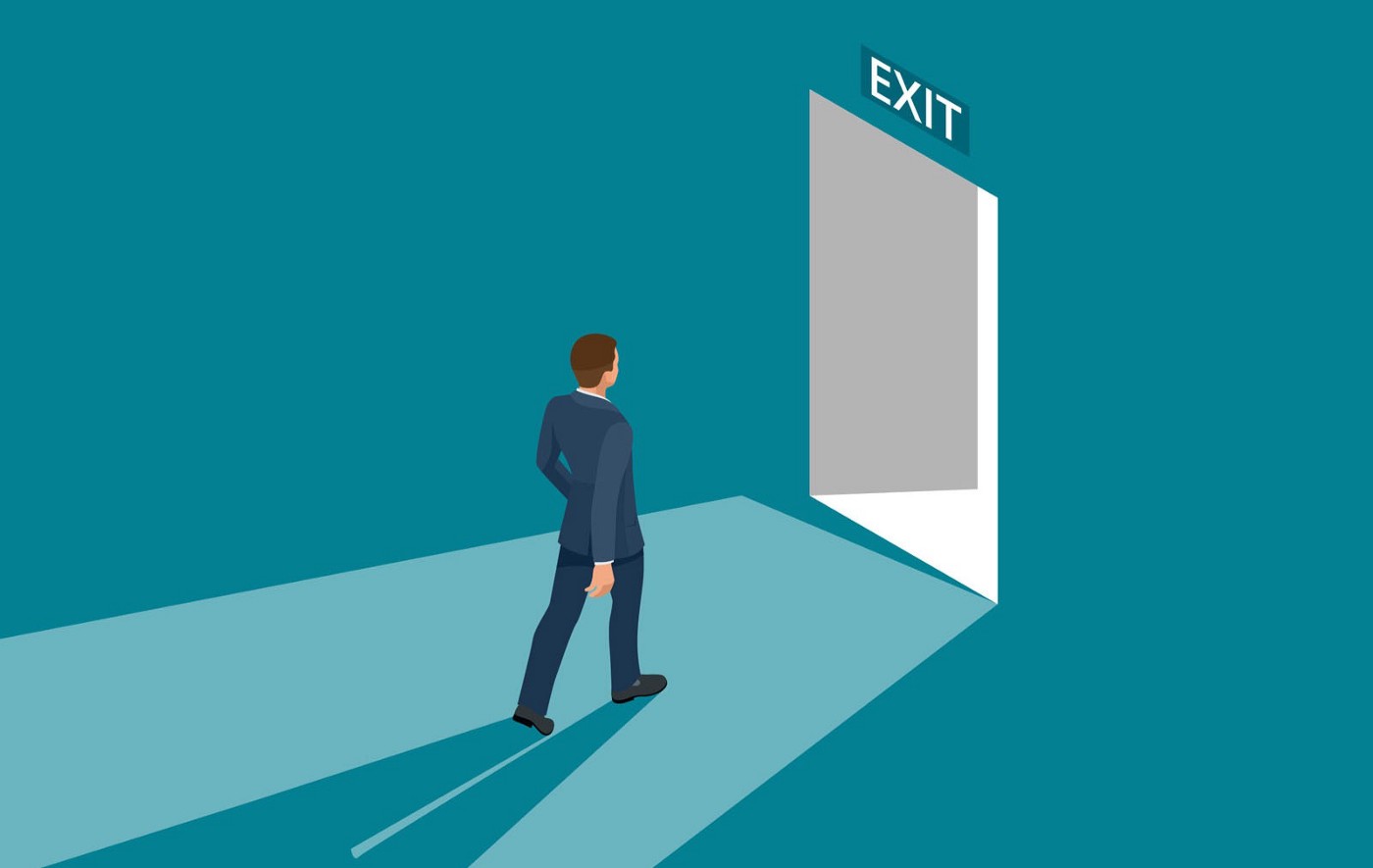
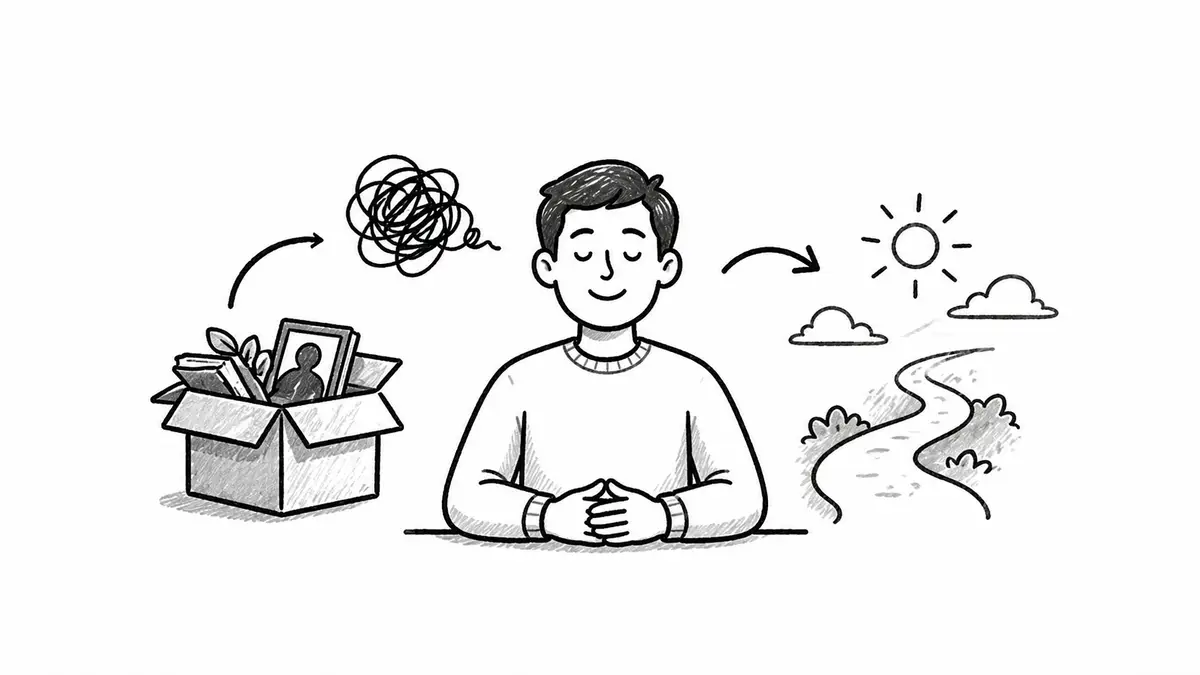
The door is half-open. The mist is clearing. And when you are ready, you will step through. Not because you have to. But because the morning is beautiful, and you are finally curious to see where the road leads.
 About the author Barbara Best
Career Coach · Remote Work Evangelist - USA Hi, I’m Barbara. With over 12 years of experience helping people pivot careers, I specialize in remote job strategies and personal branding. After spending a decade in corporate HR, I shifted focus to coaching mid-career professionals. I believe that work should fit into your life — not the other way around.