In this article
It usually starts with the Sunday Scaries. But not the normal kind. Not the “ugh, I have to wake up early tomorrow” kind.
I’m talking about the bone-deep, stomach-churning dread that hits around 4:00 PM on a Sunday, where a teacher stares at a stack of ungraded IEPs, mentally calculates how many times they’ll be sworn at by a fourteen-year-old on Monday morning, and realizes they are spending their own wildly inadequate paycheck on dry-erase markers just so they can do their job.
And then, somewhere in the middle of this existential crisis, they open their laptop. They don’t look at job boards for other schools. They look at Wyzant. They look at Outschool. They start Googling how much independent educational consultants make.
Because here is the dirty, not-so-secret reality of the modern American education system: the mass exodus isn’t just a phase. It’s a permanent structural shift. Teachers aren’t just quitting to sell real estate or become HR managers anymore, though plenty still do. They are staying in education. They are just refusing to do it inside a cinderblock building under the crushing weight of bureaucratic administration.
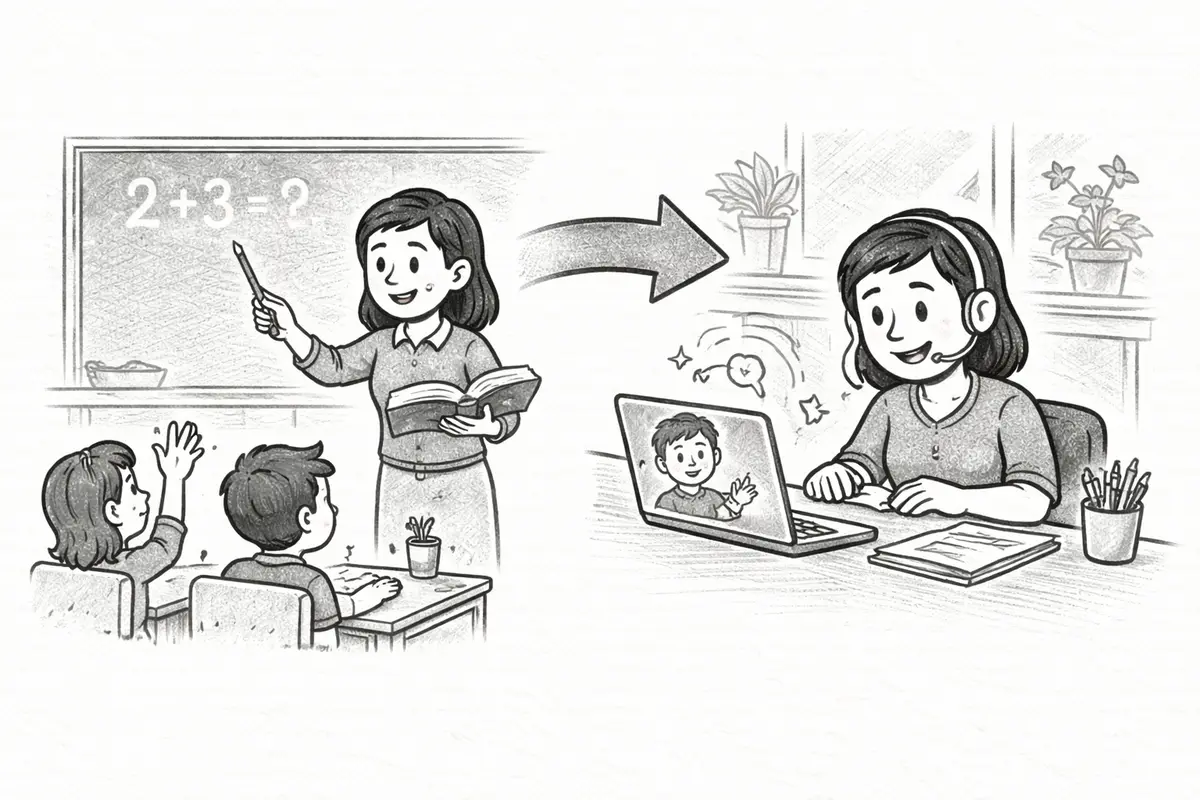
They are pivoting. Trading hall passes for Zoom links. Ring lights instead of fluorescent tubes.
And honestly? Who can blame them.
The Breaking Point Isn’t What You Think It Is
If you ask the average person on the street why teachers are bailing, they’ll probably say, “Well, the pay sucks.” Which, yeah. Obviously. The Economic Policy Institute regularly tracks the “teacher pay penalty”, which recently hit a record high. Public school teachers make about 24% less than other college-educated professionals. It’s abysmal.
But talk to an actual educator who just handed in their keys, and the money is rarely the primary trigger. It’s the catalyst, sure. But the trigger? The trigger is usually something incredibly stupid.
It’s the mandatory professional development seminar on “mindfulness” led by an administrator who makes twice their salary, right after the district announced a hiring freeze for classroom aides. It’s the realization that they are expected to be a social worker, a data analyst, a behavioral therapist, and a bullet-shield, all while ostensibly trying to teach algebra.
“I didn’t quit because I hated teaching. I quit because I literally never got to teach. I managed chaos. I did paperwork. I fought with the WiFi. Teaching was maybe 10% of my day.”
That’s a quote from a former middle school science teacher I spoke to recently. Let’s call him Dave. He’s now making six figures tutoring wealthy kids in AP Chemistry from his converted garage. He wears sweatpants. He drinks his coffee while it’s actually hot. He hasn’t been called a sociopathic slur by a child in over eighteen months.
Dave isn’t an anomaly anymore. According to the RAND Corporation’s ongoing surveys on teacher well-being, the stress levels reported by educators consistently double those of the general working population. The system is hemorrhaging talent, and that talent is looking for a lifeboat. And for a rapidly growing segment of educators, the internet is that lifeboat.
The Gig-ification of Pedagogy
So, what does this actually look like in practice? It’s messy, honestly. It’s not like there’s a single button you push that says “Become Remote Tutor.”
For a lot of folks, it starts as a side hustle. A toe in the water. Maybe they sign up for a platform that connects tutors with students. During the pandemic, companies like VIPKid were the gold rush, where North American teachers woke up at 4 AM to teach English to kids in China. (That specific market basically imploded overnight when the Chinese government changed its regulations, which was a harsh lesson in gig-economy volatility for thousands of people).
But the domestic market? It’s exploding.
We are witnessing the complete gig-ification of education. Ed-tech platforms act as the middlemen, skimming a percentage off the top (sometimes a totally predatory 25-40%) to connect desperate parents with desperate teachers.
But the smart ones—the ones who survive the initial shock of self-employment—eventually cut out the middleman.
They build a brand. I know, I know. “Teacher brand.” It sounds gross. It sounds like something a tech-bro in a Patagonia vest would pitch at a synergy conference. But in 2026, if you want to survive as an independent educator, you have to market yourself.
You see them on TikTok, right? Breaking down complex phonics rules for stressed-out moms. You see them on Instagram, selling downloadable curriculum bundles. They aren’t just tutors anymore. They are “Edu-creators.” They are independent micro-schools of one.
The Brutal Economics of Going Solo
Let’s not romanticize this too much. Trading the classroom for the kitchen table isn’t all sunshine and perfectly curated aesthetic workspaces.
When you leave the public school system, you leave the pension. You leave the health insurance. You leave the union protection. You step out into the cold, unforgiving reality of being a 1099 independent contractor.
I’ve watched brilliant educators almost bankrupt themselves because they didn’t understand estimated quarterly taxes. When you charge a client $80 an hour for SAT prep, you don’t actually get $80. The IRS takes a massive bite, the self-employment tax takes another bite, your Zoom subscription, your digital whiteboard software, your independent health premium… suddenly that $80 an hour is looking a lot like $35 an hour.
And then there’s the hustle.
When you’re a classroom teacher, the kids just show up. You don’t have to go find them. The district legally mandates their attendance, funnels them into your room, and shuts the door.
As a remote tutor? If you don’t market, you don’t eat.
The Feast or Famine Cycle
It creates this bizarre, exhausting feast-or-famine cycle. October through May? You are booked solid. Parents are panicking about midterms, freaking out about college applications, throwing money at you to fix the fact that their kid can’t write a coherent paragraph. You’re working 60 hours a week, staring at a grid of faces on a screen until your eyes bleed.
But then July hits.
Summer vacation. The kids vanish to camp. The parents stop calling. Your income drops off a cliff.
“My first summer as a full-time tutor, I literally ate ramen for three weeks. I didn’t realize that education in the private sector is a highly seasonal industry.”
This forces independent tutors to get incredibly creative. They start running summer boot camps. They pivot to asynchronous courses. They write ebooks. It requires an entrepreneurial mindset that, frankly, traditional teacher training programs actively discourage. Teachers are trained to follow rubrics and adhere to state standards; they aren’t trained to run a small digital business.
Yet, despite all the financial terrifying leaps of faith, most of the people who make the jump? They say they’d never go back. Not in a million years. The autonomy is just too intoxicating. The ability to actually teach—one-on-one, seeing the lightbulb go off in a kid’s eyes without having to simultaneously manage 29 other kids throwing erasers at each other—it reminds them why they got into this profession in the first place.
The Dark Side of the Ed-Tech Boom
But we need to zoom out for a second. Because while this shift is a great personal victory for Dave the Chemistry Guy, it is creating a sociological nightmare on a macro level.
What happens to the public school system when all the most experienced, dynamic, burned-out-but-brilliant teachers leave to become private tutors?
I’ll tell you exactly what happens. It becomes a system of profound, undeniable inequity.
The National Bureau of Economic Research published findings recently on learning loss and recovery, and the data is pretty stark. The kids who caught up after the pandemic disruptions were overwhelmingly the kids whose parents could afford high-dosage, private tutoring.
We are accelerating toward a bifurcated education system.
On one side, you have the “haves.” Upper-middle-class and wealthy families who treat public school as just a baseline socialization center. When their kid struggles with math, they don’t rely on the overworked school resource teacher. They hop online, pay $100 an hour, and hire a burnt-out former Teacher of the Year to fix the problem via remote sessions.
On the other side, you have the “have-nots.” Families who can barely afford groceries, let alone premium remote tutoring. Their kids are left in traditional classrooms that are increasingly staffed by under-qualified long-term substitutes, emergency-certified college grads, and the few veteran teachers who are too close to their pensions to quit.
It’s brain drain, pure and simple.
We are strip-mining the talent out of our public infrastructure and selling it back to the highest bidder in the private market.
Is There Any Going Back?
You hear politicians talking a lot about “retaining teachers.” They throw around ideas like modest pay bumps, or giving teachers a $500 stipend for classroom supplies (which is honestly just insulting).
But it misses the fundamental shift in the labor market. The remote tutoring boom proved something dangerous to the teaching workforce: it proved they have options.
For decades, the system relied on the martyr complex of educators. Do it for the kids. If you leave, who will help them? Teaching is a calling, not a job. It was a brilliant, toxic psychological manipulation to keep highly educated professionals working in terrible conditions for terrible pay.
The internet broke that spell.
Once a teacher realizes they can make the same amount of money—or more—working 25 hours a week from their living room, setting their own schedule, and dealing only with clients who actively want to be there… why on earth would they ever go back to the fluorescent lights?
School districts haven’t figured this out yet. They are still operating like it’s 1995. They still think their main competition for talent is the school district one town over. They don’t realize their main competition is a laptop, a decent internet connection, and the sheer human desire for autonomy.
Maybe the traditional model collapses. Maybe it transforms. I don’t know.
But I do know that there’s a teacher right now, sitting in her car in a high school parking lot, crying out of sheer frustration before the morning bell rings. And tonight? Tonight she’s going to open her laptop. She’s going to create a profile. And she’s going to take her first step out the door.
And honestly, we can’t stop her. We shouldn’t even try.
 About the author Matt Semon
Career Writer · AI Hiring Trends · USA I’m Matt, a writer and researcher focused on how hiring is evolving in the age of AI. I’ve been following trends in recruitment, automation, and remote work since 2018. When I’m not writing deep-dive articles for Jobicy, I’m testing AI tools to see how they impact candidates and hiring teams.