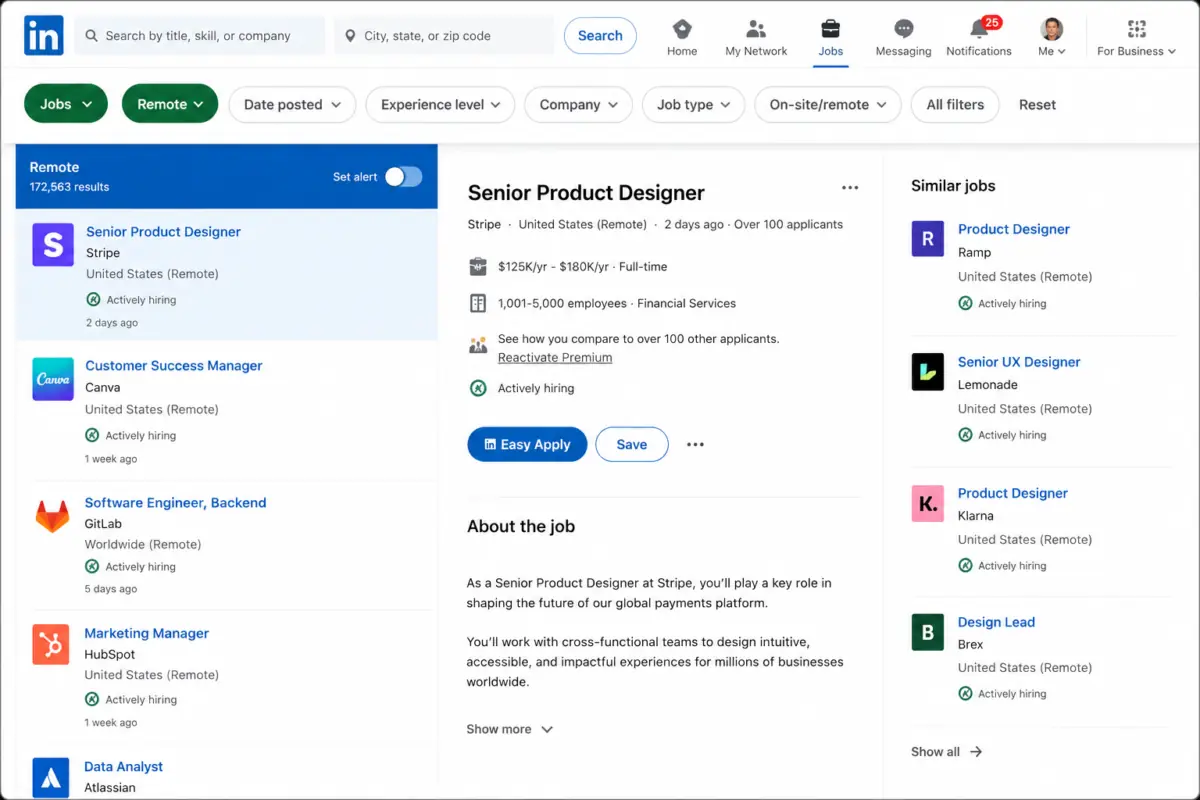
A few months ago, I came across a post from a job seeker who had carefully documented every application he submitted over the course of six months. The final number was somewhere around 400. Four hundred applications, dozens of customized resumes, countless cover letters, and hundreds of hours spent scrolling through job boards.
The result?
A handful of interviews. No offers.
The reactions underneath were predictable. Some people told him to keep going. Others suggested rewriting his resume. A few blamed the economy.
What struck me was how familiar the story sounded.
Almost everyone looking for work today seems to know someone who has applied for hundreds of jobs and received almost nothing in return. At some point, sending applications stopped feeling like a hiring strategy and started feeling like a ritual. Open LinkedIn. Open Indeed. Open another job board. Apply. Repeat.
The assumption behind this approach is simple: if enough applications are sent, eventually one of them will work.
Unfortunately, the modern job market doesn’t really function that way anymore.
When Applying Became Too Easy
There was a time when applying for a job required effort. You had to find opportunities, prepare documents, send emails, make calls, and often follow up directly.
Today, applying can take less than a minute.
That sounds like progress, and in many ways it is. Remote work has opened opportunities that simply didn’t exist before. A designer in Poland can apply to a company in New York. A developer in Argentina can interview with a startup in Berlin. A marketing specialist in Thailand can work for a company based in London.
The problem is that everyone else can do exactly the same thing.
The easier it becomes to apply, the easier it becomes for employers to receive hundreds or thousands of applications. What feels like opportunity from the candidate’s side often feels like information overload from the recruiter’s side.
Many job seekers imagine their application arriving in someone’s inbox and being carefully reviewed. In reality, recruiters often spend their days filtering through enormous volumes of candidates while trying to fill roles quickly. The competition isn’t necessarily better than it was ten years ago. There is simply much more of it.
That’s why so many qualified people find themselves stuck in a frustrating cycle. They apply. They hear nothing. They apply to even more jobs. They hear nothing again.
The logical response seems to be increasing volume. The practical result is often more disappointment.
Most Hiring Decisions Are Still Human
Technology has changed recruiting, but it hasn’t changed human nature.
When companies hire, they are making decisions under uncertainty. They want to reduce risk. They want to feel confident that the person they choose can actually do the job.
This is one reason referrals remain so powerful.
Imagine a hiring manager has two candidates. One arrives through a recommendation from someone they trust. The other arrives through an online application together with several hundred other resumes.
The recommended candidate hasn’t necessarily proven anything yet. They haven’t magically become more talented.
They simply start with a small advantage: trust.
That advantage matters more than many people realize.
Recruiters and hiring managers are not only evaluating skills. They are evaluating confidence, reliability, communication, and cultural fit. The more information they have about a candidate before the first interview, the easier the decision becomes.
Applications alone rarely provide that information.
The Hidden Job Market Isn’t a Myth
Career experts have been talking about the hidden job market for years, and many people dismiss it as a buzzword.
But the reality behind the phrase is surprisingly simple.
Not every opportunity begins with a public job posting.
Some jobs emerge through conversations. Others appear through referrals. Some companies start searching for candidates informally before publishing a role online. In smaller organizations, hiring decisions often begin long before a position reaches a job board.
If you’ve ever heard someone say, “I wasn’t really looking for a job, but an opportunity came up,” you’ve already seen the hidden job market in action.
This doesn’t mean companies are secretly hiding jobs from applicants. It simply means that relationships often move faster than recruitment processes.
People naturally prefer to hire individuals they already know or who come recommended by someone they trust.
That was true before LinkedIn existed. It’s still true now.
Why Networking Gets a Bad Reputation
Many professionals know networking is important. Fewer know what it actually means.
The word itself has become associated with awkward events, elevator pitches, and forced conversations between strangers holding coffee cups.
Most valuable professional relationships don’t develop that way.
They develop gradually.
A former colleague remembers your work. Someone you’ve interacted with online reaches out months later. A recruiter notices your profile after seeing your comments on an industry discussion. A conversation leads to another conversation.
The people who consistently discover opportunities often aren’t “networking” in the traditional sense at all. They’re simply participating in their industry.
They’re visible.
They’re present.
People know who they are.
That visibility creates opportunities long before an application is ever submitted.
Remote Work Changed the Rules
Remote work didn’t just expand access to jobs. It expanded access to competition.
When a company hires locally, candidates compete against people living nearby. When a company hires remotely, candidates may be competing against professionals across multiple countries and time zones.
This shift has created enormous opportunities, but it has also made generic applications less effective.
Standing out requires more than clicking a button.
Recruiters increasingly look beyond resumes. They search LinkedIn profiles. They review portfolios. They look for signs of expertise, engagement, and professionalism.
For remote workers especially, LinkedIn has become much more than a digital resume. Recruiters actively search for candidates and often contact them directly. Understanding how to use LinkedIn to find a remote job can be significantly more valuable than spending another evening sending applications into crowded applicant pools.
Visibility matters because opportunities often go to the people who are easiest to find.
The Number That Doesn’t Matter
One of the strangest things about modern job searching is how much attention people give to application counts.
People proudly announce they’ve submitted fifty applications this week. Others share spreadsheets tracking hundreds of submissions.
The number feels important because it’s measurable.
But applications are activity, not progress.
You can submit fifty applications in a weekend and move no closer to finding a job.
Meanwhile, a single conversation with the right person can completely change the direction of a search.
That doesn’t mean job boards are useless. They remain one of the most important tools available to job seekers. Most people will eventually find opportunities through some combination of applications, networking, referrals, and direct outreach.
The problem begins when applications become the only strategy.
A Different Way to Think About Job Searching
Perhaps the biggest mistake people make is treating job searching like a sales funnel.
The assumption is simple: if enough applications go in at the top, eventually an offer will come out at the bottom.
Human relationships don’t work that way.
Careers don’t work that way either.
The strongest opportunities often emerge from places that cannot be measured in a spreadsheet. A conversation with a former colleague. A recruiter who remembers your profile. A recommendation from someone you’ve worked with before. A connection made months earlier that suddenly becomes relevant.
A friend of mine spent nearly four months applying for remote jobs last year. By the end of it, he had submitted more than 300 applications. Most disappeared into silence. A few resulted in interviews. None resulted in an offer.
The job he eventually accepted came from a conversation.
Not a job board.
Not an application portal.
Not an automated hiring system.
A conversation.
Stories like this happen often enough that they stop sounding unusual.
The internet has made applying for jobs easier than ever before. It has also made being ignored easier than ever before. The people who seem to navigate the market most successfully are rarely the ones obsessing over application counts. They spend time making themselves visible. They stay active in professional communities. They build relationships before they need them.
That approach is slower. It doesn’t produce a satisfying number at the end of each day.
But it often produces something far more valuable than another automated application confirmation email.
It produces opportunities.