In this article
The latest federal time-use data looks almost reassuring. In 2025, full-time employees in the United States worked an average of 8.5 hours on weekdays when they worked, according to the Bureau of Labor Statistics. That is a substantial day, especially once commuting and domestic work are added, but it does not resemble the endless shift that the language of burnout often suggests.
Then another set of measurements intrudes. Microsoft’s 2025 analysis of workplace activity found email being checked early in the morning, meetings extending past 8 p.m., and work returning late at night. Nearly half of employees in its global survey described their work as chaotic and fragmented. For the most communication-heavy users, a meeting, email, or message arrived every two minutes during core working hours.
The figures measure different things. A time diary records duration. Digital telemetry records interruptions, spread across the day, and the number of times someone else can redirect the work.
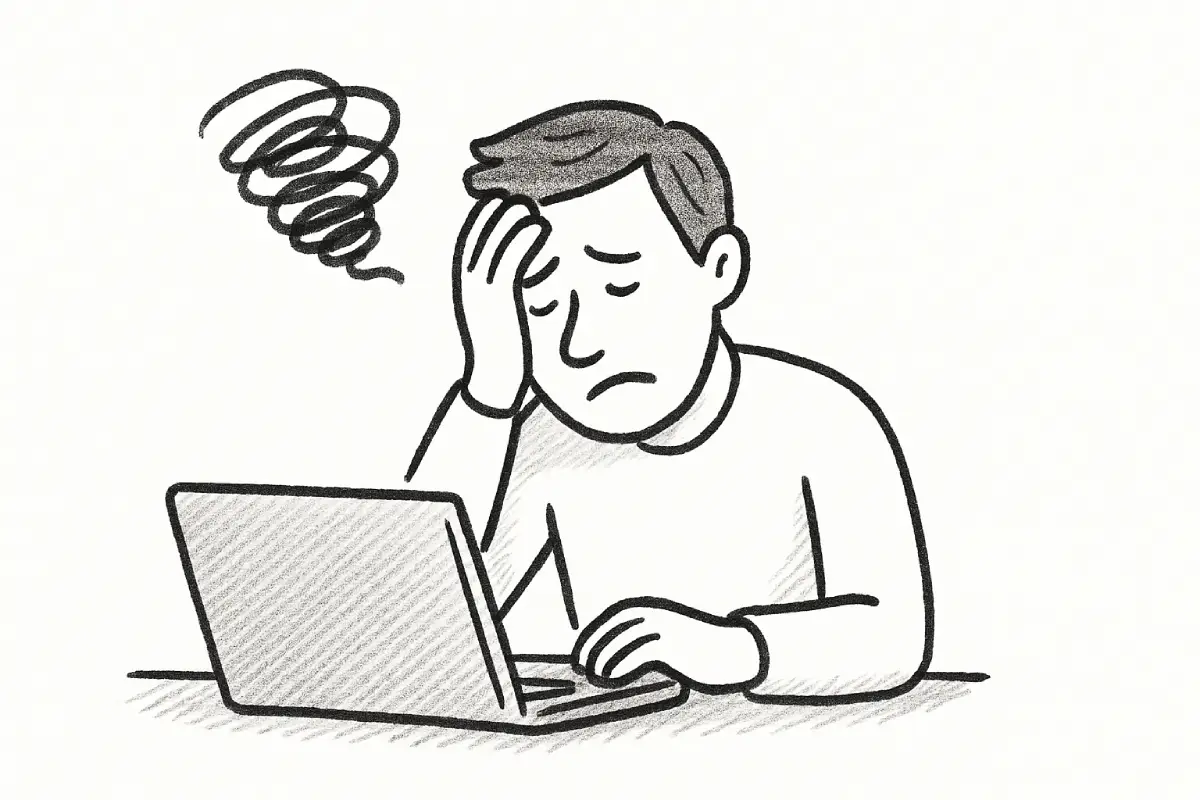
This distinction helps explain why a person can work an apparently ordinary number of hours and still finish Friday with no usable attention left. The hours matter. Their structure matters too.
The Workday Has Hours but No Clear Edge
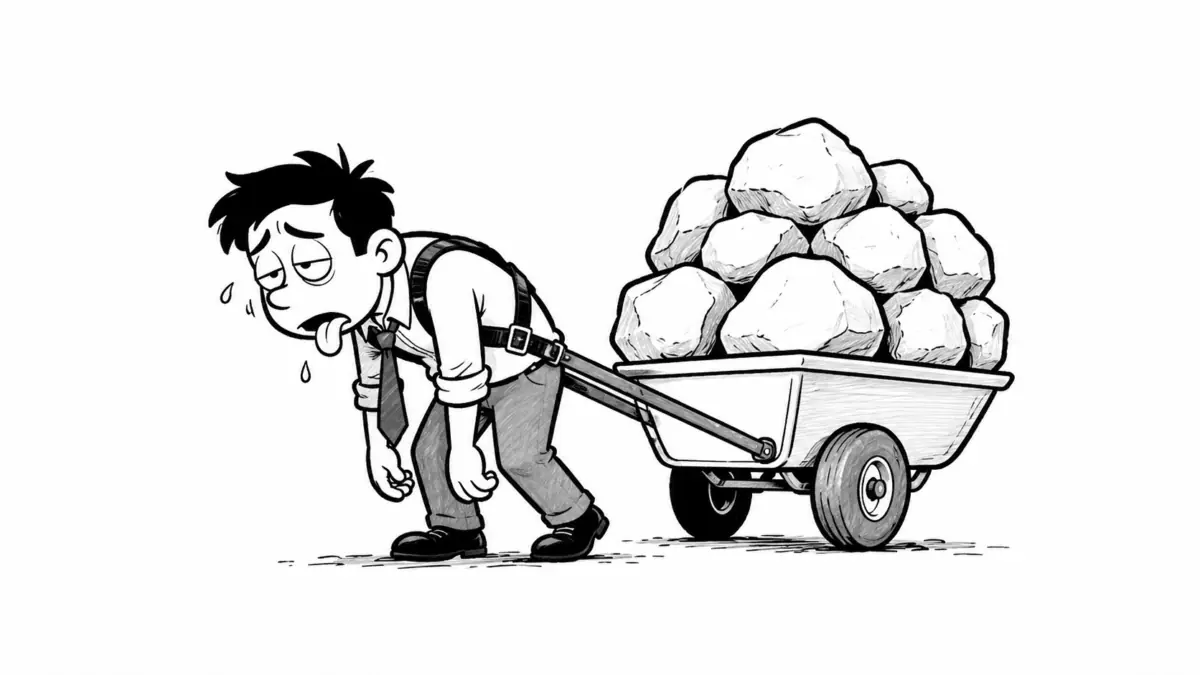
Long hours remain an obvious source of exhaustion. A nurse completing repeated night shifts or a manager absorbing the responsibilities of eliminated roles does not need a theory of notification design to explain fatigue.
But “too much work” can conceal several different problems. There may be too many tasks for the available time. Priorities may change faster than tasks can be completed. Responsibility may exceed authority. Work may stop on the clock but continue as low-level vigilance: checking messages, anticipating tomorrow’s conflict, or wondering which supposedly urgent request will be judged most urgent later.
Microsoft’s 2025 special report on the “infinite workday” provides a useful, if limited, view of this pattern. Its telemetry excludes European Union and education tenants, and some of its interruption figures describe the top 20% of users by message volume rather than the average employee. Those limits matter. The report should not be read as a census of all work.
Still, the mechanism is recognizable. Fifty-seven percent of meetings in the dataset were unscheduled calls, while after-hours chats rose 15% from the previous year. Meetings beginning after 8 p.m. rose 16%. A calendar may show eight working hours, yet those hours can be divided into pieces too small for the work that still has to be delivered.
The employee then completes the assignment after the meetings end. Officially, this may still be called flexibility.
Exhaustion Alone Does Not Settle the Diagnosis
The term burnout now covers boredom, sleep loss, resentment, overwork, poor management, depression, and ordinary fatigue. That expansion makes the word easy to use and harder to act on.
The World Health Organization’s ICD-11 description is narrower. It treats burnout as an occupational phenomenon resulting from chronic workplace stress that has not been successfully managed. It identifies three dimensions: depleted energy, greater mental distance or cynicism toward the job, and reduced professional efficacy. WHO does not classify it as a medical condition.
Fatigue that improves after sleep or a quiet weekend may indicate a temporary demand for recovery. Burnout tends to change the relationship with work. Tasks feel invasive, colleagues become interruptions, and competence feels less available.
The common explanation is failed recovery. Sometimes that is correct. Yet if Monday restores the same impossible workload, conflicting instructions, and permanent availability, recovery becomes maintenance for the source of the strain.
Burnout often develops where expectations remain firm but the boundaries of the job do not.
Sleep, exercise, and time away may improve health and coping capacity. They do not decide which assignment should be dropped when five assignments share a deadline.
Workload Is Only Half of the Equation
The more useful model compares demands with resources. Demands include volume, emotional strain, time pressure, difficult customers, unstable schedules, role conflict, and interruption. Resources include authority, time, staffing, information, support, predictable priorities, and a credible way to say that the capacity limit has been reached.
Two people can carry similar workloads differently because one can choose how to execute the work, renegotiate a deadline, or obtain help. The other receives responsibility without corresponding discretion.
A 2025 four-wave study of working professionals examined technostress, autonomy, and subsequent burnout. The sample was modest, with 198 employees, so it does not establish a universal rule. Its longitudinal design is more informative than a one-time opinion poll, however. The results supported the idea that autonomy can weaken the path from technology-related demands to burnout.
Autonomy here means control over consequential parts of the job: sequencing tasks, protecting attention, choosing methods, and negotiating trade-offs.
I keep noticing that job descriptions advertise “ownership” more often than they specify decision rights. In practice, ownership may mean accountability for an outcome controlled by several other people.
The result is not simply a large amount of work. It is work that cannot be brought to a stable conclusion.
More Freedom Can Quietly Become More Work
Autonomy is not an automatic cure. It has an inconvenient counterexample: people sometimes use freedom to lengthen their own working day.
A 2025 qualitative study of remote knowledge workers and managers described this as an autonomy paradox. Some employees who felt trusted also increased their hours and output, partly because visible presence had been replaced by visible results. The study involved 52 participants and drew on pandemic-era experience, so its findings should not be inflated into a population estimate. It does show how freedom and work intensification can coexist.
Remote employees may gain control over location while losing a recognized stopping point. Output-based management can remove pointless attendance, but it can also make capacity harder to defend.
A worker can silence notifications and still understand that delayed replies may affect assignments or performance reviews. The formal policy says “disconnect.” The incentive says “respond.”
Global teams need overlap, emergencies occur, and some employees prefer evening work. Trouble begins when exceptions have no frequency limit and preference becomes an unofficial availability standard.
A Better Weekend Cannot Repair an Unchanged Job
Recovery matters because sustained effort requires periods in which the same demands are absent. Yet recovery is usually discussed as a private duty. The employer supplies the workload; the employee is expected to arrive on Monday restored through disciplined leisure.
The 2026 Gallup global workplace data adds context, not a diagnosis. Employee engagement fell to 20% worldwide in 2025, while 34% of employees were classified as thriving in their lives. Engagement and burnout are not opposites, but weak attachment to work plainly coexists with limited wellbeing.
The more revealing question is whether time away changes the condition or merely interrupts it. A vacation may reduce exhaustion. If cynicism and diminished efficacy return within days, the unresolved demand is probably structural.
Structural does not always mean dramatic. A reporting process may consume the time needed for the work being reported. A role may expand after reorganization while its title, pay, and staffing stay still.
Recovery can restore capacity. It cannot define a job that the organization has left undefined.
Before optimizing personal resilience, identify what repeatedly consumes it.
Sometimes the Job Is Not the Only Source
There is a less convenient counterexample to the structural argument. Not every case of persistent exhaustion begins at work.
Caregiving, financial pressure, chronic pain, poor sleep, grief, medication effects, anxiety, and depression can reduce the capacity available for any job. A tolerable role can become unmanageable when the rest of life has no margin. Conversely, a damaging job can worsen conditions that already exist.
If exhaustion, loss of interest, concentration problems, or sleep disruption persist across work and non-work settings, discussing them with a qualified health professional is more appropriate than relying solely on career tactics.
A worker may also dislike the job. Dislike is not a disorder. A fairly managed role can still offer too little interest, progress, or fit.
Find the Constraint Before Choosing the Remedy
Replace “I am burned out” with a description specific enough to support a decision. A two-week record is more useful than a mood captured on the worst afternoon.
Track the following without attempting to improve anything yet:
- Hours worked, including after-hours checking and catch-up work
- Work that arrived without another task being removed
- Meetings or messages that displaced planned work
- Decisions delayed because authority or information was missing
- Requests made after the agreed working day
- Tasks repeated because priorities or standards changed
- Symptoms on workdays and days away
The aim is to identify the recurring constraint.
If volume dominates, discuss scope, staffing, deadlines, or compensation. Bring the task list and ask which work should move when new work arrives. A manager who says everything remains a priority has supplied information.
If fragmentation dominates, ask for protected production time, fewer recurring meetings, or defined windows for nonurgent communication. Measure whether the change produces longer blocks of usable attention.
If role conflict dominates, document the competing instructions and ask the relevant decision-maker to choose.
If low control dominates, identify the smallest authority that would help: permission to reject incomplete requests, adjust sequence, contact a stakeholder directly, or renegotiate a date. “More autonomy” is too abstract to grant.
If effort and return have separated, the decision is different. A larger role without recognition, pay, title, learning, or credible advancement may remain exhausting even after the workflow improves. A 2025 three-wave study found that person–organization fit was associated with lower exhaustion and cynicism through organizational trust. The sample was small, and association is not destiny. Still, it points to a factor that productivity advice rarely addresses: people conserve effort when they no longer trust the exchange.
Set a review date. Two to four weeks should show whether clearer priorities or protected hours altered the pattern. If nothing changes, that is evidence about the organization’s capacity or willingness to redesign the role.
The next choices may include an internal transfer, leave where appropriate, reduced hours where financially possible, or a job search. Each carries cost. Remaining also carries cost in smaller deductions.
The Ordinary-Length Day Was Hiding the Wrong Measurement
The BLS figure still matters. Eight and a half hours is not a light weekday, and averages conceal far longer schedules. But duration cannot show whether the day contained finishable work, enough authority, or a genuine end.
A workday can look conventional in a survey and remain psychologically open late into the evening. The employee stops working. The job has not supplied a stopping condition.
Finding that condition may require fewer tasks, firmer priorities, greater discretion, or an exit. A weekend can provide rest while that decision is being made. It cannot make the decision unnecessary.
 About the author Matt Semon
Career Writer · AI Hiring Trends · USA I’m Matt, a writer and researcher focused on how hiring is evolving in the age of AI. I’ve been following trends in recruitment, automation, and remote work since 2018. When I’m not writing deep-dive articles for Jobicy, I’m testing AI tools to see how they impact candidates and hiring teams.