In this article
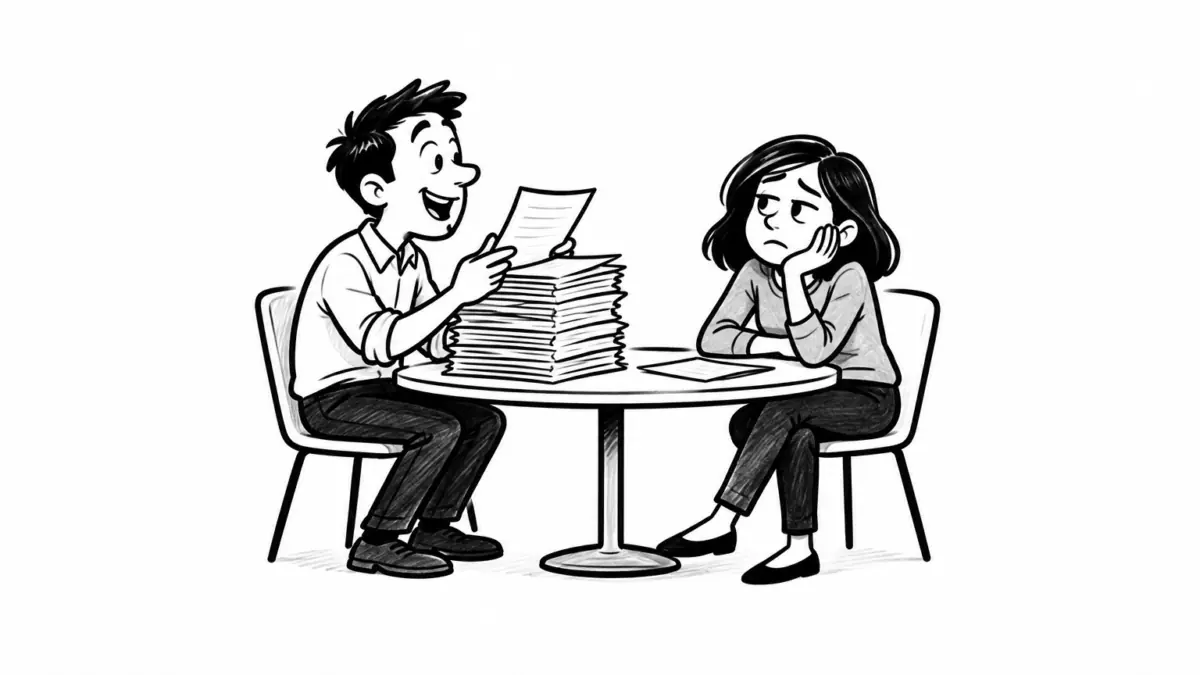
Why does every one-on-one end with a list of project updates and none of the conversation you meant to have? New managers often blame the agenda, the employee’s preparation, or their own ability to ask good questions. Usually, the deeper problem is simpler: the one-on-one has become the team’s most reliable place to exchange basic work information.
That is an expensive use of manager time. A direct report may spend ten minutes explaining what happened this week, while the manager mentally compares it with another update, a chat thread, and a project board. Then the meeting ends before either person reaches the questions that actually need a manager: Which priority has changed? Where is a decision stuck? Is the workload becoming unrealistic? What feedback would help? What work should the person take on next?
Status is not unimportant. A manager needs enough context to spot risk, coordinate work, and make decisions. But routine reporting and one-on-one conversations do different jobs. The first creates shared visibility. The second creates a private working channel for judgment, support, development, and two-way feedback. MIT Sloan makes a related distinction for remote teams: sharing a summary of past activity before a meeting leaves live time for forward-looking discussion. Its guidance on remote manager communication is useful well beyond fully remote teams.
The repair is not to ban project updates from one-on-ones. It is to stop using the meeting as the system that produces them.
Start by identifying the status-update symptom
First, distinguish a meeting with some necessary work context from a meeting that has collapsed into reporting. If you leave with a clear next step on a project, that may be valuable. If you hear the same facts that already exist elsewhere, then neither person has gained much.
Look at the last three one-on-ones, not at your intentions. What filled the time? What did you decide? What did the employee ask for? What did you learn that changed your management action? A calendar series can look healthy while doing almost none of the work a manager needs it to do.
| What happens in the meeting | Likely underlying cause | Useful correction |
|---|---|---|
| The employee walks through every active task in order. | There is no agreed place or rhythm for routine updates. | Create a short written update that is visible before the meeting. |
| You ask for information you could see in a project board or shared document. | The team’s records are incomplete, stale, or hard to interpret. | Improve the record that should answer the question; do not make the one-on-one compensate indefinitely. |
| Important concerns appear only in the last two minutes. | The agenda has no protected space for risks, feedback, or manager support. | Reserve time for forward-looking questions before project detail expands. |
| Each person brings a different list of priorities. | Team priorities have changed without a clear decision or broadcast. | Use the one-on-one to reconcile tradeoffs, then update the shared plan. |
| The manager leaves with many follow-ups but the employee leaves without clarity. | The conversation is collecting information rather than resolving the employee’s constraints. | End with one owner, one next move, and any decision the employee needs. |
This diagnosis matters because the correction depends on the failure. A missing project record calls for a better project record. A direct report who is unclear about priorities needs a management decision. A person avoiding difficult feedback needs a safer, more specific conversation. Treating all three as an agenda problem produces a prettier meeting and the same frustration.
Trace the missing route for routine information
Before changing the meeting itself, decide where different kinds of information should live. This is basic information design: each recurring fact needs a dependable route, an owner, and a level of detail that fits the people who need it.
For example, task progress may belong in a shared project board. A cross-team risk may need a written update that several people can scan. A decision that changes scope belongs in a decision record or team channel, where affected colleagues can find it later. A personal concern about confidence, workload, working relationships, or career direction belongs in the one-on-one.
Do not create a new ritual for every gap. A manager with six direct reports can easily turn a sensible desire for visibility into a week of duplicate reporting. Start with the smallest reliable change. If a team already uses a project board, ask people to keep the current item, next item, blocking issue, and decision needed up to date there. If the board cannot provide that view without excessive work, use a brief written update once a week instead.
Shared agendas can help, but they are not a substitute for shared operating records. Atlassian’s guidance on shared one-on-one agendas is right to emphasize that both manager and employee should be able to add topics during the week. The important boundary is this: the agenda should collect items worth discussing, not become a second copy of every task list.
Make the new route explicit. Telling people to “keep me posted” returns you to interpretation. Say instead: “By Tuesday afternoon, update the project board with changes to delivery date, dependencies, and decisions you need from me. Bring anything that needs judgment, context, or a confidential conversation to our one-on-one.” That tells the employee what information is routine, what requires escalation, and what deserves live time.
Use a lightweight status standard before you add a tool
New managers sometimes respond to incomplete visibility by adding software, forms, and dashboards. That can make the reporting burden larger without making the information more useful. Agree on a simple standard before you change technology:
- What counts as a meaningful update?
- Where does it go?
- Who must read it?
- What requires a direct message or urgent escalation instead?
- When is an update no longer needed because the work is complete?
The manager owns the standard. Each employee owns keeping their assigned work current. If a team lead or project manager maintains the central plan, that person owns the structure and quality of the record. This division prevents a familiar failure mode: everyone assumes somebody else is maintaining visibility, so the manager asks for a spoken recap from every person.
If a project update contains no decision, risk, or request for support, it usually belongs in the shared workflow first.
- Review three recent one-on-ones and mark each discussion item as routine status, decision, support, feedback, or development.
- Choose one existing shared location for routine work updates before creating a new tracker.
- Define the few changes that require an update, such as a blocked dependency, changed date, or decision needed.
- Tell the team when updates are due, who needs to read them, and which issues belong in a direct escalation.
- Add only discussion-worthy items to the shared one-on-one agenda during the week.
Give the one-on-one a narrower job
Once routine information has a home, give the meeting a repeatable purpose. It does not need a rigid script. It does need enough structure that urgent project detail cannot consume the whole conversation by default.
One useful approach is to begin with the employee’s agenda, then spend limited time on the work that needs management attention, then move into feedback, support, or development. The U.S. Office of Personnel Management recommends ongoing conversations that include both the supervisor’s and employee’s views of performance and development, with questions about accomplishments, future goals, measures, and needed support. Its communication-skills guidance is a helpful reminder that a manager should not treat the meeting as a one-way inspection.
| Conversation area | Primary owner | Question to use | Expected output |
|---|---|---|---|
| Employee agenda | Employee | “What would make this conversation useful today?” | The topics that need discussion are visible early. |
| Priority and decision check | Manager | “What changed since our shared update, and what choice needs my input?” | A clarified priority, decision, or escalation path. |
| Obstacle and support | Shared | “What is making the work harder than it needs to be, and what can I remove or clarify?” | A manager action, employee action, or agreed tradeoff. |
| Feedback and recognition | Manager | “Here is the behavior I noticed and its effect. What is your view?” | Specific reinforcement or an adjustment to try. |
| Growth and working relationship | Shared | “What do you want more practice, exposure, or guidance on?” | A modest next opportunity or a topic to revisit. |
Not every area belongs in every meeting. If a launch is at risk, spend more time on the risk. If the employee has just taken on a new responsibility, spend more time on expectations and support. The structure is a safeguard against omission, not a timer that overrides common sense.
It also helps to separate a real decision from an update that merely sounds urgent. Consider a marketing manager whose direct report says a campaign is “behind.” The status is useful only if it reveals a decision: should the launch date move, should another person review the copy, or should the team reduce the scope? If none of those is needed, the item may belong in the shared work record rather than consuming meeting time.
A one-on-one should reveal what a manager needs to do next, not merely what an employee did last.
Handle performance concerns before the meeting turns vague
Status-heavy one-on-ones often conceal another problem: a manager senses that something is off but has not yet named it. The manager then asks for more updates, hoping the pattern will explain itself. The employee experiences closer scrutiny but receives no usable feedback.
More reporting rarely fixes unclear expectations, weak quality standards, missed handoffs, or a strained working relationship. When the concern is performance, say what you observed, explain the work consequence, ask for the employee’s perspective, and agree on the next check point. Avoid turning the one-on-one into a surprise annual-review preview.
For example: “The last two briefs reached design without the source links we agreed to include. That makes the review slower because the designer has to verify key claims. What got in the way, and what process will help you include the links before handoff?” This does three useful things. It identifies the behavior rather than judging the person. It explains why it matters. And it leaves room for information the manager does not have, such as a changed intake process or a missing source of truth.
Frequent feedback does not mean constant correction. It means the employee should not have to infer how their work is landing from silence, a project board, or an end-of-year form. Gallup argues that short, regular manager conversations can be meaningful when they cover current priorities, collaboration, recognition, and strengths rather than only weaknesses. Its overview of meaningful manager conversations offers a useful check against saving every developmental point for a formal review.
There is an exception. If a concern requires a formal process under your organization’s policy, do not try to handle the entire matter through a casual one-on-one template. Involve the appropriate people and follow the required process. Even then, routine conversations still matter because they provide timely clarity rather than leaving the employee to discover expectations after the fact.
More reporting is a poor substitute for a clear expectation.
Run the repair for four meetings, then adjust
Do not declare the problem solved after one improved conversation. People need time to trust that routine status will be seen elsewhere and that bringing a concern to a one-on-one will lead to a useful response.
For the next four meetings, keep a private, simple record of what occupied the time. Do not score the employee. Diagnose the system. Did the meeting start with a recap because the shared update was missing? Did a project issue reveal a decision that no one owned? Did you ask for feedback but leave no room to hear the answer? Did a development topic lead to a specific next step?
At the fourth meeting, ask directly: “Is our status process giving you enough room to raise the things that need my attention? What part of this meeting should we keep, reduce, or change?” MIT’s guidance for remote and hybrid performance development similarly advises managers to ask employees how they can best guide and support them. Its remote and hybrid performance-development guidance treats that conversation as a shared responsibility rather than a manager-only design exercise.
Then adjust one variable at a time. If updates are still taking too long, improve the format or reduce the number of items expected. If the employee has too few concerns to discuss, try collecting agenda items asynchronously and ask a more focused question about priorities or support. If every meeting becomes crisis management, inspect the team’s planning and escalation practices; the one-on-one may be exposing a wider operating problem.
Protecting private conversation time is a management responsibility, not a perk of having a recurring meeting.
- Use the revised status route for four consecutive one-on-ones.
- Protect time near the start for the employee’s own agenda.
- Write down each decision, support action, and owner before the meeting ends.
- Notice when a missing update is really a missing team process or unclear priority.
- At the fourth meeting, ask what should be kept, reduced, or changed in both the update process and the conversation.
A manager’s attention is not a reporting system
A good one-on-one will sometimes include status. Work is real, conditions change, and managers need context. The aim is not a perfectly balanced agenda. The aim is to stop spending scarce private time reconstructing information that a shared workflow should already provide.
Before your next one-on-one, ask one practical question: What information am I about to request that should already have a home? If you can answer that, you know what to repair outside the meeting. The time you recover is where clearer decisions, useful feedback, and better manager support can finally happen.
 About the author Ewald Schäfer
HR Technology Specialist · Germany I’m Ewald — a passionate HR tech consultant from Berlin. I write about the intersection of automation, recruitment, and human capital. After leading several HRIS rollouts across Europe, I now focus on advising startups and writing practical content for job seekers and hiring teams alike. With a strong IT background, I bridge the gap between HR and technology: from API integrations and data security to workflow automation and cloud-based HR platforms. My mission is to help organizations not only digitize but truly optimize their people operations.