In this article
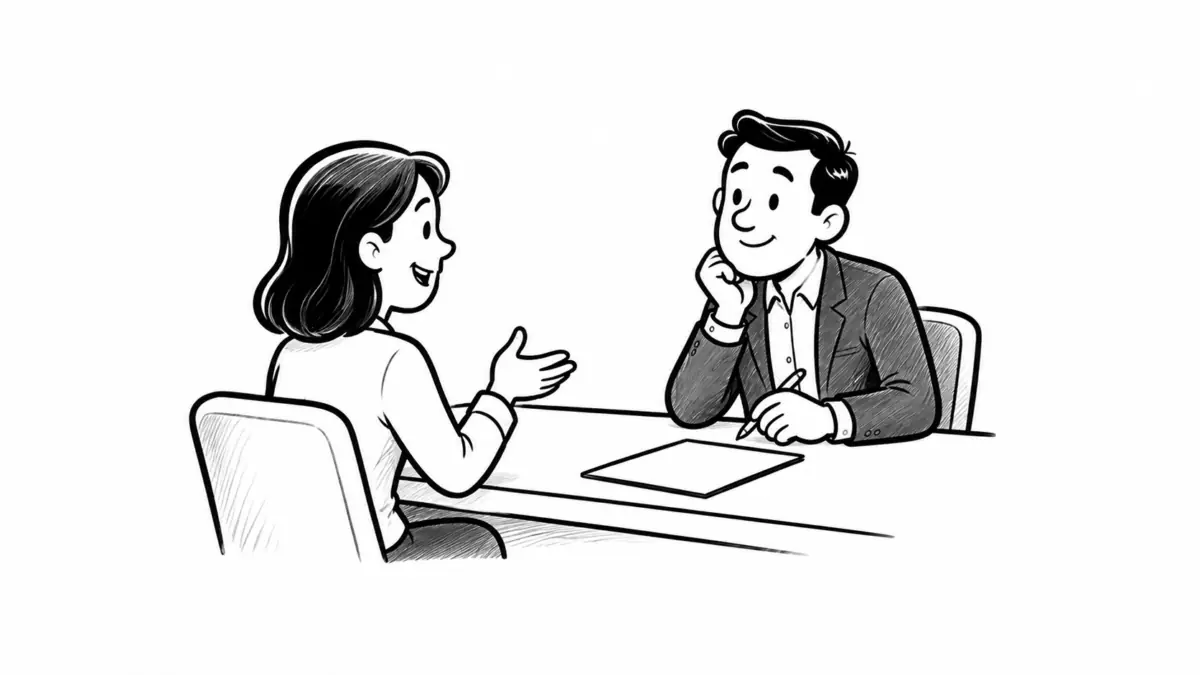
The line on a résumé often looks unusually calm: “Career break, 2024–2026.” The conversation around it rarely is. A candidate may have spent those two years arranging care for a parent, recovering from an illness, applying for work in a slow market, or discovering that a small business could not support a salary. Yet the interview question tends to compress all of that into six words: “Can you explain this gap?”
The wording makes the blank period sound like an irregularity in an otherwise orderly record. Work histories are seldom that orderly. Companies merge, funding disappears, children arrive, health changes, visas expire, industries contract. Still, the candidate is asked to account for the interruption, while the employer’s own interruptions are filed under restructuring.
That asymmetry is irritating, but irritation is not a useful interview strategy. The better approach is to understand what the question is doing. Most interviewers are not seeking a full personal history. They are trying, sometimes clumsily, to resolve uncertainty about readiness, judgment, skills, and the likelihood that the same constraint will affect the new job.
The Blank Space Invites Its Own Story
An unexplained gap gives a hurried reviewer room to invent an explanation. The invention may be mild: perhaps the candidate took time off by choice. It may be less charitable: perhaps no one would hire them, their skills have deteriorated, or they left the last job under circumstances they do not want to discuss.
This is one reason advice to “just own it” is incomplete. Confidence matters, but it does not supply missing information. A useful explanation gives the employer enough context to stop guessing, then moves the discussion toward evidence that matters for the role.
An explanation works when it replaces speculation with a work-relevant fact.
The fact does not have to be intimate. “I stepped away to manage a family health matter that required my full attention” is an explanation. A diagnosis, prognosis, and account of family conflict are not. “My role was eliminated when the company reduced the division” is an explanation. A ten-minute prosecution of former management is not.
The distinction is easy to miss because candidates often prepare for the moral version of the question: Was my reason good enough? Employers are usually making a narrower forecast: Is this person able and prepared to do the job now? A strong answer meets that forecast directly.
A Gap Is Not a Verdict on the Work That Came Before It
The labor market of 2026 gives employers less reason than usual to treat every gap as an individual failure. In July, 1.8 million people had been unemployed for 27 weeks or longer, representing 25.5% of all unemployed people, according to the U.S. Bureau of Labor Statistics. Another 5.9 million people outside the labor force said they wanted a job. Those categories do not describe identical circumstances, but they do show how many work histories fail to fit a neat, continuous timeline.
The Federal Reserve’s May 2026 report on household economic well-being adds a useful detail. The share of adults applying for new jobs held steady in 2025, while the share starting a new job fell to 13%, down from 15% in 2022. Applications did not disappear; hiring became harder. Seven percent of adults reported a layoff, up from 6% in 2024, and voluntary departures declined.
These figures do not prove that any particular gap was unavoidable. They do make a simple point: elapsed time is not a clean measure of effort, ability, or demand. A six-month search in a contracting specialty tells us something different from a six-month search when employers are competing for anyone with the required license.
I keep noticing how readily people describe a long search as if it were empty time. It may contain dozens of applications, late-stage interviews, a rescinded offer, freelance work too small to list, and a careful change in direction. An interviewer does not need the full ledger. The candidate does need to avoid accepting the premise that no payroll means nothing happened.
What the Interviewer Is Actually Trying to Learn
The question usually contains several smaller questions. Why did the previous job end? Was the break chosen or imposed? Is the situation that caused it resolved or manageable? Has the candidate kept relevant knowledge current? Why does this role make sense now?
A compact answer can cover those points without sounding rehearsed. The basic movement is from past circumstance to present readiness:
- State what happened in plain language.
- Give only the amount of context needed to make it intelligible.
- Show what makes the return credible now.
- Connect that readiness to the work under discussion.
This is a sequence, not a script. Consider a layoff:
“My position was eliminated in a broader product reorganization last October. I used the following months to target roles where my analytics work is central rather than incidental, and I completed two recent projects in SQL and Tableau. This role fits that direction because the team is building the reporting function I’ve already done in a smaller setting.”
The answer does not pretend the search was a sabbatical designed by a career strategist. It gives the employer a reason for the ending, evidence of current ability, and a reason for the application.
For caregiving, the same structure may be shorter:
“I left my role to handle a family caregiving responsibility that required a full-time commitment. That arrangement has now changed, and I’m available for the schedule this position requires. I’ve also refreshed my certification and recently completed a short project using the current version of the platform.”
For a health-related break:
“I took time away for a health matter. I’m ready to return and can perform the responsibilities we’ve discussed. During the past two months, I’ve updated my portfolio and resumed work with the tools this team uses.”
The health version is deliberately spare. In the United States, employers generally may not ask disability-related questions or require a medical examination before a conditional offer, as the Equal Employment Opportunity Commission explains. A candidate can describe readiness and any accommodation needed for a specific duty without volunteering the nature or severity of a condition. Employment law varies by country, and an unusual situation may warrant local legal advice, but no interview is improved by handing over medical detail merely to make the silence less awkward.
Privacy and Evasion Are Not the Same Thing
Candidates sometimes overdisclose because they fear a short answer will look suspicious. The result can shift attention from the job to facts the interviewer neither needs nor knows how to handle. Other candidates go too far in the opposite direction: “I had personal matters” followed by visible discomfort and no statement about availability. That leaves the original uncertainty intact.
The useful middle is bounded candor. Name the category, say what has changed, and return to the role. “Family caregiving,” “health matter,” “relocation,” “formal study,” “job search,” and “attempt to build a business” are categories. Each can be truthful without becoming an invitation to inspect private life.
If the cause is not fully resolved, do not claim that it is. Explain the arrangement that makes employment workable. A parent may still need care, but another relative or a paid provider now covers working hours. Treatment may continue, but the candidate can perform the job with a predictable schedule. The relevant fact is not that life has become free of complications. Employers cannot offer that condition either.
Confidence is the absence of unnecessary apology, not the absence of facts.
This also means avoiding the language of confession. “Unfortunately, I had to” and “I know this looks bad” tell the interviewer how to interpret the gap before the interviewer has done so. A neutral verb is usually better: left, paused, relocated, cared for, studied, searched, closed, recovered.
The Uncomfortable Counterexample
Not every concern about a gap is prejudice. Sometimes the time away has affected a qualification the job genuinely requires. A software engineer returning after several years may need to show recent code. A nurse may need an active license. A salesperson whose market has changed may no longer have current relationships. A candidate who left after a performance dispute may be asked about the departure, not simply the months that followed it.
Telling such candidates to treat the gap as irrelevant is poor advice. The employer’s concern should be answered with evidence rather than indignation. That could mean renewed credentials, a portfolio piece, contract work, a course with assessed output, or a clear account of what changed after a difficult departure.
The evidence must fit the concern. A general online certificate does little to answer whether an accountant can use the employer’s current system. A recent sample reconciliation might. Volunteering demonstrates reliability and contribution, but it does not automatically prove technical currency. Caring for a family member can involve planning, negotiation, and composure, though translating every private responsibility into a list of corporate competencies can sound strained. Some experiences deserve recognition without being repackaged as management training.
There is another exception. If a gap follows several short roles, the interviewer may be evaluating the pattern rather than the blank itself. A candidate should be ready to distinguish events: one contract ended as scheduled, one employer closed, and one role was a poor match. If the common factor was the candidate’s own decision-making, a credible answer includes what changed in the job search. “I am now focusing on positions with direct client work because the last two roles showed me that back-office operations is not a durable fit” says more than “I’m looking for stability.”
“Skills-First” Helps, but It Does Not Do the Explaining
Employers increasingly say they assess candidates by skills. In the National Association of Colleges and Employers’ Job Outlook 2026 survey, 70% of participating employers reported using skills-based hiring, up from 65% the year before. Interviewing and screening were the stages where they used it most often.
That sounds favorable to anyone with a nonlinear work history. It is favorable, but not complete. The OECD’s 2026 report on skills-first labor markets notes that adoption is uneven and that employers still rely heavily on qualifications and professional experience as proxies for skills. Removing a degree requirement, the report argues, is not enough to broaden access if candidates are not given another credible way to demonstrate competence.
The practical implication is that a gap explanation should not carry the whole application. It needs supporting proof. A résumé can place a recent project, certification, consulting assignment, or relevant volunteer role near the top, where it updates the date of the candidate’s last demonstrated work. A portfolio can show what “kept my skills current” actually means. References can speak to reliability before the break or to recent project work.
This is more persuasive than loading the career-break entry with inflated claims. A line such as “Career Break: Led complex family logistics while developing resilience and stakeholder management” asks the reader to accept too much translation. “Family caregiving leave; completed AWS Solutions Architect certification, May 2026” separates the private reason from the verifiable professional update.
Put the Explanation Where the Doubt Appears
Whether the gap belongs on the résumé depends on its length, recency, and what happened during it. A few months between jobs may need no separate entry, especially when dates are shown by year. Changing a date format solely to conceal a longer gap is different. If an application asks for months, provide them accurately.
A longer or recent break often benefits from a simple entry because it prevents the reviewer from treating missing information as accidental. “Career Break | 2024–2026” followed by one line of context may be enough. Add study, projects, caregiving, travel, or business activity only when they are true and useful. There is no prize for making a résumé account for every week.
The cover letter is better when context affects the case for candidacy. Someone returning to pharmaceutical work after caring for a relative does not need to build the letter around caregiving. Someone who used the break to complete a relevant graduate program or redirect from laboratory work into regulatory affairs may have a coherent reason to mention it.
The interview answer should usually be shorter than candidates expect. Deliver it once, then stop. Filling the silence often introduces contradictions or private details. If the interviewer asks a legitimate follow-up about skills or availability, answer it. If the follow-up seeks medical information or family detail unrelated to the job, return to function: “I can meet the travel and scheduling requirements described. Is there a particular part of the role you’d like me to clarify?”
Before an interview, say the answer aloud. Remove any sentence that defends character without adding evidence. Check that dates match the résumé and application. Prepare one concrete example of recent capability. Decide in advance where the privacy boundary sits. Confidence often comes from having made those decisions before another person is waiting.
The Line Can Stay Calm
That plain résumé entry, “Career break, 2024–2026,” is not really the problem. The problem is the untested story a reviewer may attach to it. Two years can signal withdrawal, or it can describe a period in which paid work was interrupted by obligations, market conditions, study, health, or an attempt that did not become a lasting business.
The candidate cannot control every interpretation. Some employers will continue to reward uninterrupted tenure even while advertising a skills-first process. Others will hear a concise explanation, examine the recent evidence, and move on to the work itself. The best answer does not ask for absolution and does not insist that the gap taught a profound lesson. It makes the dates accurate, the boundary clear, and the present tense more informative than the blank.
 About the author Matt Semon
Career Writer · AI Hiring Trends · USA I’m Matt, a writer and researcher focused on how hiring is evolving in the age of AI. I’ve been following trends in recruitment, automation, and remote work since 2018. When I’m not writing deep-dive articles for Jobicy, I’m testing AI tools to see how they impact candidates and hiring teams.