In this article
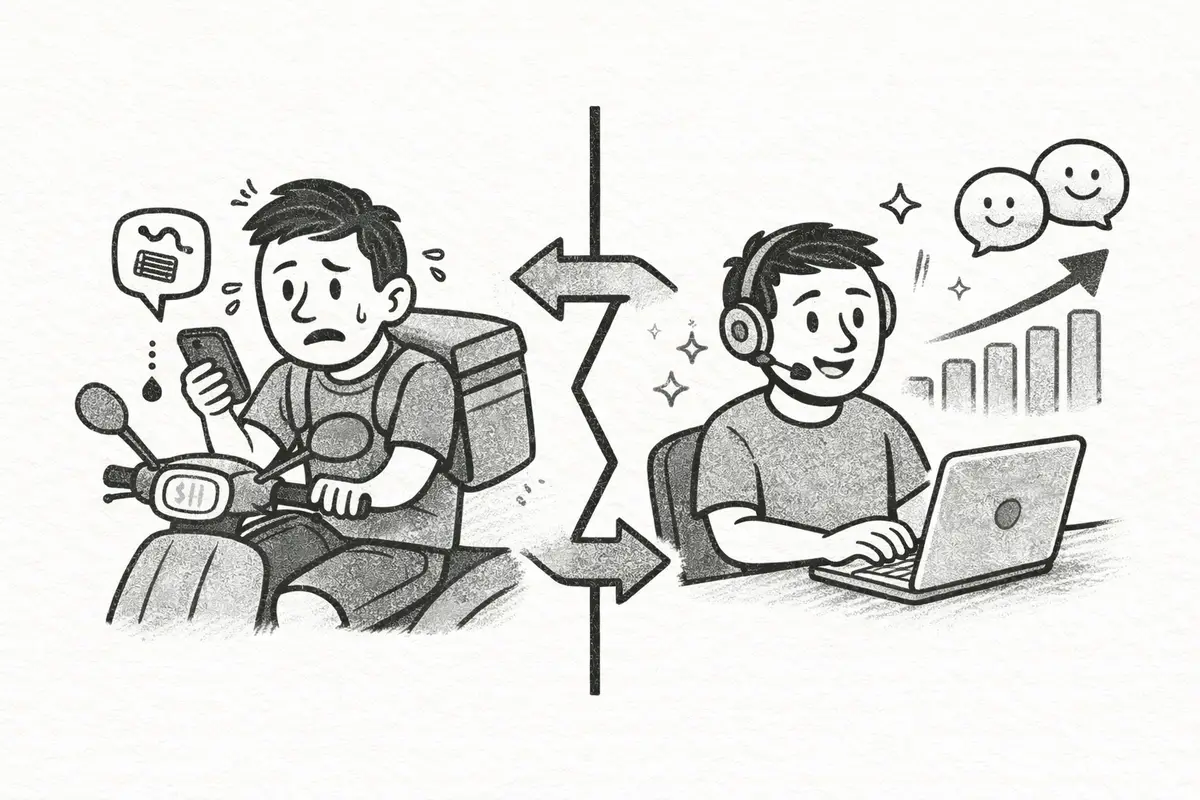
Working from home can remove a commute while making it harder to tell when the workday has ended. Messages remain visible during dinner, a shared table stays covered in equipment, or childcare interrupts a meeting you could not move.
The solution depends on your circumstances. Some remote workers choose their hours; others have fixed shifts, customer coverage, or required overlap with another time zone. Some have a separate office; others share one room with family or housemates.
Work-life balance is therefore partly about personal routines and partly about agreements with the people who share your work and home life. The nine tips below offer options to adapt, rather than rules everyone must follow.
What boundaries can—and cannot—do
Clear availability, manageable tasks, and time away from work can make daily arrangements more predictable. They do not guarantee freedom from stress or prevent every instance of burnout.
The World Health Organization describes burnout as an occupational phenomenon associated with chronic workplace stress that has not been successfully managed. It is not classified as a medical condition in ICD-11. An evening routine cannot, by itself, resolve persistent understaffing, excessive demands, or an expectation of constant availability.
For a broader comparison of the benefits and difficulties of home-based work, see Jobicy’s pros and cons of working from home.
1. Agree on working hours and response expectations
Before setting a personal stopping time, check what your role requires. Discuss these questions with your manager:
- Which hours are fixed, and where is there flexibility?
- When must the team be available together?
- How quickly should routine messages receive a response?
- What counts as urgent, and who covers it outside normal hours?
Once agreed, show your hours and time zone in the team’s usual calendar or communication tool. A status message makes an arrangement visible; it does not replace agreement about coverage.
If your shift is fixed: Focus on a clear handover, agreed breaks, and whether you are expected to monitor messages after the shift. If on-call duties apply, clarify the rotation and escalation channel rather than switching off essential alerts without discussion.
Example: “My shift ends at [time and time zone]. I’ll hand over open issues to [person/team]. Can we confirm who handles urgent requests after that?”

2. Use a simple start-and-finish routine
A short routine can mark the beginning or end of work without adding another task to a busy day. You might open your task list in the morning and, at the end, note where to resume, send a handover, and close work applications.
A walk or change of scenery is an option if it fits your mobility, safety, and care responsibilities. There is no requirement to recreate a commute or leave the house.
In a small home: Put the keyboard and notebook in a box, cover the monitor, or switch the shared table back to its household use. If equipment must stay out, closing the work browser and changing the table’s lighting may be enough to mark the transition for you.
Treat this as a practical cue to try. It is not a guaranteed way to make your brain stop thinking about work.
3. Match priorities to the time actually available
Plan around meetings, shift duties, and other commitments before estimating how much focused work fits into the day. A short priority list can help, but finishing three tasks does not automatically mean every job requirement has been met.
If you have control over your calendar, reserve time for work that needs concentration. If your role involves incoming calls or tickets, ask whether planned coverage can create room for project work.
When new work arrives, make the tradeoff explicit:
“With the current meetings and deadlines, I can complete [A] or [B] by [date], but not both. Which should take priority, and what can move?”
Overworking can reflect unrealistic demands or inadequate resources, not just poor planning. If the workload repeatedly exceeds the agreed hours, record the pattern and discuss priorities, deadlines, or support with your manager.
4. Arrange breaks that fit the job
Look for opportunities to pause screen work, change activity, or move in a way that is comfortable for you. A break need not become a workout, and leaving the building is not necessary.
The UK Health and Safety Executive’s guidance on screen-work routines recommends short, frequent breaks or changes of activity, with arrangements suited to the work. For a scheduled support shift, that may mean arranging cover rather than leaving the queue unattended.
A 2022 systematic review and meta-analysis in PLOS ONE found small improvements in vigor and fatigue from micro-breaks, but the overall performance effect was not statistically significant. Breaks should not be sold as a guaranteed productivity boost.
Try: Use an agreed pause to look away from the screen, get water, change position, or sit quietly. A timer can help if your role allows it; no single work-and-rest interval is appropriate for every task.
5. Create a workable setup without requiring a spare room
A dedicated office can be useful, but it is not a condition for working remotely. Start with the space and equipment available, and ask your employer what setup support it provides.
For a shared table, use a small kit that can be set up and cleared away. Agree with housemates which periods need quiet and when the space is available for other uses. Headphones or a visual signal may help with interruptions, but they do not guarantee privacy or silence.
If the bedroom is your only workspace: Use a chair and surface away from the bed where feasible, then put work items aside when finished. MedlinePlus sleep-habit guidance recommends keeping work out of bed. That advice does not mean an occasional work session inevitably damages sleep, or that everyone can create a separate room.
If you cannot find a comfortable arrangement, discuss equipment, a workstation review, or an approved alternative location with your employer. You do not need to buy an expensive chair to demonstrate commitment.
6. Make room for life outside work
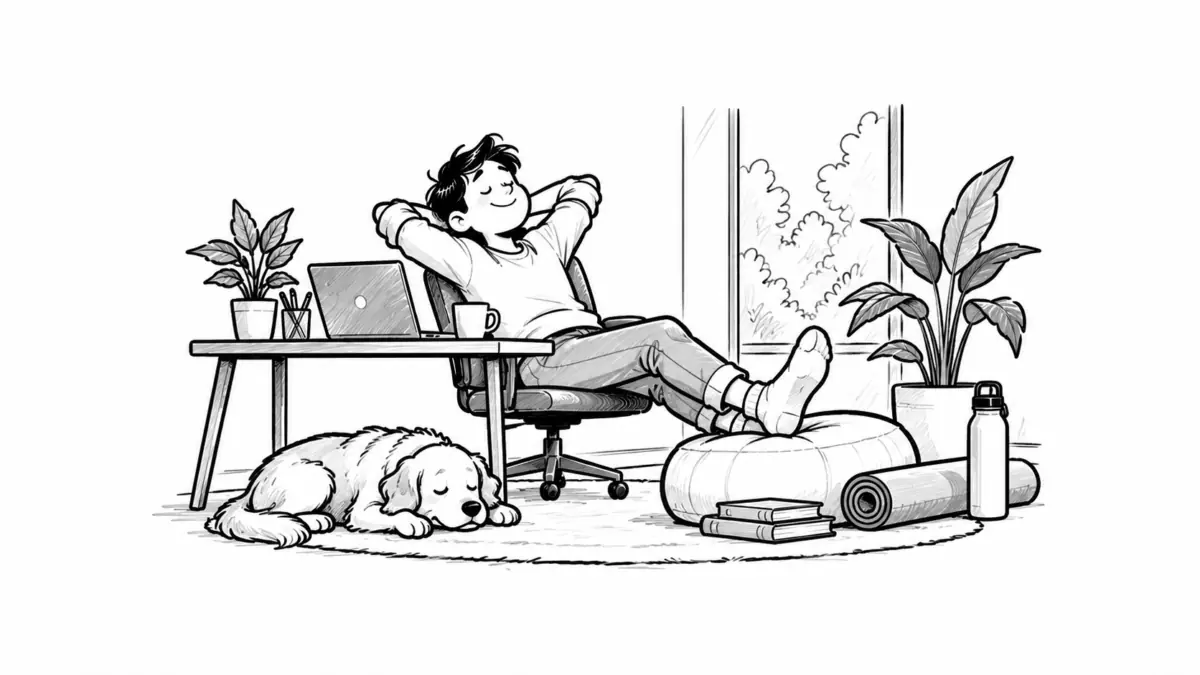
Meals, sleep, movement, relationships, and leisure all need room in the schedule. Choose a small, realistic adjustment rather than trying to build an ideal routine immediately.
Examples include taking an agreed meal break away from work messages, making plans with a friend, or reserving a period for an activity you enjoy. Rest does not have to be social, active, or screen-free to count as personal time.
After agreed working hours, adjust routine work notifications where your role permits. If you share a device or phone with work, consider separate notification settings or browser profiles while following the company’s device policy.
For night shifts or rotating schedules, personal time may fall on weekday mornings rather than evenings and weekends. Build around your actual pattern, and raise conflicts if work demands repeatedly remove the time you need outside the job.

7. Treat clothing as a preference, not a performance rule
Changing clothes before work can be a useful personal cue. It can also be unnecessary. Choose clothing that is comfortable, appropriate for your tasks, and consistent with any meeting or safety requirements.
Treat getting changed as a personal preference rather than a requirement for productive remote work. You do not need a formal outfit or a separate wardrobe to follow this suggestion.
Try: If getting changed helps you start or finish the day, keep the habit. If it adds effort without helping, choose another cue, such as opening your planner or putting your work equipment away.
8. Plan for caregiving and interruptions
Remote work changes where a job happens; it does not automatically remove the attention required by work or care. The practical arrangement depends on a child’s age and needs, the job’s demands, and the help available.
Where possible, identify reliable care coverage for meetings and work that needs sustained attention. If another adult shares care, agree who is responsible during each period rather than assuming both people can cover the same hours while working.
If you have flexible hours: Discuss whether work can be divided into agreed blocks while preserving required team overlap. Set a limit on the total working day so flexibility does not quietly become an extended shift.
If your hours are fixed: Ask about options your employer can support, such as adjusted meeting times, a shift swap, leave, or a temporary schedule change. These may need approval and may not all be available.
For unexpected care needs: Let the relevant person know promptly what has changed and propose a realistic handover or revised deadline.
“An unexpected care issue affects my availability during [period]. Could we move [meeting] or arrange cover for [task]? I can complete [specific work] by [realistic time].”
You can explain an availability constraint without sharing unnecessary family details. Expecting a young child to remain occupied all day is not a dependable coverage plan, and losing sleep every night is not a sustainable substitute.
9. Pause, then address the source of pressure
When an unexpected message arrives, check whether you are on duty, whether it is urgent under the team’s agreement, and whether someone else is covering it. If it can wait, leave it for the next working period. If you are responsible, follow the agreed escalation process.
A brief pause or gentle breathing exercise may help some people feel calmer. The NHS breathing guidance for stress emphasizes comfortable, unforced breathing. A breathing technique is optional; it does not guarantee a particular physiological response or solve the workload issue.
Review recurring pressure with your manager. Bring examples of late requests, conflicting deadlines, or missed breaks, and ask for a specific change: coverage, reprioritization, fewer simultaneous tasks, or a clearer response policy.
If stress or sleep difficulties persist or interfere with daily life, consider support from a healthcare professional or a confidential employee support service, if available.
Choose the next step that fits your situation
| Situation | A practical first step |
|---|---|
| Fixed customer-support shift | Confirm breaks, cover, and the end-of-shift handover. |
| Flexible work across time zones | Agree on overlap hours and the expected response time outside them. |
| Shared room or kitchen table | Create a pack-away work kit and agree on quiet periods. |
| Regular care responsibilities | Map care coverage and request approval for any schedule changes. |
| Work repeatedly exceeds agreed hours | Bring concrete examples and ask which duties, deadlines, or resources can change. |
Start with one arrangement you can test, then check whether it helps. A useful review asks whether your hours are predictable, your commitments fit, and your team follows the agreement—not whether every day feels perfectly balanced.
When considering a future role, use Jobicy’s company directory and remote job listings as starting points, then ask employers directly about shifts, time-zone overlap, on-call duties, and flexibility. The word “remote” alone does not answer those questions.
 About the author Yuri Ko
Hi 👋🏼 I’m Yuri, founder of Jobicy — a global platform for remote jobs and digital careers. I’ve spent years building hiring tools, career resources, and supporting distributed teams. My mission is to make remote work accessible, transparent, and human-centered. Through my articles and products, I share honest, actionable insights to help people grow their careers and help companies succeed in the modern work environment.