In this article
You know that silence?
The specific, heavy, suffocating silence that fills the Zoom room (or the conference room, if you’re old school) the second you ask, “So, does anyone have any concerns?”
It’s deafening. You look at the grid of faces. Some are looking down. Some are aggressively typing, pretending to take notes on a meeting that could have been an email. Others are just staring blankly, blinking in Morse code: Get me out of here.
You tell yourself they’re just shy. You tell yourself they’re processing the “exciting new strategic pivot” you just announced.
But deep down, in the pit of your stomach, you know the truth.
They aren’t shy. They’re scared. Or worse—they’re cynical.
They don’t trust you.
And look, I’m not saying you’re a bad person. You probably read leadership books. You probably have “Empathy” listed in your top five strengths on that personality test HR made everyone take. But trust in the workplace isn’t about your intentions. It’s about their perception. And right now, the perception is broken.
According to the Edelman Trust Barometer, there is a massive gap between how much leaders think they are trusted and how much they actually are. It’s a delusion gap.
Let’s dismantle that delusion. Here is why your team has mentally checked out, and why your “Open Door Policy” is a joke.
1. The “Schrödinger’s Boss” Phenomenon
The number one killer of trust isn’t incompetence. People will forgive a boss who isn’t a genius. They won’t forgive a boss who is inconsistent.
I call this “Schrödinger’s Boss.”
Your team wakes up on Tuesday morning, and they have no idea which version of you is going to walk through the door.
- Is it “Cool, supportive mentor” who wants to hear about their weekend?
- Or is it “Q3 Panic Attack” you, who is going to micromanage the font size on a slide deck because corporate squeezed your budget?
If your team has to spend energy gauging your mood before they bring up a problem, you have already failed.
“Predictability is the bedrock of safety. If I can’t predict your reaction, I’m not going to tell you the truth. I’m going to tell you what keeps me safe.”
When you are volatile, your employees become weather reporters. They track your storms. “Don’t ask him about the budget today, he’s in that mood.” They stop doing the work and start managing you.
2. You Weaponized Their Honesty
Remember that time you asked for “radical candor”?
Yeah. You probably didn’t handle it as well as you think.
Here’s a scenario I’ve seen play out a thousand times: A manager says, “I want honest feedback. Tell me what’s broken.” A brave soul steps up. They say, “Hey, this new process is actually slowing us down by 40%.”
The manager stiffens. Their smile gets tight. They start defending. “Well, we implemented that process for compliance reasons, and actually, if you understood the bigger picture…”
Congratulations. You just taught that employee—and everyone watching—a valuable lesson: Honesty is a career-limiting move.
Psychological safety, a concept famously studied in Google’s Project Aristotle, is the belief that you won’t be punished or humiliated for speaking up. If you react defensively to bad news, you are effectively censoring your team. They will feed you happy lies until the day the project implodes.
3. The “Toxic Positivity” Trap
There is a plague in modern management. It’s this relentless, forced optimism. The “Good Vibes Only” crowd.
This might sound counterintuitive, but your optimism is making people hate you.
When the team is drowning in work, the client is furious, and the software is buggy, walking in and saying, “We got this, team! Let’s look at this as an opportunity!” is not motivating. It’s gaslighting.
It tells them that you are detached from reality. It tells them that you don’t see their pain.
I once had a boss who, during a massive layoff round, told us it was an “exciting evolution for the company.” We were watching our friends pack their boxes, and he was talking about evolution. I never trusted a word out of his mouth again.
Real trust comes from acknowledging the suck. It’s standing in the fire with them and saying, “Yeah, this is a disaster. I’m stressed too. Here is the plan to get out of it.”
4. You’re Hoarding Information (Power Plays)
Information is currency in corporate America.
insecure managers hoard it. They think that if they know things the team doesn’t, it makes them indispensable. They hold back the full context of a decision, dole out information on a “need to know” basis, and treat the team like children who can’t handle the truth.
But in the absence of information, people make up stories. And the stories they make up are always worse than the reality.
- “Why is the budget delayed?” -> They think: Layoffs are coming.
- “Why is the boss in a closed-door meeting?” -> They think: The company is being sold.
Transparency isn’t just about sharing the wins. It’s about sharing the “Why.” If you treat your adults like children, don’t be surprised when they act like teenagers.
How to Fix It (The Hard Stuff)
Okay, so you’ve realized you might be the problem. That’s good. That’s the first step of recovery.
Fixing trust isn’t a hack. You can’t buy a ping-pong table and fix this. You can’t organize a “trust fall” retreat (please, for the love of god, do not do a trust fall retreat).
It’s a slow, grinding process of behavior modification.
A. Apologize. For Real.
This is the power move nobody expects.
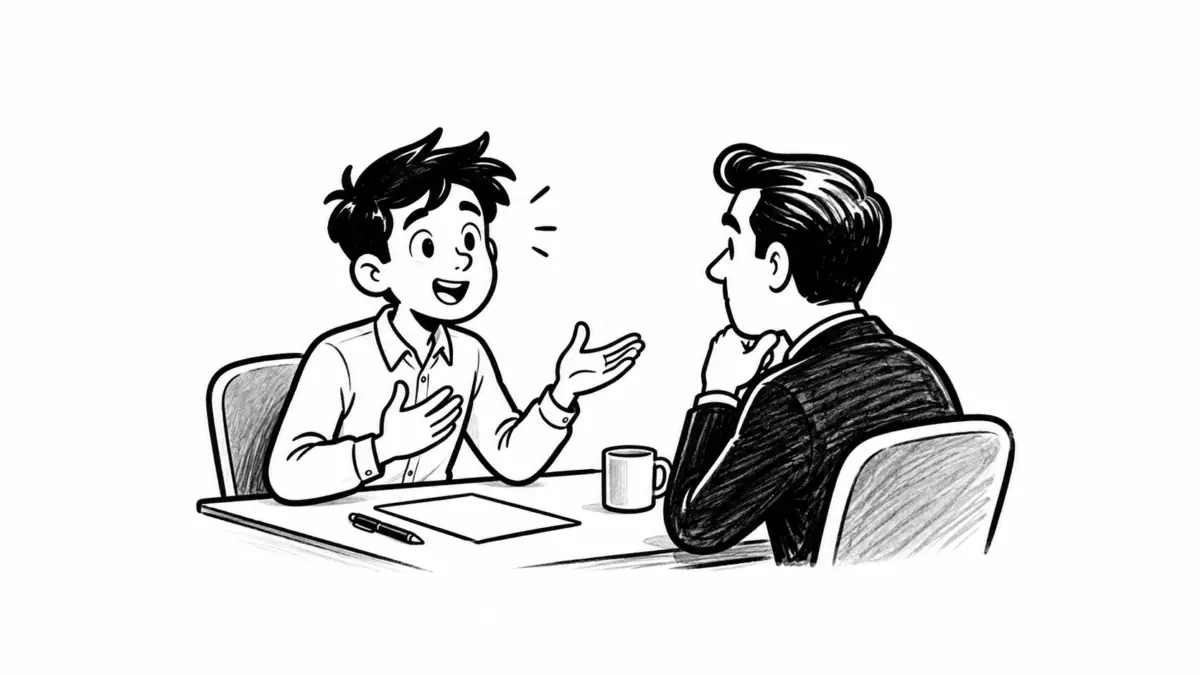
Walk into that meeting and say: “I realized I’ve been micromanaging the X project lately. That’s on me. I was stressed about the deadline, but I took it out on your autonomy. I’m sorry. I’m going to back off.”
Watch their jaws hit the floor. Vulnerability is not weakness; it is a signal of high status. It shows you are secure enough to admit fault.
B. Be the “Umbrella”
Simon Sinek talks about this, but it’s older than him. Your job is to shield the team from the rain of excrement falling from upper management.
When corporate rolls out a stupid policy, don’t pretend you love it. Say, “Look, I know this new expense report system is a pain. I fought it, I lost. We have to do it. But I’m going to try to make it as painless as possible.”
Become their co-conspirator against the absurdity of the system. That bonds a team faster than any happy hour.
C. Kill the “Open Door,” Start the “Proactive Hunt”
Stop waiting for them to come to you. They won’t.
Go to them. But don’t ask “How’s it going?” (The answer is always “Fine”).
Ask better questions:
- “What is the one thing annoying you most this week?”
- “What’s one thing I’m doing that’s slowing you down?”
- “Do you have the tools you need to do this, or are we just hoping for a miracle?”
D. Consistency Over Intensity
You don’t need to be a hero. You just need to be steady.
Be the boring, reliable rock. If you say you’ll send the email, send the email. If you say you’ll fight for their raise, fight for it (and if you fail, tell them exactly why).
Harvard Business Review suggests that consistency in behavior is the single strongest predictor of trust.
The Bottom Line
Trust is a bank account. Every time you defend your team, every time you admit a mistake, every time you tell the truth when a lie would be easier, you make a deposit.
Every time you cancel a 1:1 at the last minute, every time you steal credit for an idea, every time you spin bad news, you make a withdrawal.
Right now, a lot of you are overdrawn.
You can get back in the black. But you have to stop trying to be the “Boss” and start being a human being who happens to be in charge 😉
 About the author Matt Semon
Career Writer · AI Hiring Trends · USA I’m Matt, a writer and researcher focused on how hiring is evolving in the age of AI. I’ve been following trends in recruitment, automation, and remote work since 2018. When I’m not writing deep-dive articles for Jobicy, I’m testing AI tools to see how they impact candidates and hiring teams.