In this article
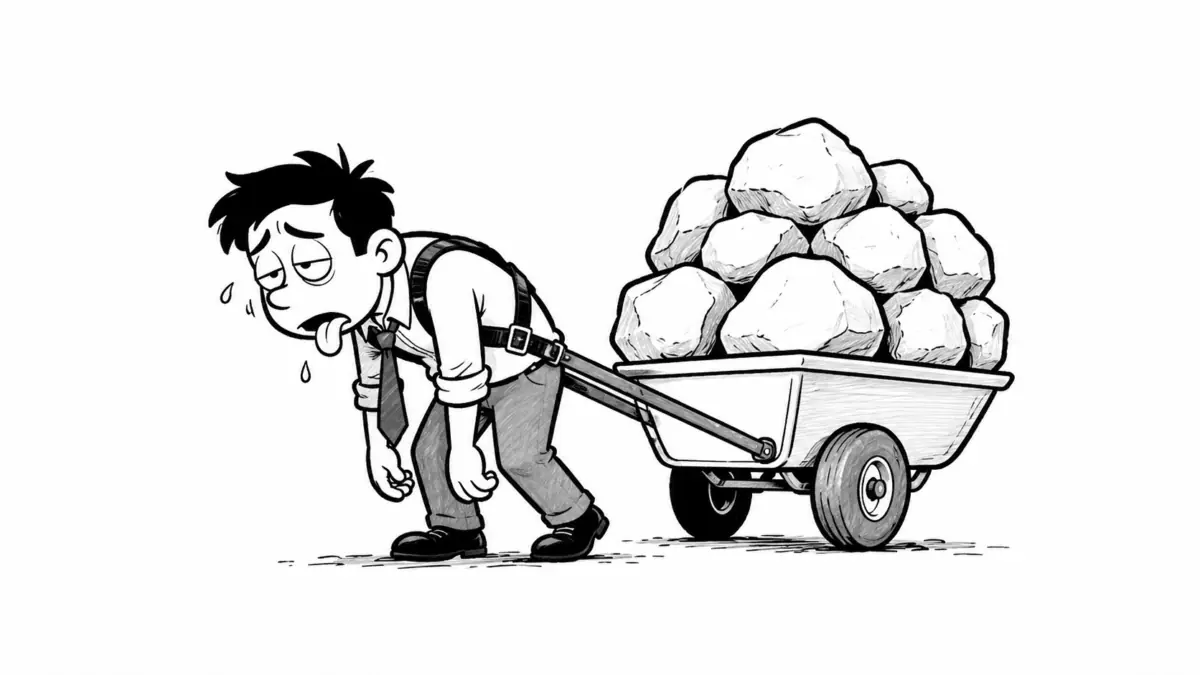
You can take a vacation, return feeling better, and be exhausted again before the next Friday. That does not necessarily mean you chose the wrong career or failed to manage stress properly. It may mean the job resumed exactly where you left it: too many demands, too little control, and no realistic way to recover.
The familiar advice is to set boundaries, practice self-care, and become more resilient. Those measures can help, but they have limits. A better question comes first: What must be true about a job for your effort to remain sustainable over time?
Building a career that does not burn you out means evaluating the operating conditions around your work, not merely finding a profession you enjoy. Workload, autonomy, management, recovery, financial security, and life outside work all shape whether a role remains manageable after the initial excitement disappears.
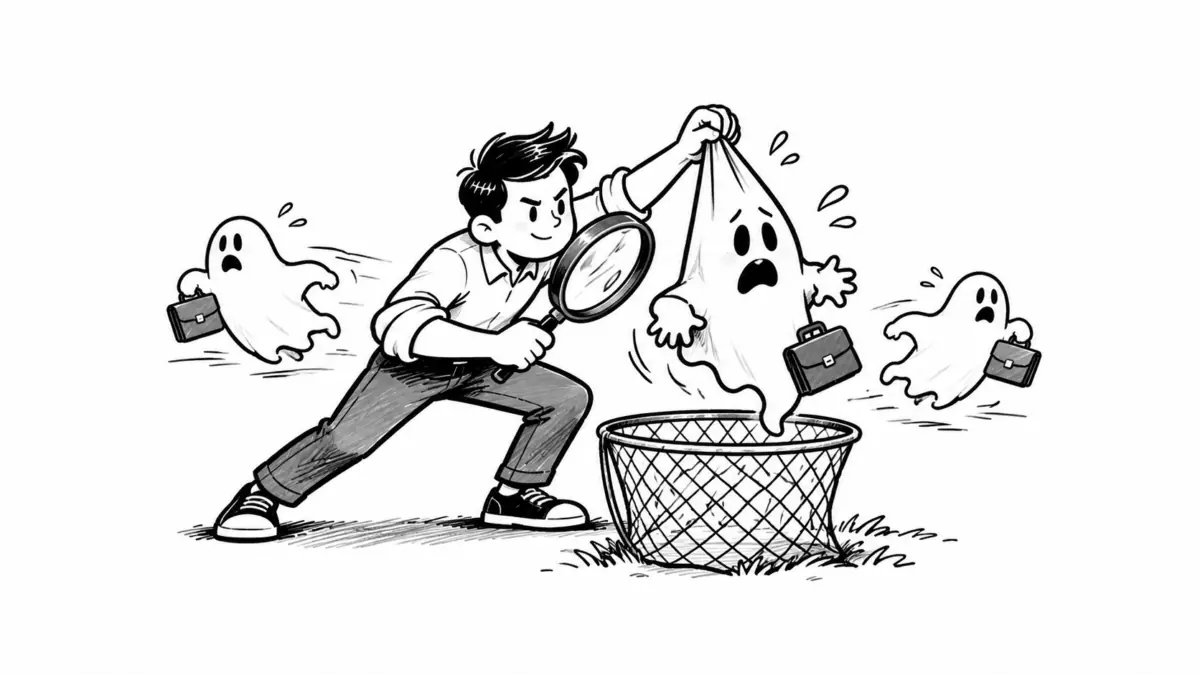
Burnout is not simply the price of caring about your work
The World Health Organization classifies burnout as an occupational phenomenon, not a medical condition. Its description centers on chronic workplace stress that has not been successfully managed and includes exhaustion, growing mental distance or cynicism toward work, and reduced professional effectiveness.
That definition matters because it locates the problem in a relationship between a person and their working conditions. It does not suggest that anyone who feels tired after a demanding week is burned out. It also does not mean symptoms such as exhaustion, anxiety, low mood, or sleep disruption should be self-diagnosed or assumed to have only one cause.
A difficult project can be demanding without being destructive if the expectations are clear, the team has enough support, and the pressure eventually ends. A less prestigious or apparently easier role can become unsustainable if priorities change constantly, responsibility exceeds authority, or employees remain permanently available.
The false shortcut is assuming that passion makes an unhealthy arrangement manageable. Caring about your work can make it easier to justify conditions you would reject in any other part of life.
Sustainable work depends on the balance between demands and resources
The WHO’s guidance on mental health at work identifies risks including excessive workloads, understaffing, inflexible hours, limited control, poor management support, unclear roles, inadequate pay, and conflicting work and home demands.
The European Agency for Safety and Health at Work similarly describes psychosocial risks as problems arising from how work is designed, organized, and managed. A challenging job is not automatically harmful when employees have sufficient support, autonomy, and preparation.
One practical way to evaluate a role is to compare its demands with the resources available to meet them.
| Area to assess | A sustainable arrangement tends to include | A warning sign worth investigating |
|---|---|---|
| Workload | Priorities fit the available time, and urgent periods have an endpoint. | Every assignment is urgent, and unfinished work repeatedly spills into evenings. |
| Control | You can influence deadlines, sequencing, methods, or escalation. | You are accountable for outcomes but cannot change the conditions affecting them. |
| Predictability | Working hours, coverage expectations, and responsibilities are reasonably clear. | Priorities and schedules change without warning or explanation. |
| Recovery | Breaks, days off, and vacation are realistically usable. | Time away creates a backlog so large that rest feels unaffordable. |
| Support | Managers clarify trade-offs, and colleagues can provide coverage. | Asking for help is treated as weakness or lack of commitment. |
| Fairness and fit | Compensation, recognition, opportunities, and expectations are understandable. | Extra effort becomes the permanent baseline without discussion or adjustment. |
These factors will not look identical for a nurse, a software engineer, a founder, a customer support specialist, or a warehouse supervisor. Shift work, caregiving, disability, immigration status, financial pressure, and local employment arrangements can all limit what a person can change.
The goal is not a perfect job. It is a role where the demands do not continuously outrun the time, authority, support, and recovery available to you.
Start by measuring the job you actually have
A job description might promise a manageable workload while your calendar tells a different story.
For two ordinary weeks, track the factors that determine your real capacity:
- Hours spent in meetings, responding to messages, handling administration, and completing focused work.
- Requests received after your agreed working hours.
- Projects added without another responsibility being removed.
- Delays caused by unclear ownership, missing decisions, or repeated rework.
- Interruptions that fragment tasks requiring sustained attention.
- Breaks, evenings, weekends, and days off that are actually protected.
Example: A worker has 40 scheduled hours, but spends 14 in meetings, six answering requests, and four on routine administration. That leaves 16 hours for project delivery. If the assigned project work requires substantially more, the problem is not automatically poor discipline. The plan does not match the available capacity.
This is a hypothetical illustration, not a universal formula. Different roles need different amounts of coordination, and not every interruption is waste. What matters is whether the organization acknowledges the trade-off between time spent coordinating work and time spent completing it.
If your work feels exhausting despite apparently normal hours, examine whether fragmentation, weak control, or unclear limits are driving the pressure before assuming the solution is simply to become faster.
Build boundaries around commitments, not good intentions
A boundary is more useful when it changes a shared operating agreement rather than relying on private willpower.
“I will try not to check messages at night” is fragile if the team expects immediate answers. “Nonurgent messages receive a response during working hours, and emergencies follow a defined escalation process” creates a clearer basis for consistent behavior.
Useful boundaries can include:
- A normal working window communicated to colleagues.
- Agreed response times for routine requests.
- A separate process for genuine emergencies.
- Protected time for concentrated work.
- A requirement to identify what gets delayed when a new priority appears.
- Clear coverage before vacation or scheduled time away.
Try wording the conversation around delivery:
“I can complete the client revision by Thursday or finish the reporting update this week, but I do not have capacity to do both to the expected standard. Which should take priority?”
Or:
“I’m available during my agreed working hours and can respond to genuine emergencies through our escalation process. Can we clarify what qualifies as urgent so routine requests do not extend the workday?”
These approaches work best when a manager can make decisions about workload and respects the agreement. In an environment where boundaries are punished, the problem is not solved by finding a more elegant script.
Recovery has to be part of the schedule, not a reward for finishing everything
Many jobs contain more potential work than one person can complete. If rest becomes conditional on reaching the end of an endless list, it keeps moving into the future.
The National Institute for Occupational Safety and Health’s burnout-prevention training explains that persistent strain can develop when work demands exceed available resources and opportunities for recovery.
Build recovery into several timeframes:
- During the day: Protect ordinary breaks and avoid filling every available gap with another meeting.
- Across the week: Maintain a dependable end to the workday and identify when you are genuinely off duty.
- Across demanding periods: Decide when a deadline, launch, or seasonal rush ends and what changes afterward.
- Across the year: Understand how vacation is approved, who provides coverage, and whether employees are expected to remain reachable.
Research also suggests that changing the structure of work can matter. A 2025 study published in Nature Human Behaviour examined an income-preserving four-day workweek involving 2,896 employees across 141 organizations in six countries. After organizational changes and a six-month trial, researchers reported improvements in burnout, job satisfaction, and self-reported mental and physical health; the same pattern was not observed in 12 comparison companies.
That does not prove every employer can adopt a four-day week, nor does it show that compressing the same workload into fewer days will help. The participating organizations reorganized work before the trial, and the findings apply to those conditions. The broader lesson is that reducing pressure requires changing the work itself, not merely rearranging the calendar.
Choose managers and operating conditions as carefully as job titles
A promotion can expand your income and influence. It can also add responsibility without increasing authority, staffing, or decision-making support.
When evaluating a new opportunity, investigate how the team functions under pressure:
- What does a normal week look like outside the hiring pitch?
- How are priorities adjusted when everything cannot be completed?
- Why is the position open?
- How often do employees work outside their usual hours?
- What happened the last time someone took an uninterrupted vacation?
- How does the manager respond when a project estimate proves unrealistic?
- Which decisions can the person in this role make independently?
- How are customer emergencies, weekend coverage, or time-zone conflicts handled?
A strong answer includes a process, an example, or a clear ownership structure. “We all do whatever it takes” may describe commitment, but it does not tell you how the organization decides when enough is enough.
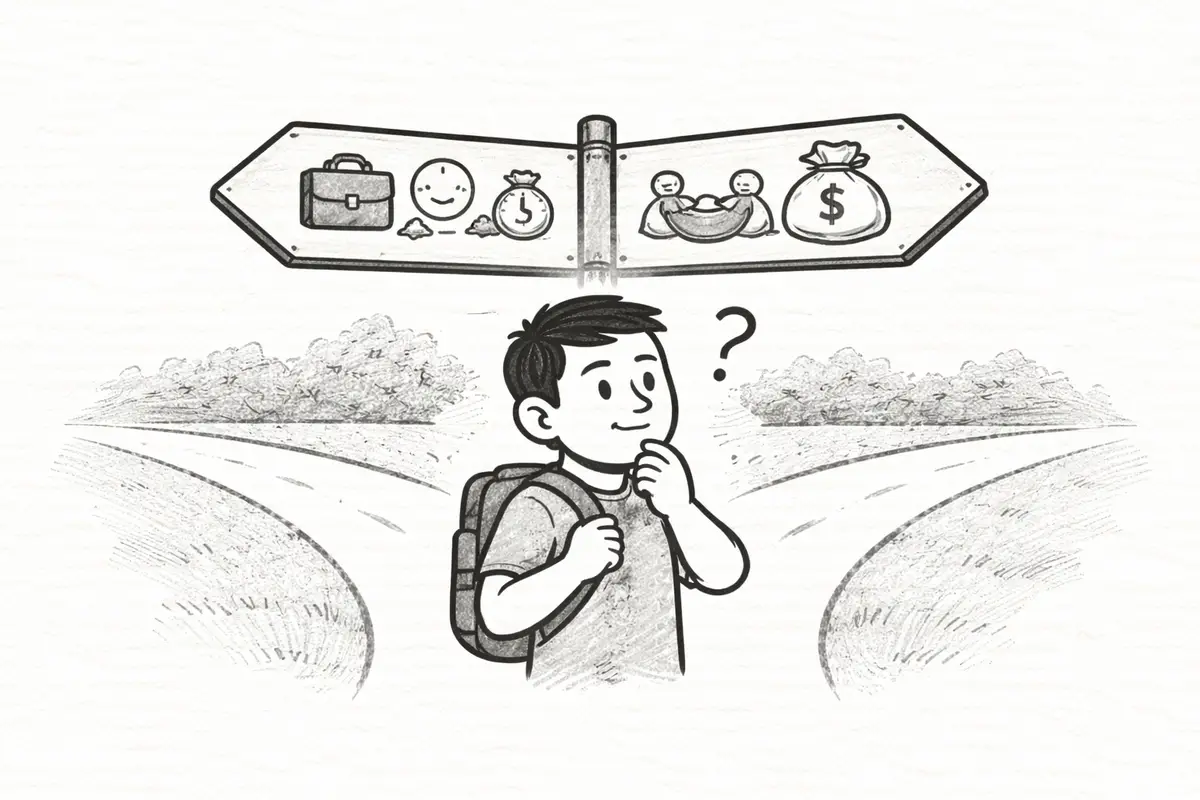
Composite scenario: One candidate is choosing between a prestigious title on a small team and a less glamorous role with defined responsibilities, dependable coverage, and a manager who can describe how priorities are reset. The first role may still be worthwhile if it offers meaningful support and a clear end to an intense growth period. The second may be more sustainable if its lower status comes with greater control and fewer unplanned demands.
The right decision depends on income needs, career stage, available alternatives, personal responsibilities, and whether the stressful conditions are temporary or structural.
Remote work helps only when the operating model protects your time
Working from home can remove commuting and make daily logistics easier. It does not automatically reduce workload, improve management, or create recovery time.
Distributed teams create specific risks when colleagues treat everyone’s waking hours as available. Meetings may drift across time zones, messages may create constant low-level vigilance, and visibility may become tied to appearing online rather than producing useful work.
For a remote or hybrid role, check:
- The expected working window in your local time zone.
- How much daily overlap the team requires.
- Whether decisions are documented for colleagues who are offline.
- How often meetings occur outside normal hours.
- Whether inconvenient meeting times rotate fairly.
- What counts as an emergency and who provides coverage.
- Whether performance is assessed through outcomes or constant availability.
Remote work becomes more sustainable when a team uses clear handoffs, written decisions, defined response expectations, and limited overlap windows. It becomes less sustainable when the office follows employees into every room and every time zone.
Fix the conditions you can influence, then evaluate the conditions you cannot
Individual habits matter. They do not remove an employer’s role in designing manageable work.
The NIOSH hierarchy for improving worker well-being places removing harmful working conditions and redesigning work ahead of individual education or behavior-change efforts. The WHO similarly recommends organizational interventions that target the working environment directly.
Start with one specific problem and one measurable request:
“Our team has been handling client escalations after hours without a clear rotation. Could we establish a named on-call schedule, define what requires an immediate response, and review the workload after four weeks?”
If the response produces a concrete change, a responsible owner, and a review date, the situation may be improvable.
If concerns are repeatedly dismissed, commitments change without explanation, or asking for help creates professional risk, treat that pattern as information. Depending on your situation, appropriate next steps may include speaking with HR, an employee representative, a union, an occupational-health service, or a qualified professional familiar with local rules.
Leaving immediately is not an option for everyone. Financial obligations, insurance, caregiving, a difficult labor market, visa dependence, or limited local opportunities can make a rapid exit unrealistic. In that case, a sustainable transition might begin with documenting workload, reducing avoidable commitments, exploring internal transfers, updating your resume, or quietly assessing other employers.
If a break becomes part of the process, you can prepare to explain a career gap related to burnout without disclosing unnecessary personal details.
Know when the issue needs professional support
Burnout is an occupational description, not a complete explanation for every symptom someone experiences.
Persistent exhaustion, serious sleep disruption, anxiety, low mood, physical symptoms, or difficulty functioning deserve attention from a qualified healthcare professional. Work may be contributing, but other medical or mental health issues can produce overlapping symptoms, and an article cannot determine the cause.
If you feel unsafe or may harm yourself or someone else, contact local emergency services or an appropriate crisis support service immediately.
Professional support and workplace changes are not competing choices. Someone may need both, and options for leave, accommodations, treatment, or financial support depend on location, employment status, insurance, and individual circumstances.
What this changes for your next career decision
A sustainable career is not built by permanently choosing the easiest assignment or refusing ambition. It is built by understanding the conditions under which ambitious work remains possible without consuming every available resource.
Before accepting a role, promotion, major project, or new responsibility, write down five answers:
- What demands will increase?
- What resources, authority, or support increase with them?
- How will recovery and time away be protected?
- What happens when priorities exceed available capacity?
- What evidence shows the employer follows these practices when work becomes difficult?
If you cannot answer those questions, the next useful move is not to promise yourself better boundaries after joining. Ask for the missing operating details while you still have the ability to compare options.
 About the author Matt Semon
Career Writer · AI Hiring Trends · USA I’m Matt, a writer and researcher focused on how hiring is evolving in the age of AI. I’ve been following trends in recruitment, automation, and remote work since 2018. When I’m not writing deep-dive articles for Jobicy, I’m testing AI tools to see how they impact candidates and hiring teams.