In this article
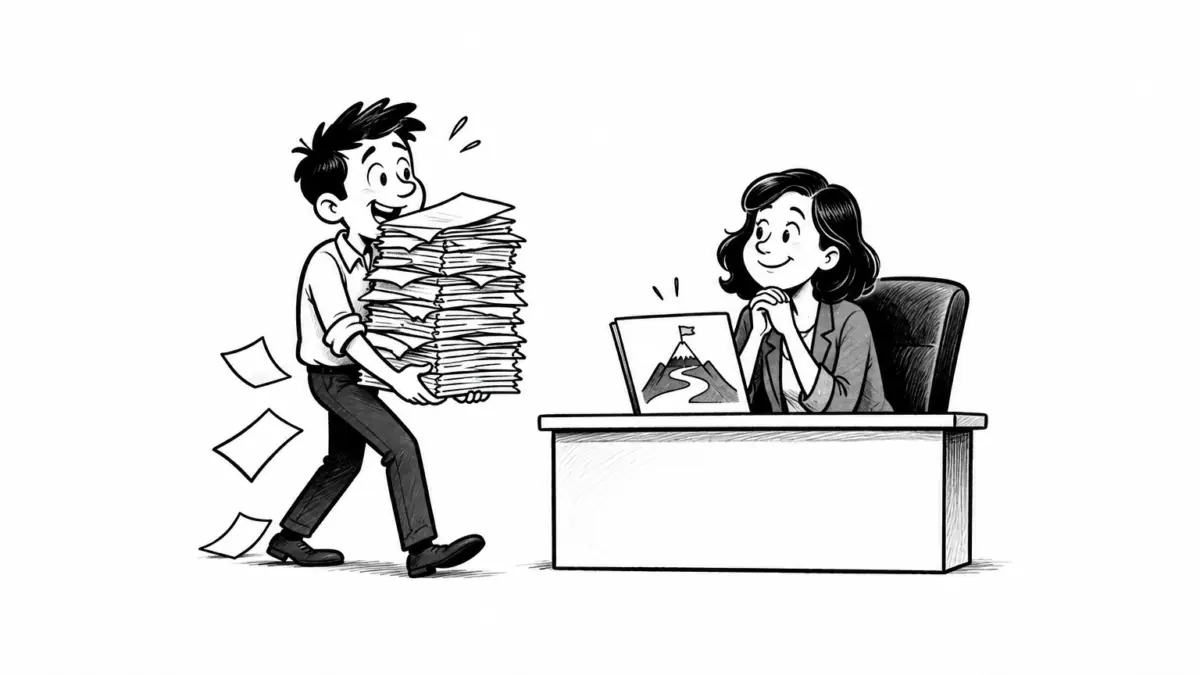
Imagine, hypothetically, that Jordan is six months into a first analyst role. In a one-on-one, Jordan’s manager says, “Keep building stakeholder judgment.” It sounds encouraging, but it does not answer the useful questions: Which situations count? Who can observe the skill? When should Jordan ask for input? What should change after that input arrives?
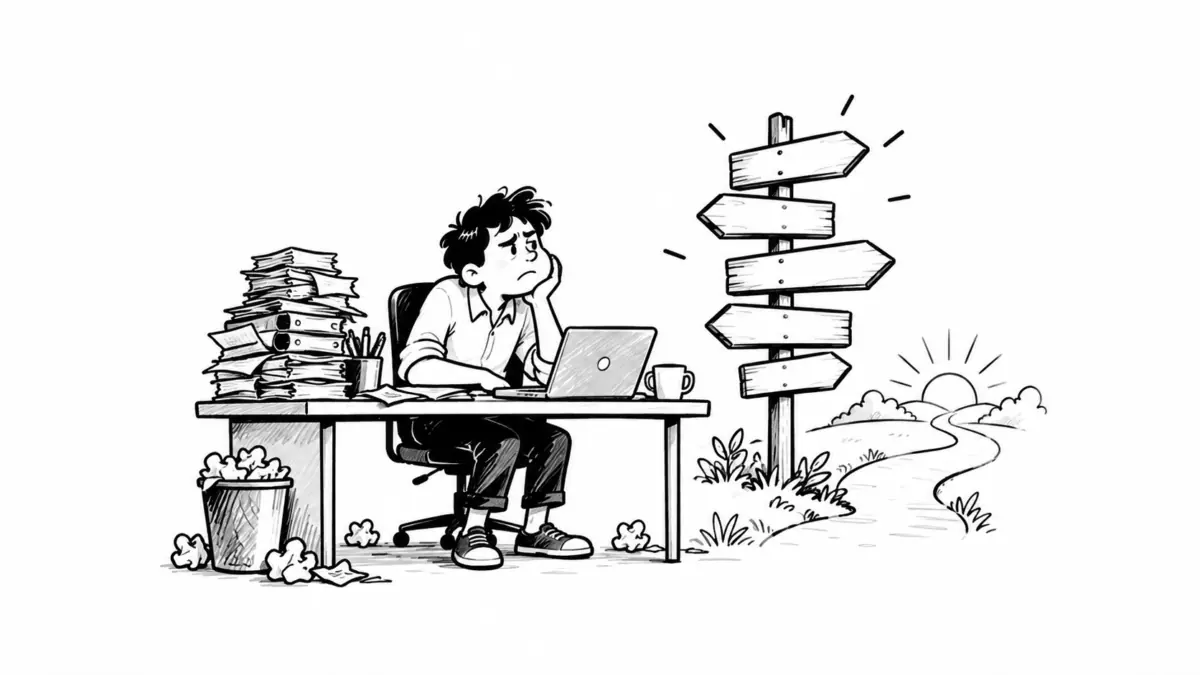
Early-career growth often stalls at that point. A development goal becomes a private intention, while the relevant evidence sits with a manager, a project lead, and peers who each see only part of the work. The answer is not to ask everyone for constant feedback. It is to agree on a small repeatable loop: one capability, one upcoming piece of work, named observers, a short request, and a date to decide what to try next.
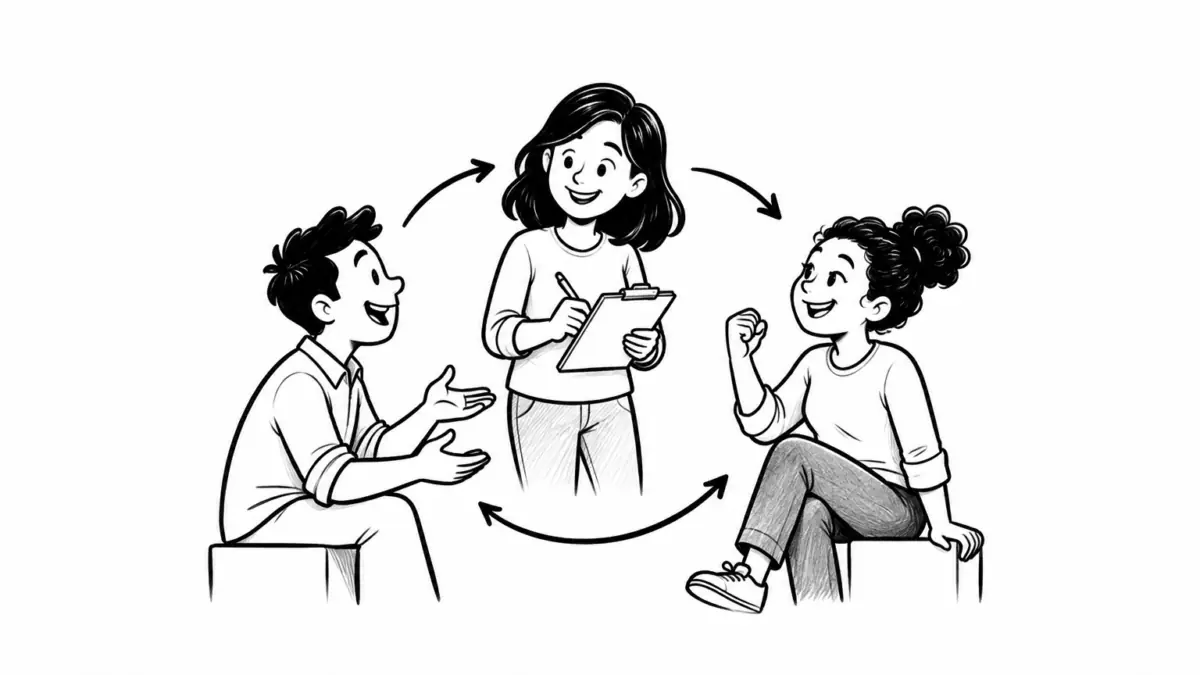
This is a team practice because career growth is rarely visible in a single output. A manager may see priorities and judgment. A teammate may see how you hand off work. A partner in another function may see whether your explanation lets them act. When those observations are routed deliberately, development becomes less dependent on annual reviews or vague impressions.
Turn a growth goal into a team-owned work loop
Start with a capability that matters in your current role, then tie it to work that will happen soon. “Become more confident” is too broad for useful observation. “State a recommendation and its tradeoff in the next two project updates” gives a reviewer something concrete to notice.
The distinction matters most when you are still learning how work fits together. For a new skill or a complex assignment, learning-focused goals can be more useful than a narrow outcome target. The CIPD’s evidence review of performance feedback similarly recommends learning-focused goals when a person must acquire skills or handle complex work, and connects specific goals with more specific feedback.
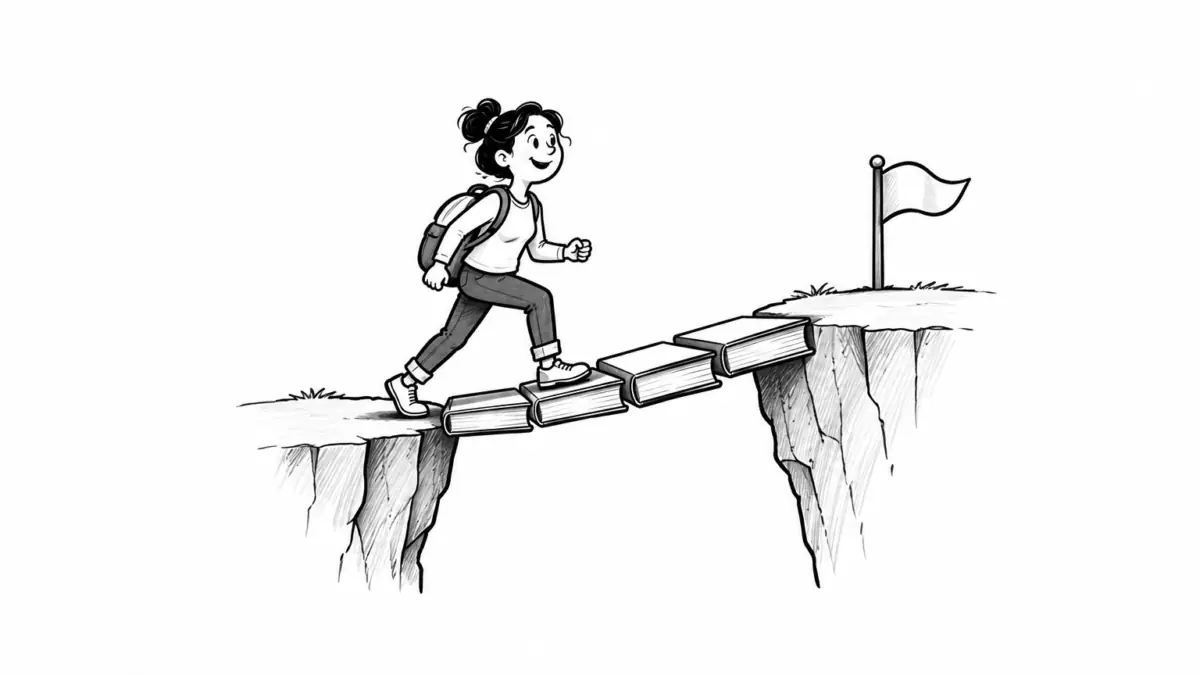
Use a loop that lasts two to four weeks, not a grand plan for the next year. The goal is to create enough repeated evidence to make a sensible adjustment. It is not to prove that you have mastered a trait.
| Part of the loop | What to define | Example |
|---|---|---|
| Capability | A behavior that another person can observe | Frame a recommendation before requesting a decision |
| Work moment | An upcoming meeting, document, handoff, or review | Thursday’s vendor-options briefing |
| Observer | Someone with direct visibility and relevant judgment | The operations lead who must use the recommendation |
| Request | One focused question about the behavior | Where did my recommendation become unclear or under-supported? |
| Adjustment date | A point to select one next experiment | Fifteen minutes in next Tuesday’s one-on-one |
Make the agreement explicit with your manager rather than treating it as extra work they must design alone. A useful opening is: “I want to improve how I make recommendations when information is incomplete. I have two decisions coming up this month. Could we choose one behavior for you to watch and spend ten minutes reviewing it after the second one?”
That question reduces the manager’s task. They are not being asked to assess your entire potential. They are being asked to observe one defined part of the work and help choose the next practice.
Keep the record smaller than a performance file
A simple note is enough: the capability, the situations used as practice, what observers noticed, and the next adjustment. Keep source material linked or named where the team already works, but do not turn the note into a running biography. Its job is to preserve decisions between conversations, especially if the manager changes, the project ends, or details become fuzzy.
The record should separate observation from interpretation. “The project lead asked twice which option I recommended” is an observation. “I am bad at presenting” is an interpretation. The first gives you something to change: lead with the recommended option, then explain the alternatives.
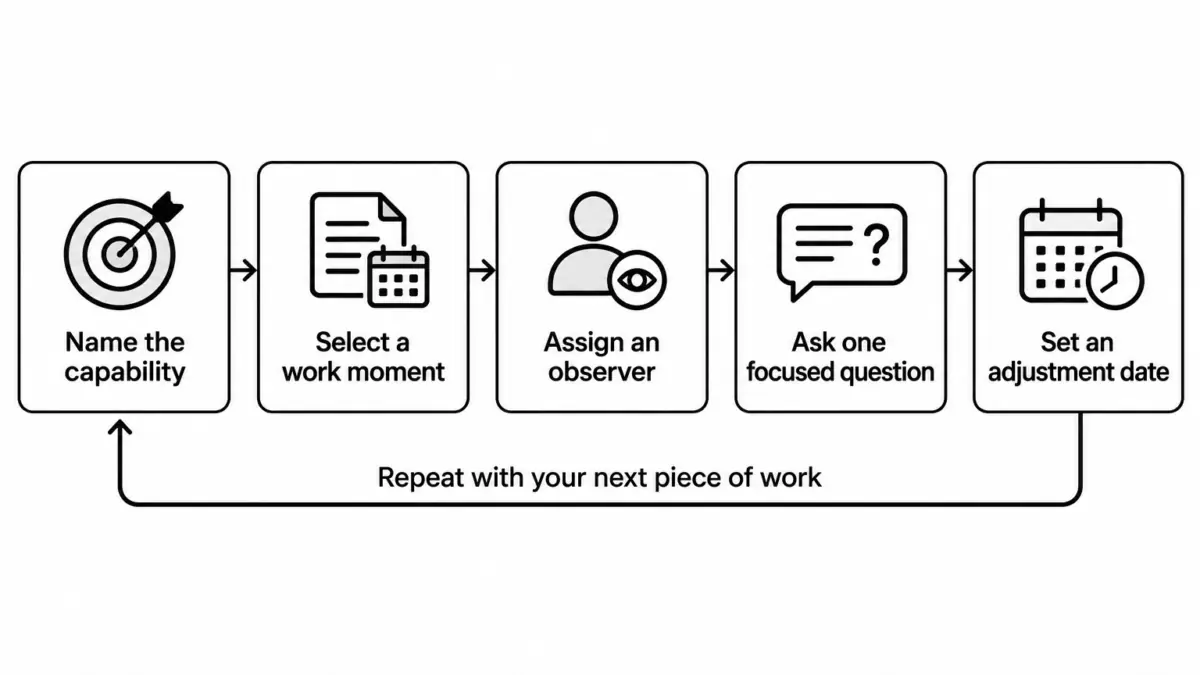
Text version of this visual
- Name the capability: Choose one behavior connected to current role expectations.
- Select a work moment: Use an upcoming document, meeting, handoff, or review where the behavior will be visible.
- Assign an observer: Choose someone with direct exposure and relevant judgment.
- Ask one focused question: Request advice about the next comparable piece of work.
- Set an adjustment date: Choose when to decide what to repeat, revise, or stop.
Choose the right reviewer for the work, not the title
Your manager should not be the only source of developmental input. They may have the clearest view of role expectations, but they cannot reliably observe every interaction. Ask for input from people who see the behavior you want to improve and can explain the consequence of it.
That does not mean collecting opinions indiscriminately. Research on feedback-seeking distinguishes between asking directly and monitoring cues, and finds that the conditions around the request affect whether people seek input at all. The longitudinal review of feedback-seeking in organizations is a useful reminder that feedback seeking is shaped by available job resources and relationships, not simply by personal ambition. Design requests that are easy to answer, bounded in scope, and connected to work the reviewer actually witnessed.
| Reviewer | Best placed to comment on | Poor use of their time |
|---|---|---|
| Direct manager | Role priorities, scope, judgment, and patterns across assignments | Minute-by-minute comments on work they did not see |
| Project peer | Handoffs, reliability, collaboration, and day-to-day problem solving | A verdict on promotion readiness |
| Cross-functional partner | Clarity, responsiveness, and whether your work supports their next action | Advice on technical methods outside their view |
| Subject-matter expert | Technical reasoning, quality standards, and missed edge cases | Broad judgments about your interpersonal style from one interaction |
Consider a junior marketer preparing a launch brief. The product manager can say whether the brief creates a decision. The designer can say whether requirements arrived early enough to shape the work. The marketing manager can connect those observations to the role’s expected level of ownership. Each source supplies a different piece of the picture; none needs to produce a complete career assessment.
This approach also prevents a common failure mode: asking a senior person for general feedback after a meeting they barely attended. They may offer something polite and broad because the question gives them no solid evidence to work from. A narrower request is fairer to them and more useful to you.
| What is true? | Best move | Why |
|---|---|---|
| The person watched the relevant work and knows the standard | Ask within a few working days | Specific details are still available |
| The person saw only the final output | Ask about the output’s usefulness, not your whole process | They can judge what they received |
| The person has no direct evidence | Do not ask for an evaluation | The answer is likely to become guesswork |
| The work involved a serious error or sensitive conflict | Address the immediate issue first with the accountable manager | Development reflection should not delay necessary repair |
Peer input can be especially useful when the behavior is interdependent: how you clarify a request, resolve ambiguity, or prepare a handoff. One study of coworker feedback seeking found associations with task performance, workplace well-being, and coworker relationships in its sample of teachers; it should not be treated as a universal promise, but it supports the practical idea that colleagues can be meaningful observers of work others must rely on. Read the open-access study on coworker feedback seeking for its design and limits.
Ask for input from the person who saw the behavior you are trying to change.
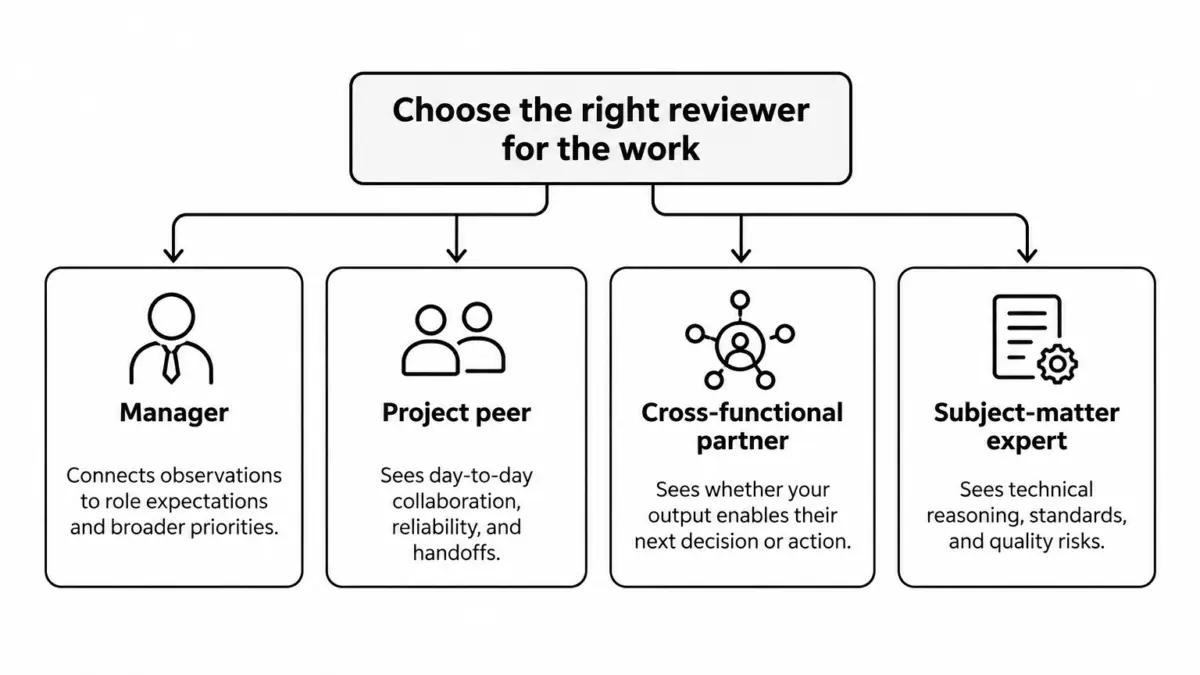
Text version of this visual
- Manager: Connects observations to role expectations and broader priorities.
- Project peer: Sees day-to-day collaboration, reliability, and handoffs.
- Cross-functional partner: Sees whether your output enables their next decision or action.
- Subject-matter expert: Sees technical reasoning, standards, and quality risks.
Write requests that produce a usable next move
“Any feedback for me?” places too much design work on the other person. It requires them to recall an event, decide what matters, judge how candid to be, and invent a recommendation. The result is often reassurance or a vague label such as “be more proactive.”
Ask instead for advice about a specific future moment. A recent field experiment and follow-up studies found that prompts framed as advice produced more concrete developmental input than prompts framed as feedback. The researchers’ explanation is practical: a future focus encourages the provider to imagine an action the recipient could take next. See the published paper, “Eliciting Advice Instead of Feedback Improves Developmental Input,” for the study details and its cautions.
| Broad request | Better request | What the second request changes |
|---|---|---|
| Do you have feedback on my presentation? | For the next presentation, what should I do in the first two minutes so the decision is clearer? | It identifies a moment and asks for an action. |
| How am I doing with stakeholders? | After this handoff, what would help you act with fewer follow-up questions next time? | It asks the partner to judge the handoff’s effect. |
| What should I improve? | If I handled a similar analysis next month, which check would you want me to add before I share it? | It turns criticism into a repeatable safeguard. |
| Was I clear in that meeting? | Which part of my recommendation needed more context before you could respond? | It directs attention to a visible consequence. |
One question is usually enough. If someone offers a useful answer, ask a single follow-up: “What would that look like in the next version?” Do not defend the work while they are answering. You can supply missing context, but immediate rebuttal teaches people that candid input creates extra labor.
Close the loop in writing
After the conversation, send a short confirmation when the advice affects shared work: “I’ll lead next week’s update with the decision needed, name my recommendation, and put background in the appendix. I’ll ask you after the meeting whether that made the choice easier.” This is not a performance display. It is a handoff: the observer knows what to watch, and you know what will count as a test.
Make the follow-up visible without making it performative
A development loop fails if every observation is treated as a verdict. The point of the follow-up is to select one adjustment, use it in comparable work, and decide whether it should become part of your normal practice.
Suppose Jordan learns that project updates include good analysis but obscure the decision needed from leadership. The next adjustment might be a standard opening line: “Today I need approval for option B because it protects the delivery date; the remaining risk is vendor capacity.” After two updates, Jordan can ask the manager whether leaders responded with fewer clarification questions or whether the issue lies elsewhere. The team has moved from a personality judgment to an observable workflow change.
Keep the cadence light. Frequent requests can create fatigue, while waiting for a formal review makes it harder to remember the work. The right interval depends on the assignment and the observer’s access. The important part is that a request has a declared end point.
Managers should own the connection between the experiment and role expectations. The early-career professional should own preparing the work moment, making the request, and recording the adjustment. Peers and partners should own only the observations they can credibly provide. This division prevents a development plan from becoming either a private self-improvement project or a manager’s administrative burden.
Use missed loops as diagnostic information
If the same loop repeatedly fails to happen, identify the broken handoff. Perhaps the work arrives too suddenly to name an observer. Perhaps the manager cancels every follow-up. Perhaps no one has a shared definition of the capability. Each problem calls for a different repair.
- If work is unpredictable, agree on a standing request for one artifact per month rather than one scheduled event.
- If the manager lacks visibility, choose a project lead or partner for the first observation and bring the evidence back to the one-on-one.
- If the goal remains abstract, ask the manager for two examples of work that would demonstrate it at your level.
- If requests produce only praise, revise the question toward a future task and a concrete consequence.
A development note should preserve the next experiment, not turn every observation into a label.
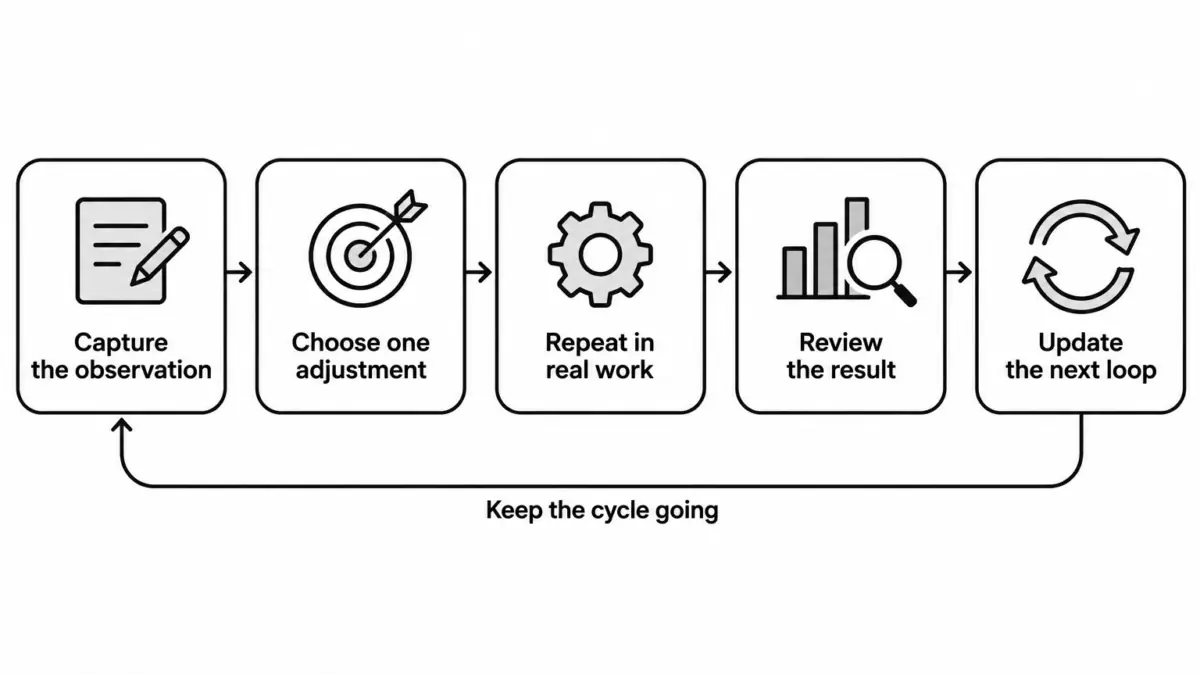
Text version of this visual
- Capture the observation: Record what happened and the consequence, without adding a broad self-judgment.
- Choose one adjustment: Turn the input into a behavior to use in the next comparable task.
- Repeat in real work: Use the adjustment where the same capability is needed again.
- Review the result: Ask whether the change improved the work or whether a different constraint remains.
- Update the next loop: Keep, revise, or replace the practice based on the evidence gathered.
Use the loop to learn, not to build a case for yourself
There is a boundary here. A growth loop is not a substitute for a formal performance process, a promotion decision, or a response to serious conduct or quality issues. Those decisions need clearer criteria, broader evidence, and accountable leadership. Developmental conversations work better when they are not quietly being used to decide compensation or rank; the CIPD review warns against conflating administrative and developmental purposes.
For ordinary growth, though, a small agreement is enough. Pick one capability that will matter in the next month, name the next piece of work where it appears, and ask one qualified observer: “For the next version, what is one change that would make this more useful to you?”
 About the author Ewald Schäfer
HR Technology Specialist · Germany I’m Ewald — a passionate HR tech consultant from Berlin. I write about the intersection of automation, recruitment, and human capital. After leading several HRIS rollouts across Europe, I now focus on advising startups and writing practical content for job seekers and hiring teams alike. With a strong IT background, I bridge the gap between HR and technology: from API integrations and data security to workflow automation and cloud-based HR platforms. My mission is to help organizations not only digitize but truly optimize their people operations.