In this article
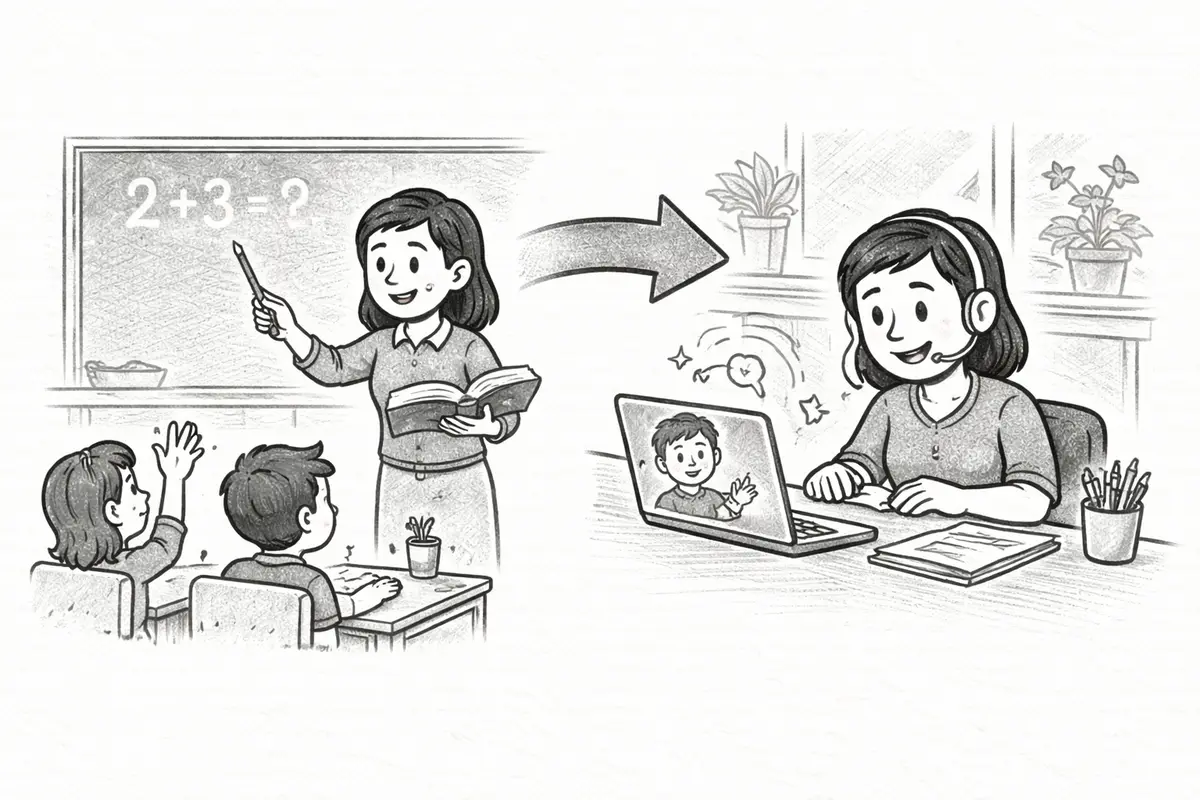
At seven in the morning, the apartment is blue with winter light. The kettle clicks off. A laptop wakes on the table, its screen pale and patient, while beyond the glass the city gathers itself—buses breathing at the curb, shoes striking wet pavement, office towers switching on floor by floor.
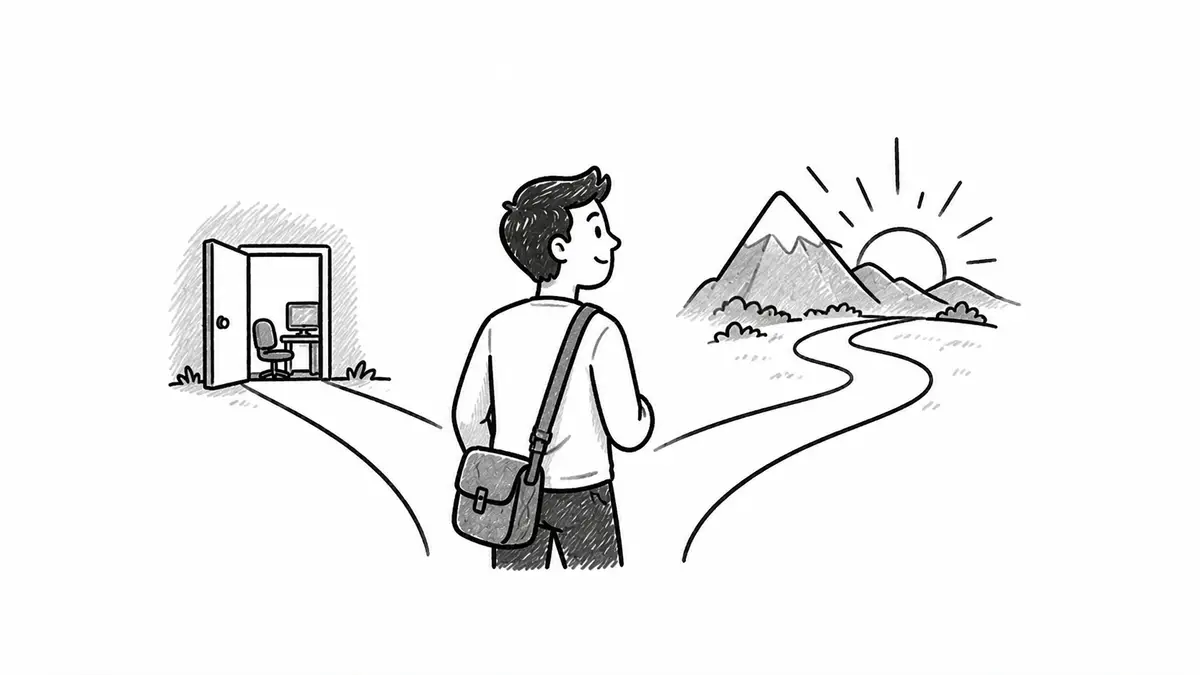
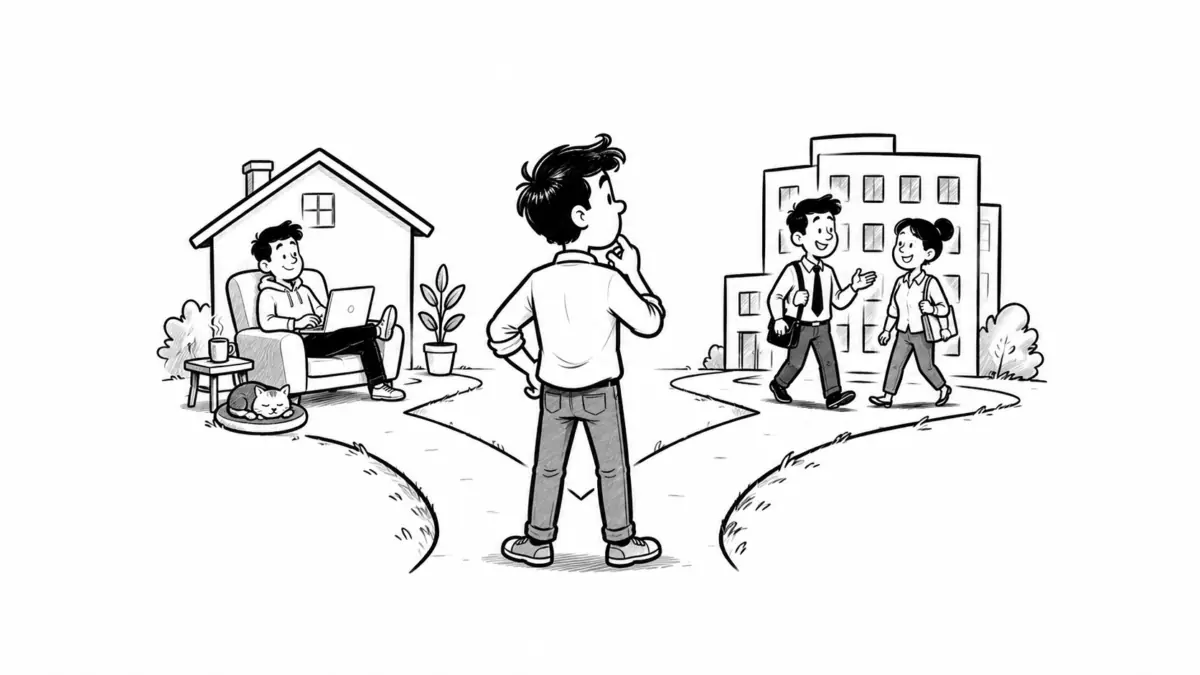
One worker closes the door against that city and begins. Another buttons a coat.
Remote or hybrid?
The choice changes the texture of attention, the people who witness our effort, and the amount of ourselves left intact when evening comes.
You are not choosing where to place a laptop. You are choosing the climate in which your career will grow.
The Quiet Room
Remote work begins with subtraction.
No train doors folding shut against your sleeve. No fluorescent kitchen with its orphaned yogurt. No morning spent transporting a human body across a city so that it may answer the same email from a different chair.
The saved hour arrives like a blank page.
For some, that page becomes deep work. A writer keeps the thread of a sentence. An analyst builds a model in concentrated silence.
For others, it becomes fog. Work seeps under doors; Slack glows after dark like a nervous blue eye. Freedom, poorly fenced, becomes permanent availability.
The latest data suggests this way of working has not vanished despite the theatrical return-to-office declarations. Stanford’s 2025 Global Survey of Working Arrangements, covering more than 16,000 university-educated workers across 40 countries, found that working from home fell between 2022 and 2023, then stabilized. Across a consistent group of 22 countries, the average settled at 1.27 days per week in 2024–2025.
Not a revolution now. A sediment.
Who grows well here?
Remote work may fit you if:
- you protect your attention well;
- you communicate before silence becomes confusion;
- you have a usable room, reliable internet, and some control over noise;
- your life includes caregiving, health needs, or a geography that makes commuting costly;
- you already possess professional confidence and a network beyond one employer;
- you prefer written thought to spontaneous performance.
Remote work rewards self-knowledge. It punishes its absence.
At home, you must build the structure yourself: a start, an end, a place where work happens.
The Divided Week
Hybrid work has a different sound.
Monday: the soft tap of keys at home.
Tuesday: elevators, greetings, the hiss of milk under a coffee wand. A colleague solves in forty seconds what six messages had failed to explain. You see who listens and who drags influence behind them like expensive luggage.
Then home again.
Hybrid tries to braid solitude and contact. Gallup’s Hybrid Work Indicator showed that in May 2025, 52% of remote-capable U.S. employees worked hybrid, 28% worked fully remotely, and 21% remained fully on-site. Six in ten preferred hybrid.
Preference is not proof of perfection. People also prefer dessert.
Still, hybrid’s endurance tells us something. It offers enough distance to recover attention and enough proximity to keep relationships warm. Stanford’s 2025 survey of more than 1,000 U.S. executives found that only 12% of companies with remote or hybrid workers planned some form of return-to-office mandate during the following year. The projected effect would reduce home-based paid workdays from 21.2% to 20.8%.
The headlines roared. The decimal barely moved.
Who benefits from the crossing?
Hybrid often suits careers built through observation and negotiation. Early-career workers can hear how experienced colleagues frame a problem before the meeting begins. New managers can read the room rather than a row of initials inside black rectangles.
Hybrid may fit you if:
- you learn by watching people work;
- your role depends on informal decisions and cross-functional alliances;
- social contact restores rather than drains you;
- you need home days for concentrated production;
- your commute is tolerable;
- your team attends on the same days for a clear purpose.
Hybrid without coordination is merely commuting to join a video call. The office becomes a costly stage set for togetherness.
A good hybrid policy gives each place a job. A bad one counts chairs.
Visibility Has a Temperature
Careers are also built from memory—who comes to mind when a difficult assignment appears, whose judgment has been seen under pressure. Remote workers fear becoming a clean square on a screen: reliable, productive, and absent when promotions are discussed.
Remote workers can make labor visible through concise updates, documented decisions, and strong relationships. An office manufactures encounters. A remote career must compose them.
Hybrid workers face the opposite danger: confusing visibility with value. Presence can become performance—the bright notebook, the well-timed hallway conversation, the choreography of being observed. A career built only on proximity is a plant fed with painted sunlight.
Ask yourself which failure you are more likely to commit: disappearing, or performing.
The Price Is More Than Money
A commute has a ledger. Fuel. Tickets. Lunch. Childcare. Time.
Remote work collects elsewhere: space, heating, equipment, and the subtle erosion that comes when home no longer feels private. Silence can become loneliness.
Hybrid divides both bills—and attention.
Owl Labs surveyed 2,000 U.S. knowledge workers for its 2025 State of Hybrid Work Report. Nearly half said they lacked the flexibility they wanted; 37% said they would not accept a job without flexible hours. Notice the wording: hours, not merely location.
That distinction is the thin gold line running through the whole debate. Many people do not crave a home office. They crave sovereignty over time.
Do Not Choose a Label. Inspect the Machinery.
“Remote” can mean calm autonomy—or surveillance software counting your keystrokes.
“Hybrid” can mean two purposeful team days—or four compulsory commutes announced as flexibility.
The label is packaging. Ask what lives inside:
Questions for a remote role
- How does the team document decisions?
- Which hours require overlap?
- How are new employees trained?
- How are performance and promotions assessed?
Questions for a hybrid role
- Are office days fixed, coordinated, or chosen individually?
- How many team members attend together?
- Are remote participants equal in meetings?
Flex Index’s 2025 flexible-work data found that 71% of Fortune 100 companies retained flexible policies, with three-day hybrid the most common model. This tells us where policy has settled among large employers. It does not tell us whether a specific Tuesday inside a specific company feels intelligent.
Only questions can reveal that.
Choose for the Season You Are In
At twenty-three, I might choose the noisy room: overheard wisdom, imperfect mentors. At thirty-seven, I might choose the quiet window and the long unbroken morning.
Neither choice must become an identity.
Careers move through seasons. Apprenticeship asks for exposure. Mastery asks for concentration. Caregiving rearranges every clock. A move can make remote work not a preference but a bridge.
So test the fit against three truths:
- Your work: Does it grow through solitude or rapid human exchange?
- Your career stage: Do you need visibility and apprenticeship, or autonomy and range?
- Your life: What does the commute take, and what does isolation take?
Be honest about the third. We often disguise a life need as a productivity theory because need feels soft and theory wears a tie.
The Light in the Window
Evening returns.
In one home, the laptop closes and the room becomes a room again—if the worker has learned that difficult art. In another, keys touch a hallway bowl; the body carries home the static of voices, the warmth of contact, the fatigue of transit. Neither person has chosen freedom. Each has chosen a set of constraints.
That is all work ever offers.
The better arrangement is not the one praised by the loudest executive or desired by the largest percentage in a survey. It is the one whose costs you can bear without becoming smaller, and whose gifts match the career you are trying to build.
Tomorrow morning, when the city switches on and the kettle gives its small metallic click, which version of you needs to wake beside it?
 About the author Barbara Best
Career Coach · Remote Work Evangelist - USA Hi, I’m Barbara. With over 12 years of experience helping people pivot careers, I specialize in remote job strategies and personal branding. After spending a decade in corporate HR, I shifted focus to coaching mid-career professionals. I believe that work should fit into your life — not the other way around.