In this article
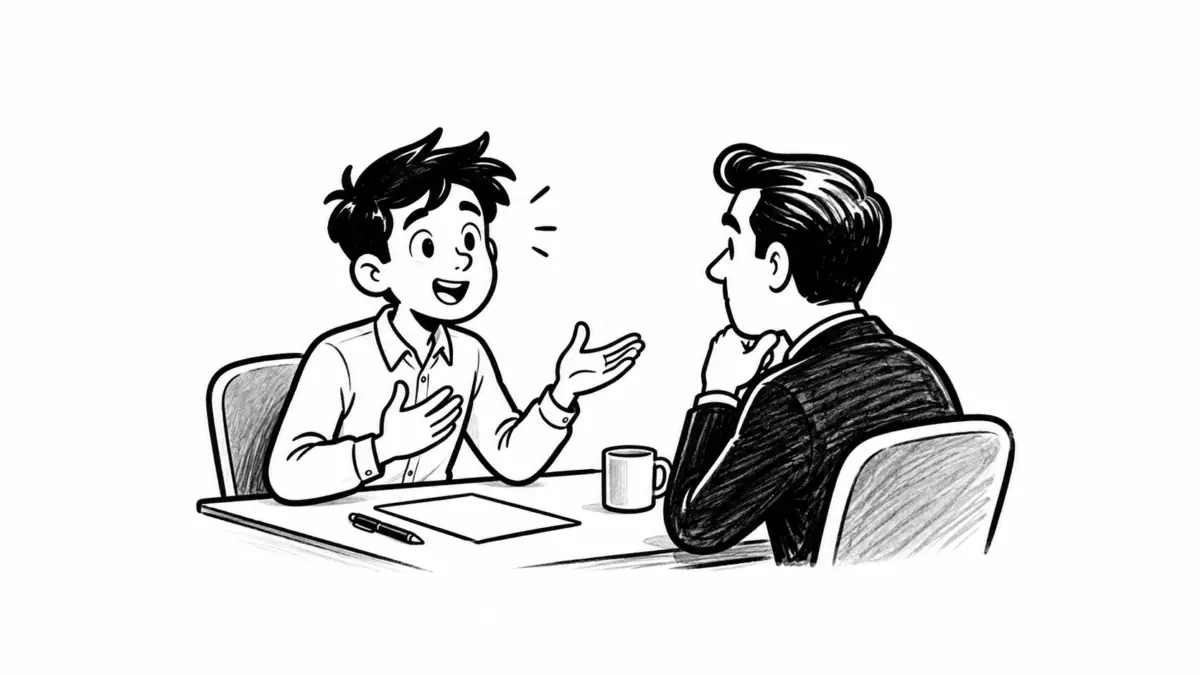
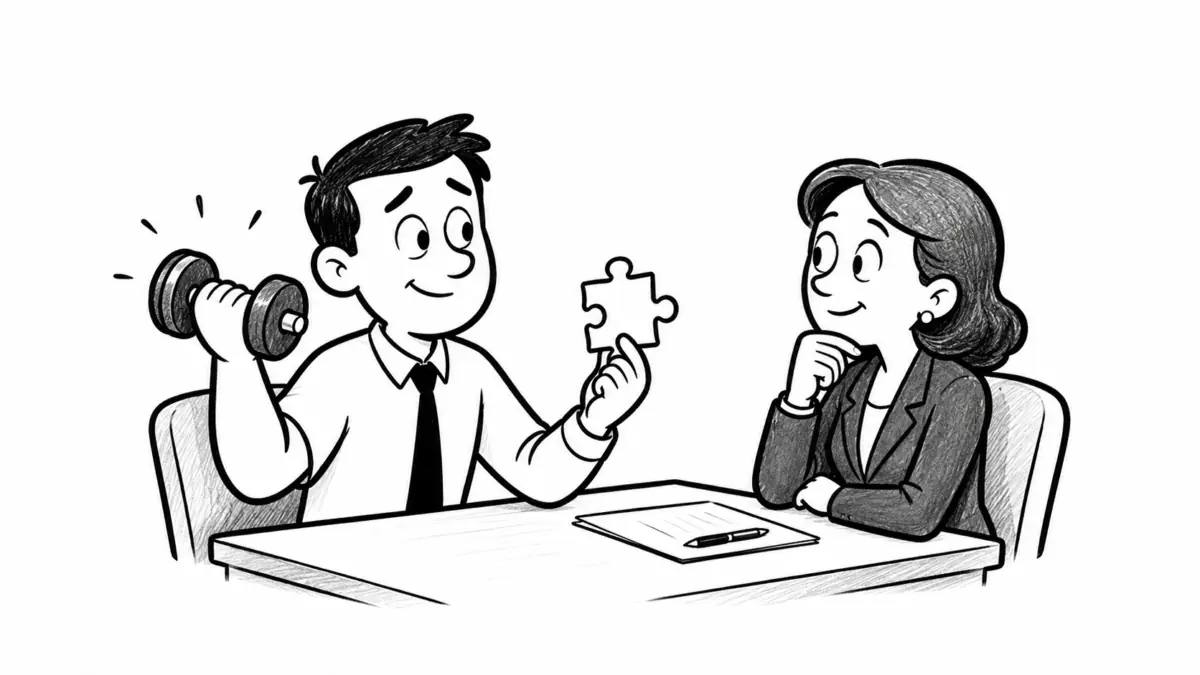
Most candidates ruin the weakness question in one of two ways. They disguise a compliment as a flaw—“I care too much”—or reveal a serious performance problem with no plan to control it.
Both answers fail.
The interviewer does not expect perfection. She wants evidence that you understand your own patterns, accept responsibility and improve without constant supervision. Your answer should demonstrate self-awareness plus risk management.
That is the standard. Stop trying to outsmart the question.
A strong weakness answer does not make you look flawless. It makes you look coachable, deliberate and safe to hire.
I have coached candidates who spent hours searching for a “perfect weakness.” That search creates the problem. A polished fake sounds evasive; an uncontrolled real weakness sounds dangerous. You need a genuine limitation that you already manage with a credible system.
This article gives you that system.
Understand Why Employers Ask the Question
“What is your greatest weakness?” sounds personal, but the hiring decision behind it is practical. Employers want to know:
- Can you evaluate your performance accurately?
- Do you accept feedback without becoming defensive?
- Can you identify the effect of your behavior on other people?
- Have you built a repeatable improvement process?
- Will this weakness create unacceptable risk in the role?
The question matters more as hiring becomes skills-based. NACE’s Job Outlook 2026 research found that 70% of participating employers used skills-based hiring for entry-level roles, most often during screening and interviews. LinkedIn’s Future of Recruiting 2025 reported that 93% of talent acquisition professionals considered accurate skill assessment crucial to improving quality of hire.
Your answer is therefore not a personality quiz. It is a short demonstration of how you manage a skill gap.
Choose a Weakness That Is Honest but Not Fatal
The right weakness passes four tests.
1. It is real
You should be able to describe when the weakness appears, what it affects and what you have done about it. If your answer could appear on a motivational mug, reject it.
“I am a perfectionist” means nothing without a specific behavior. Do you delay decisions? Over-edit low-value work? Struggle to delegate? Name the behavior, not the flattering label.
2. It is not a core requirement you cannot perform
Do not apply for an accounting role and announce that details bore you. Do not seek a sales position while admitting that rejection prevents you from making calls. A weakness can touch the role, but it cannot destroy the business case for hiring you.
Use this distinction:
- Manageable weakness: “I used to overprepare for presentations and spend too much time polishing slides.”
- Fatal weakness for the role: “I avoid presenting because public speaking makes me shut down.”
The first shows an efficiency problem that can improve. The second questions whether you can perform an essential duty.
3. It is within your control
Choose a behavior or skill you can change. Avoid external complaints disguised as weaknesses: “I struggle when leadership gives unclear instructions.” That answer blames the environment and reveals nothing about your response.
A better version is: “When instructions are ambiguous, I used to begin work before confirming the intended outcome. I now summarize the goal, constraints and deadline in writing before execution.”
Same situation. Better ownership.
4. You can prove progress
Do not present an open wound. Present a weakness under active management.
The World Economic Forum’s Future of Jobs Report 2025 identifies motivation and self-awareness, resilience, flexibility and lifelong learning among important workforce capabilities. A credible weakness answer demonstrates several of them at once: you recognize a gap, act on it and adjust your behavior.
Use the EDGE Method
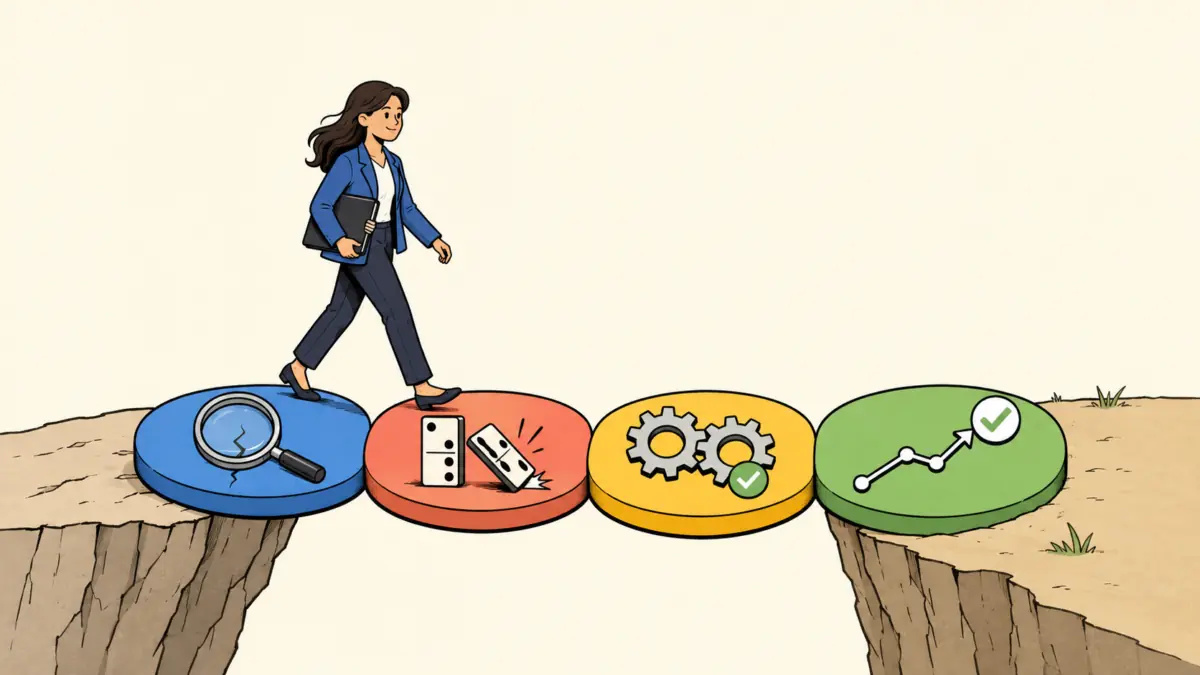
I teach candidates to structure the answer with four parts: Exact weakness, Damage, Growth system, Evidence.
E — State the exact weakness
Name one narrow behavior.
Weak:
“I struggle with communication.”
Strong:
“Earlier in my career, I waited too long to raise concerns when a project deadline looked unrealistic.”
The strong version defines the situation. It does not suggest that every form of communication is broken.
D — Explain the damage it can cause
Show that you understand why the weakness matters.
“That reduced the team’s options because we learned about the risk after work was already delayed.”
Keep this section brief. You are demonstrating judgment, not prosecuting yourself.
G — Describe your growth system
Explain the repeatable action you introduced.
“I now review milestones at the start of each week and flag any deadline risk as soon as I can identify its cause, likely effect and two possible responses.”
Notice the difference between a system and an intention. “I try to speak up sooner” is an intention. A weekly review and escalation rule form a system.
E — Give evidence of progress
Finish with a concrete result or observed change.
“On my last project, that process exposed a dependency problem two weeks before launch. We changed the sequence of work and kept the original release date.”
Evidence turns personal development into business value.
The complete answer takes 45 to 75 seconds. Longer answers often sound defensive. Shorter answers usually omit the proof.
Name the weakness quickly. Spend most of the answer on the system and the evidence.
Five Strong Weakness Answers
Use these examples as structures, not scripts. Recruiters can hear memorization.
When you overcommit
“I used to accept new requests too quickly because I wanted to be helpful. The result was unnecessary pressure near deadlines. I now check the priority, effort and existing workload before committing, and I state what must move if the new task is urgent. In my current role, this has made my delivery estimates more accurate and reduced last-minute renegotiation.”
Why it works: The candidate shows service orientation without romanticizing poor prioritization.
When you hesitate to delegate
“When I first started leading projects, I held onto too many tasks because explaining them felt slower than completing them myself. That limited my team’s ownership and made me a bottleneck. I now define the expected outcome, decision boundaries and review points before delegating. The team handles more work independently, and I can focus on the decisions that require my role.”
Why it works: The weakness is relevant to leadership, but the candidate has already changed the operating process.
When public speaking is still developing
“I am comfortable presenting to small working groups, but large formal presentations have required more preparation than I want. I joined a monthly speaking group, volunteer for internal demos and rehearse the opening and transitions rather than memorizing every sentence. My last department presentation was clearer, and I answered questions without relying on notes.”
Why it works: The candidate defines the current level precisely and shows exposure-based practice.
When you ask for help too late
“I used to spend too long solving technical problems alone before asking for input. That protected my independence but sometimes wasted time. I now set a time limit based on the problem’s urgency. If I cannot make meaningful progress, I document what I tested and ask a focused question. I still investigate independently, but I no longer confuse persistence with efficiency.”
Why it works: The final sentence shows mature judgment.
When your experience with a tool is limited
“My weakest area against this job description is advanced Tableau dashboard development. I can build basic reports, but I have not yet managed a complex production dashboard. I am completing a structured project using public data and reviewing performance, accessibility and stakeholder requirements—not only chart design. I can show you the current version and explain what I still need to improve.”
Why it works: The candidate does not exaggerate proficiency and brings visible evidence.
NACE’s 2026 work on ePortfolios and competency reflection makes the same broader point: reflection becomes more valuable when candidates connect it to artifacts and employer-valued skills. Do not merely claim growth. Show it.
Avoid the Answers Hiring Managers Stop Believing
“I work too hard”
This answer insults the interviewer’s intelligence. It also avoids self-assessment.
If overwork is genuinely a problem, identify the damaging behavior: poor prioritization, failure to delegate, unrealistic estimates or weak boundaries.
“I am a perfectionist”
Perfectionism can be real, but the label is overused. Translate it into an observable cost.
Say: “I used to apply the same quality standard to low-risk internal work and client-facing deliverables, which slowed execution.” Then explain your new decision rule.
“I have no weaknesses relevant to this job”
You have eliminated one concern by creating a larger one: lack of self-awareness.
A dramatic personal confession
An interview is not therapy. Do not disclose private health, family or trauma details unless you choose to discuss an accommodation through the appropriate process. Keep the answer professional and connected to work behavior.
A weakness with no control system
“I miss details sometimes, but I am working on it” is unfinished. What checklist, review stage, tool or peer check did you implement? What changed?
Growth mindset does not mean believing improvement will happen. It means building conditions that make improvement visible.
Tailor the Answer to the Role
Use the job description as a risk map.
- Highlight the five most important responsibilities.
- Identify the skills required to perform them.
- Remove any weakness that directly undermines a critical skill.
- Choose a real adjacent weakness with evidence of progress.
- Adjust the final sentence to show how your system protects performance in this role.
For a junior role, employers may accept a technical gap if you demonstrate learning speed and discipline. For a management role, they will expect deeper evidence around delegation, conflict, judgment and feedback. For remote work, weaknesses involving communication, documentation or self-management require particularly strong safeguards.
Do not recycle one answer for every interview. The weakness may remain the same, but the risk and relevance change.
Deliver the Answer Without Undermining It
Your words matter. Your delivery confirms them.
- Maintain a calm, neutral tone.
- Do not laugh nervously after naming the weakness.
- Avoid a five-minute backstory.
- Use “I,” not “we,” when describing responsibility.
- Do not claim the weakness has completely disappeared.
- Finish with current evidence, not a promise about the future.
I once worked with a candidate who had a strong answer about delayed escalation. She buried it under three minutes of explanation because silence made her uncomfortable. We cut the answer to four sentences: behavior, impact, system, result. The substance did not change. The credibility did.
Clarity signals control.
Prepare Your Answer Today
Take fifteen minutes and complete this exercise:
- Write three real professional weaknesses.
- Remove any weakness that is fatal to the target role.
- Remove any weakness you are not actively improving.
- Select the remaining weakness with the clearest evidence.
- Write one sentence for each EDGE stage.
- Record the answer and keep it under 75 seconds.
- Ask someone to challenge you with: “How do you know you have improved?”
If you cannot answer the final question, your preparation is incomplete.
The goal is not to present yourself as a finished product. Employers know better. Show that you can identify risk, build a system and turn feedback into better performance.
That is not weakness. That is professional maturity.
 About the author Natalya Luft
Remote Culture Consultant · Former HR Director I’m Natalya -- originally from Kyiv, now based in NYC. I’ve spent 15+ years building and managing distributed teams across Europe. I write about culture, communication, and leadership in remote-first organizations. I believe remote work is about trust, not tools.